
Cold Wars

Cold Wars

The 2019 Polar Vortex slid down from the North Pole, threatening to lock Chicago into subzero stillness. I prepared for the warring cold by teeing up the entire 18-hour series of The Marvelous Mrs. Mazel. Then I threw stale bread crumbs onto my balcony to nourish the house sparrows, finches, and chickadees before they huddled together in eaves and cracked soffits to wait it out. I shuttered in and Dapped all the little crevices around the balcony door that were spritzing air into my not-so-insulated living room. That was the extent of my preparation for the coldest two days ever recorded in Chicago.

Day one brought minus 23 degrees. I woke to a thick film of silver ice covering all the windows. The ice curtain obscured the humanity moving around behind the windows across the street and any fool pedestrian walking in the feels-like-minus 40.
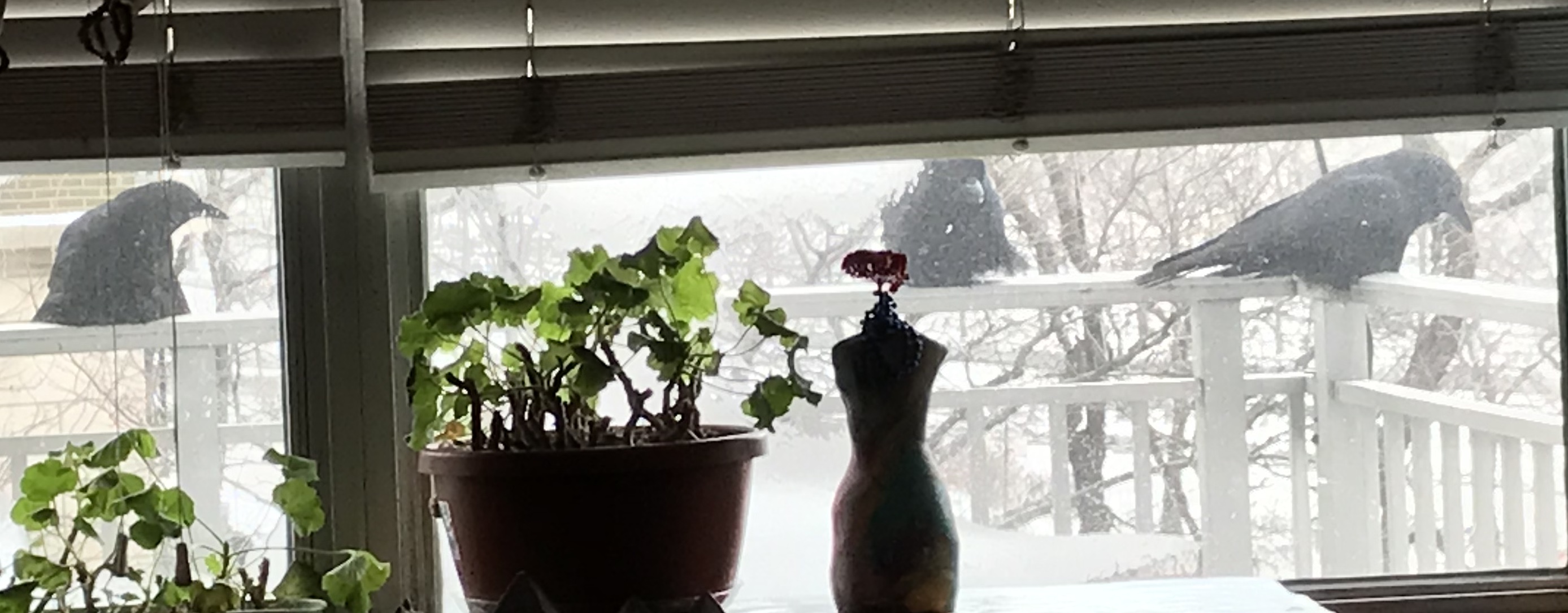
My binge-watching was interrupted mid-morning by a thrashing whomp, whomp whomp on the concealed balcony. I inched toward a clearing in the frosty glass.

A murder of crows had come to forage.

The much-studied American Black Crow might be the most intelligent animal other than primates. They hide their food and come back for it. If a crow looks you in the eye, she will remember you, follow you down the street, and caw at you for attention like a wild pet. 

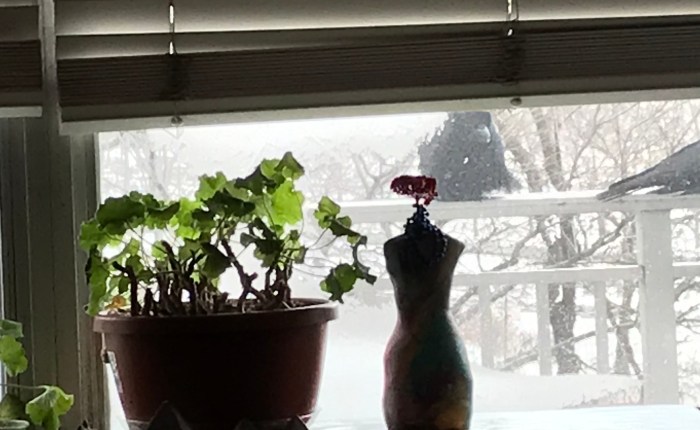
On day two, the temperature was 21 degrees below. The ice wall on my windows melted enough for a small lookout. I abandoned Mrs. Mazel and placed a chair well away from the clearing to observe the crows without startling them. They first landed in late morning. A mighty set of black wings fluttered a plumped-up body onto the balcony railing, and the rest followed—a family of five dipping to the balcony floor for leftovers. They flew off and came back. Again. And again. And again. I remained still throughout, trying to lock eyes with the birds. In the afternoon, the weather broke and allowed the dog and me to walk outside—under the watchful eyes of noisy new friends.

The first cold days of 2023 were predicted for the weekend after Thanksgiving. Though nowhere near the 2019 plunge, 30-degree temperatures heightened awareness of asylum-seeking families living on cardboard slabs outside police stations. I sought diversion through another favorite TV series, Julia.

The TV automatically tuned in CNN, though, where there was live coverage of the hostages being released from Gaza. A mysterious and curious need for every scrap of information gripped me. Who are they? What are their stories? Where are they going? I saw six women over the age of 70. One 85-year-old was helped onto a bus. I winced, feeling my own arthritic pain. Four children appeared—ages 2, 4, 5, and 9. I squinted to see if they were clutching teddy bears.

After watching for two tearful days, unrelenting shivers overcame me. And when I took the dog for a walk, that murder of crows cawed to us from the barren trees.

Gifts and Omens from the Polar Vortex

Gifts and Omens from the Polar Vortex

In 1982 newspaperman Paul Galloway made arrangements for me to volunteer on the Adlai Stevenson for governor campaign. Paul wrote features for the Chicago Sun Times and knew the campaign press secretary. It’s best to have a reference when volunteering on a campaign or you’ll get stuck answering phones or standing on a street corner passing out brochures. I was entrusted with driving Nancy Stevenson around to her scheduled events. She is one helluva quick-witted woman. I’ve never known any two people as funny as Paul Galloway and Nancy Stevenson. At the end of every day, I’d have hilarious conversations with Paul recapping the day’s events. He’d brief me on the serious issues of the campaign that I had missed while I was out with Nancy. Once in a while he’d relay bits of gossip about Adlai’s opponent, Jim Thompson, that he’d overheard in the newsroom—confidentially, of course, but I told Nancy everything.

Paul scheduled time with Nancy on the campaign trail because he was writing an article on the candidates’ wives. At the end of that day, as we dropped Nancy off, we doubled over out of the car barely able to recover from the previous sidesplitting eight hours. When the article appeared a few days later, a campaign staffer asked if we had given Paul an aphrodisiac because he wrote more of a love letter to Nancy than a journalistic objective feature story.

When the 2019 Polar Vortex was on its way to Chicago at the end of January, I decided to spend  the forced hibernation writing about my time in the ’82 Stevenson campaign. But my first draft notes were blank. I could remember very little about it. In writing memoir, when I sit down with a particular theme in mind, memories rise up. Other memoirists say the same thing; it’s why we call it bibliotherapy. Incidents hidden somewhere in the hippocampus come forward.

Not this time. No specifics of what-I-thought-were-memorable days with Nancy Stevenson and Paul Galloway. It’s as if Paul took the stories with him when he died ten years ago. Like they are his to tell, not mine. This has made me profoundly sad, not only at the lost memories, but at the loss of Paul.

And so the day before the Polar Vortex I figured out how to tee up the full 18 hours of  The Marvelous Mrs. Mazel on Amazon Prime. I threw half-a-loaf of stale bread cubes onto my 4’x10’  third floor balcony to nourish the house sparrows, finches and occasional chickadees that frequent my suet feeder. Then I shuttered myself in and Dapped all the fullsizeoutput_4cb7little crevices around the balcony door that were spritzing air into my not-so-insulated living room. That was the extent of my preparation for the coldest two days ever recorded in Chicago.

Day One: -23 °. I awoke to a thick film of silver ice covering all my windows. There were fractal peek-a-boos to the outside world near the balcony door handle and around my hardy geraniums on the indoor windowsills. The ice curtain shut me out of the humanity moving around behind the windows across the street, buses and cars on Lake Shore Drive and any fool pedestrian walking about in the feels-like-minus-40 degrees. The windows emitted a dazzling cold so I grabbed some goose down, hunkered down far away from the frozen glaze with Henry the dog and cuddled the TV remote.

My binge-watching was interrupted by a thrashing whomp, whomp whomp, on my balcony. Then another. And another. Then two more. I rose to inch toward a clearing in the frosty glass. A murder of crows had come to visit. 

The American Black Crow measures 20 inches long with a 3-foot wide iridescent wing span. The crow and its cousin, the raven,  show up in every ancient mythology as bad omens of storms, disease or death. Native American tribes believed the crow had the power to talk and was a stealer of souls. Recent research suggests their cognitive abilities are as sophisticated as chimpanzees. If they look you in the eye, they will remember you, follow you down the street and caw to you when they’re hungry, like wild pets.

As the arctic blast began serrating its way from the North Pole down toward the Lower Forty-Eight, the goal of every bird in the Midwest was to gorge themselves, find a safe 51281615_10218858609480733_4258526774826106880_nplace and stay still to conserve the calories heating their bodies. The weather should have kept the crows out of sight.

Instead, it brought them to me.

Day Two: -21°. The ice wall on one of my windows melted enough for a small lookout. I prayed to the crows, “Come back. Please come back.” They first landed mid-morning. A mighty set of black wings fluttered a plumped-up body onto the balcony railing and the rest followed, plucking for leftovers. They flew off and came back. Again. And again. And again. I remained still throughout, trying to lock eyes with the leader. Was this a bad omen? Come to steal more memories?

In the late afternoon the temperature rose to minus-2 degrees. I strapped Henry into his dreaded boots, packed myself in layers of cold weather gear and set out. We clipped along the crackling tree-lined sidewalk.  A crow cawed overhead. Again. And again. And again.