What’s Love Got To Do With It?

What’s Love Got To Do With It?

On February 15, 1976, I drove my red Toyota ten miles west from my Toms River, New Jersey, home to a small church meeting in Whiting.  I’d not had a drink for twenty-four hours. My head was pounding. I shook and shivered and sweated. I sat down but had one foot out the door.

Toms River shoulders the Atlantic Ocean. Most of life there happens near the ocean, its inlets, and brackish rivers. Whiting, known for the now-closed Nature’s Rest Nudist Colony, sits on unceded Leni Lenape land at the northern edge of New Jersey’s Pine Barrens. It’s a defunct railroad town surrounded by scrub pines, that dreary little tree that never grows more than eighteen feet because of the sandy soil. No one goes there.

I drove to Whiting to a meeting of Alcoholics Anonymous because I wanted to be anonymous and not run into anyone I knew. I had an overwhelming urge to announce out loud to strangers that I was going to kill myself with vodka.

An active adult community, Crestwood Village, had risen up near Whiting. The eight men and women at the AA meeting were over fifty years old, which was a turn-off for me at twenty-nine. But I was banging on the bottom and had nothing to lose. I thought I’d spill the beans there and bug out for the liquor store on my way home.

The group of eight centered the AA meeting around me and how I could stay sober. They figured out a schedule of who could follow me home that night and stay with me for the next few days. Each day, a different soul appeared on my doorstep to feed me, talk to me, answer the dreaded phone, and connect me to an AA group in my neighborhood. Their messages were the same: you’re sick, we were sick, too. Drink water. Eat chocolate. Go to AA. They trusted me with shocking truths about their lives before sobriety. 

They traveled well beyond their small community in the Pine Barrens and re-arranged their comfortable lives to help a suffering alcoholic. The obsession to relieve my misery with booze lifted after about seven days. Each of them called every day for a month.

I never drank again. After a few months, I sold my house, gave away the dog, left an estranged husband, packed up my son and houseplants, and drove to Chicago.

I was a dead soul before I met that group of kind and loving saints in New Jersey’s outback. Every minute of every day, I thought only of drinking and not drinking.

In the forty-eight years since, I’ve met many people who have asked for help. I share the same love that was offered to me that first week. In very few cases, people have stayed sober themselves. Most have disappeared, died, or gotten pissed off and moved on. 

Love saved me. That’s all I can wish for others.

Happy Valentine’s Day.

.

The Ten Virgins

The Ten Virgins

As a veteran churchgoer, I’ve logged about 3,650 hours in the Sunday pew.  My childhood church clocked in at one hour a week for Catholic Mass. When I came to my senses at eighteen, I abandoned churchgoing. After a long period of barstool arguments on the God-is-dead theme, I started up churchgoing again at the Metaphysical Center, where I received a “reading” from a medium. The two-hour-long talk between the spiritualist and his dead interlocutor revealed that I had been Harriet Beecher Stowe in a former life.

I like that. Harriet Beecher Stowe, one of the world’s most famous abolitionists, wrote Uncle Tom’s Cabin after receiving a vision during a church service. Church is indeed a good place for visions. Clare of Assisi, Joan of Arc, and Theresa of Avila are famous Christian visionaries. And, of course, there’s the fearless Miss Harriet Tubman herself, who led enslaved people through the Underground Railroad at night, led by her visions. 

After I learned as much as my addled brain could absorb in metaphysical spiritualism, I sobered up and joined a Christian fundamentalist cult. It was so extreme that the elders admonished me for making friends at Little League games with parents who were not our kind of Christian. To extricate myself from that legalistic life, I spent a year drinking jugs of vodka in my basement. Turning again to Alcoholics Anonymous, I sobered up through the holy love of AA veterans. 

Since 1979, I’ve been attending a Presbyterian church in downtown Chicago. Yet, I never call myself a Presbyterian. Why? I’m not too sure. Perhaps the residual PTSD from the Christian cult or, Catholicism or, spiritualism protects me from assigning myself religious labels. More likely, I’m not altogether sure I believe what they believe. 

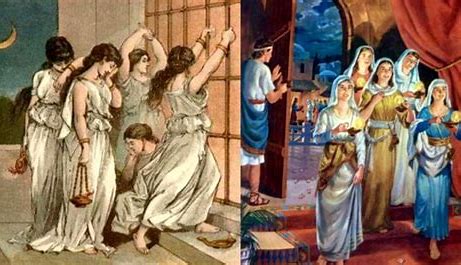
Last Sunday, churchgoers throughout the land heard the parable of the ten virgins, or bridesmaids as they say in today’s lingo. The seven-day wedding feast in ancient times couldn’t begin until the bridegroom arrived. In the story, five wise bridesmaids had working oil lamps when the groom arrived late at night, and they all entered the gate to the feast. The other five foolish bridesmaids were out buying lamp oil and got locked out of the party. In previous preachings, I’d heard Jesus’ explanation of his parable is that we must always be ready, have our lamps lit, awaiting his coming (or was it his second coming?). No wonder I’ve been a nervous wreck my whole life, constantly failing to be ready for Jesus. I really hate parables. 

The church’s new pastor spun the story as a lesson in patience. Be patient because we never know when God will present a reason to throw a party. I had to listen again to him on YouTube because I swear I heard that ominous “Jesus is coming” sermon. This is one of the blessings and curses of old age. My brain holds years-old information, which is a blessing. But that information is a curse when it doesn’t make room for new ideas.

Like with those wily parables.

Joys and Sorrows of a Colonoscopy

Joys and Sorrows of a Colonoscopy

The morning after my last colonoscopy, I stood in line at Starbucks to satisfy a sudden obsession for a flat white, not my usual coffee drink. A familiar tune came through the surround sound subwoofers. My toes began tapping involuntarily until the song’s words remembered my voice from long, long ago and softly fell freely from my lips.

Thunder only happens when it’s raining

Players only love you when they’re playing.

Dreams. Stevie Nicks. I imagined myself wiggling my hips and flailing my arms—an unwise move for a not-so-sure-footed roly-poly 77-year-old.

Feldenkrais teacher Deborah Darr says, “Imagine you’re doing the movements you can’t physically do.” She taught me that imagination can so deeply engage the mind that the body feels like it’s moving when it’s not. So, on my way home from Starbucks, I imagined myself line-dancing down the street humming Dreams.

By the time I got home, I was physically exhausted. I clicked into a meeting of Alcoholics Anonymous on Zoom. I’ve been attending AA meetings for over 50 years and often ho-hum to myself, “I’ve heard this story already…nothing new,” even if I’ve never seen the speaker before in my life. On this day, I zeroed in on the story so wholly that I felt every cheap drink, every disgusting hangover, every regrettable hook-up, and every sickening word of his drunken story. When he talked about getting sober, my stomach balled up, remembering the agony of those early days of sobriety with uncontrollable sweaty shakes and tears. The love he felt from fellow sober alcoholics and for his family sticking with him filled me, too. Love and gratitude seeped into my every pore. 

The growing ball in my stomach erupted at the emotional and physical powerlessness, and I ran to the bathroom and puked. 

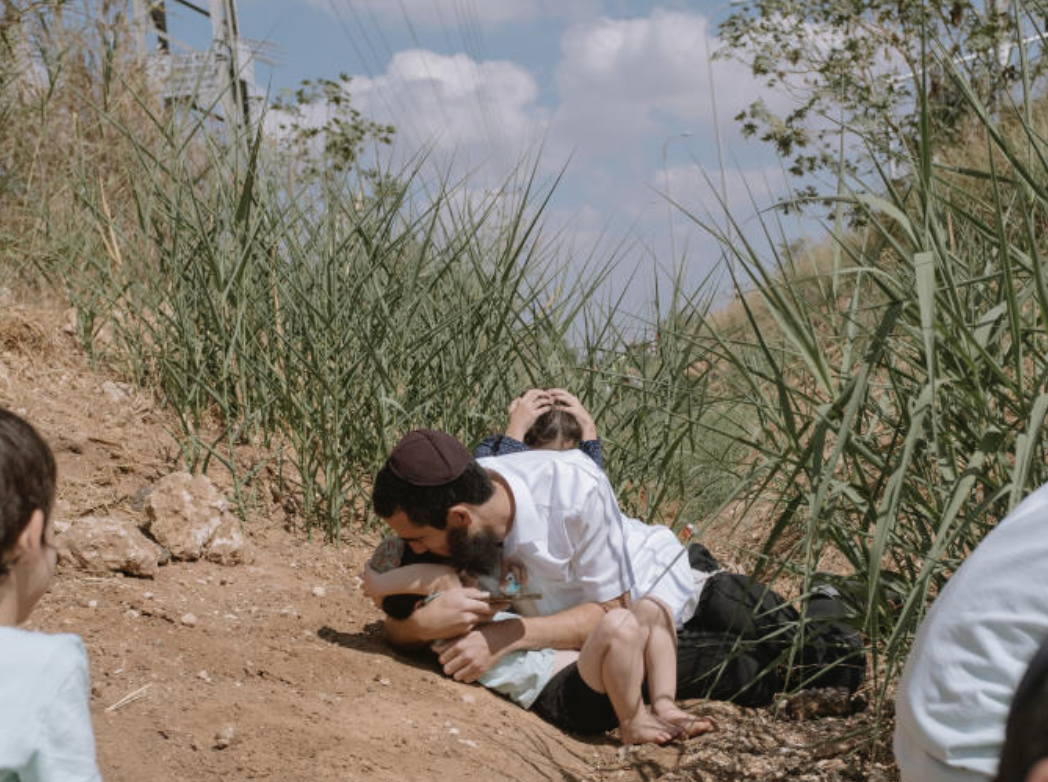
(AP Photo/Dor Kedmi)ASSOCIATED PRESS

Seeking distraction, I turned on the TV. Hamas terrorists had tunneled under the Gaza-Israel border a few days before and riddled Jewish babies with bullets. News outlets had taken a few days to get the images to us. I wept watching the photos and videos, hearing children crying out for their mothers, watching helpless fathers, and reporters describing families on the move. Displaced. Terrified. Confused. Grieving.

I reached in my purse for the forgotten mound of papers handed to me as I left  the “colonoscopy suite.” Was I supposed to read them sooner? I don’t know. But I saw why I was so giddy, twirly, and happy in the morning and so emotionally flattened later. Fentanyl. The doctor shot fentanyl in my arm before snipping a bit of chitterling from my innards. Fentanyl is so powerful that I forgot biopsy results were coming my way.

The doctor sent me a note within a few days. “All clear,” he wrote.

Just one veinful of fentanyl laid down a new neuro path in my brain, allowing the deepest of joys and sorrows. Since then, if I’m tuned in, boundless joy arises from the hope of alcoholic stories—and bottomless sorrow from images of bloodied children being carried to unsafe safety.

Click: Stevie Nicks sings Dreams

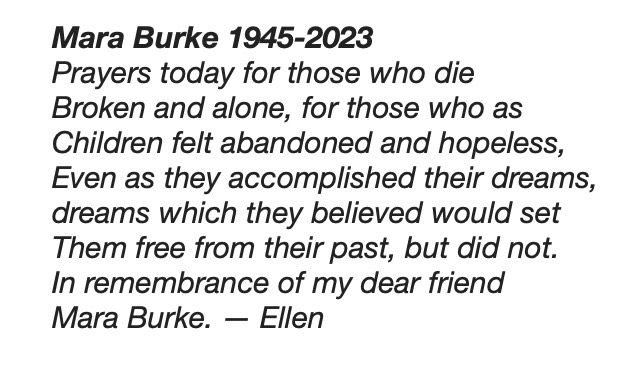
Mara Burke RIP

Mara Burke RIP

On Thursday, March 30, a cousin called to say she’d heard my long-forgotten sister Mara had died. We’ve both heard such rumors over the years and have no way of verifying them. So we shrugged and turned our attention to stories about our grandchildren before saying goodbye. A few minutes later she texted me a post from Mara’s Facebook:

The next morning I sipped coffee with one hand as I clicked into voicemails, emails and texts. A voicemail from the previous day said, ”Yes, ma’am. My name is Frank. I’m a captain with Winchester Police. Uh trying to find some possible information about your sister Mara if you can give me a call back. My telephone number is 540xxxxxx. Thanks.”

Captain Frank said they’d responded to a wellness check nearly three weeks ago, on March 13 and was sorry to say Mara had died. The police couldn’t find any information except an emergency contact on Mara’s health records for one of my other sisters. That number was disconnected.

Their investigation drove them to Facebook looking for clues. Eventually they connected to Ellen, an old high school friend who tried staying in touch with Mara. Years ago I’d given Ellen my phone number during a time when people were still trying to help Mara get sober.

“How did she die?” I asked the Captain.

“The death certificate won’t be available for a few weeks. Nothing suspicious though. No reason for us to ask for an autopsy,” he said.

“Oh. Where’s her body?” I asked.

“At the funeral home. They are concerned about the disposition of the remains.”

The Captain felt he ought to talk to the one quasi-official designated family member whom Mara listed as her emergency contact. I said it might take me a few hours to contact her since I didn’t have her number.

“The landlord hasn’t called us yet,” said the Captain, “but we’ll need to give him a contact.”

“I’m sorry,” I said, “I guess it’s obvious we are all estranged.”

I thanked him profusely and told him to feel free to contact me again if need be.

Mara was the oldest of four sisters. I, the second born, became an unwanted character in her life from the dawn of our family story. As adults Mara and I tried here and there to be loving. She once sent me a textbook, England in Literature, from my high school English class. It has my handwritten notes in the margins. She’d salvaged the book from the rubble of our mother’s home. This cherished gift is one of the kindest gestures of my lifetime. 

But our ancestral roots of untreated alcoholism proved too tangled for Mara to weed through. I arose as an easy target for her perennial unruly emotions, especially after I joined Alcoholics Anonymous.

From her Facebook page, I see that many of Mara’s old friends loved her dearly and tried to poke through her isolation for years with little success. Ellen’s brief eulogy tells me Mara confided in her,  and Ellen loved Mara even in Mara’s brokenness.

That is the most comforting condolence of all—knowing Mara was loved.

Mara Burke, b. February 1, 1945, d. March 13, 2023

Prayers

(excerpted from the November 2022 Grapevine, the International Journal of Alcoholics Anonymous)

My mother’s cousin, Father Long, asked to meet me on the wraparound porch of the1900s-era resort hotel in Spring Lake, New Jersey.

I had recently left my husband and was living at my mother’s house with my two-year-old boy. Assuming Father Long wanted to force feed me unwanted marriage counseling, I hung a defiant roach clip from an anti-establishment leather string around my 22-year-old neck to amplify my hippie ensemble.

He talked about my marijuana use. “Give it up, for your mother’s sake,” he said. I paused. “Are you talking to her about giving up drinking for my sake?”

Father Long started his career as a disciplinarian of an inner-city Catholic boys’ school. Realizing I was no match for him, I scrambled out of the painted wood rocking chair and made a fast exit. I heard him call to me as I walked away, “I’ll pray for you.” 

Father Long spent a few weeks every year near Sea Girt where I lived during adolescence and young adulthood. That summer his vacation on the edge of the Atlantic Ocean was interrupted by my mother’s cry for help. She wanted him to help me. My mother’s lips never parted to pray and I doubt her thoughts ever enter the spiritual realm. On the way home, I wondered how drunk she must have been to ask for help from her cousin, a soldier of God. Had Father Long been summoned to help other wayward children sprung from our very wayward relatives?

A few years later, I made it to Alcoholics Anonymous and, after six months sober, I was asked to speak at a large AA meeting in Montclair. In the meeting, I talked about my inability to stop drinking, stop smoking pot, stop consuming illicit drugs. I welled up speaking of gratitude for my father, who had brought me into the Fellowship.

My father had sobered up at Towns Hospital in Manhattan. He attended meetings on the Upper East Side and had been able to sustain abstinence during the time I was dying way out there in some other dimension of addiction. We hadn’t seen each other for five years. Then he showed up at the public mental institution where I had been sent after I overdosed at 24 years old. He suggested I go to the AA meeting on the grounds of the institution.

After I wrapped up my six-months sober talk at that meeting in Montclair, a petite, pearly lady stood out from a line of well-wishers. She approached and said, “I pray for you every day.” “What?” I asked. “Do I know you?”

“I go to meetings in New York with your father,” she said. “We helped him when he went to see you in the hospital. We told him what to say, to just share his story, what it was like, what happened and what it was like now. Like we do with any other alcoholic—and suggest you go to meetings. A lot of us have been praying for you for a long time.” 

 “And here you are.” 

That was the summer of 1971.

___________________________________________________

NOTE: Father Long was removed from the priesthood in 1995 for sexual abuse. He’s on the Pennsylvania, Maryland and Washington DC, lists of accused priests. He died in 2004.

Remembering Jim Cummins

Remembering Jim Cummins

“I got fired,” he said over the phone one spring afternoon in 1979.

“What? I’ll be right there!” I sprang from my desk yelling, “I have an emergency” and bolted out the front door of the Ontario Street hotel where we both worked—he at the front desk and me in the back office.

Jim Cummins and I were nascent members of Alcoholics Anonymous and I feared the worst—that he was drinking again. Lately he had been showing up too late for work, taking too many smoke breaks and wisecracking about too many hotel guests.

Jim’s furnished one-bedroom on Delaware had lower-floor gloom characteristic of downtown Chicago apartments. The coffee table, overstuffed brown couch and chair blended together into the beige carpeting. A glass ashtray loaded with butts sat atop newspapers strewn all over the coffee table. No beer cans. He hadn’t shaved. His shirt was wrinkled and hanging out of his trousers but otherwise he looked the same guy I’d seen two days earlier.

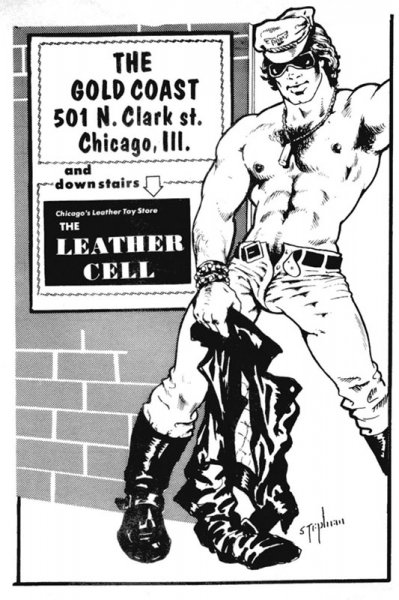
“Sit down and read this,” he said, handing over a Sun-Times opened to an article buried in the back of the paper. The blunt headline read, “Gold Coast Leather Bar Raided”. The article contained facts about the location, the owner, a description of the leather get-ups and the names of eleven men who were arrested. Jim was listed. I read, then read again, looking for an explanation. Abruptly I burst out laughing and fell headlong into uncontrolled hysterics as I slid off the brown overstuffed.

“What the hell were YOU doing there?” I said from the floor. 

“My dear, I’m a homosexual. I was participating.” 

“You are NOT! What? Were you looking for someone?”

Jim said he thought I would giggle at the news but he didn’t expect he’d have to convince me he was gay. We talked long into the night about the history of his secret. He had been expelled from the seminary for improper behavior, served in the Army, was married, had a child, divorced, worked in the newspaper business, was an actor, voted Republican—all the while hiding his true nature. Beer and gin helped wage the battle against his Irish-Catholic guilt until he hit bottom and sobered up. 

When our employer, the hotel manager, read the article he promptly called Jim and fired him. Jim joined others from the raid in a class action suit against the city, but he was gone before it came to trial. Mayor Jane Byrne ended police raids on gay bars after her 1979 election, the same month as Jim’s arrest.

Jim stayed sober but had a difficult time landing another job. He started dating, tried but failed to form a lasting relationship, lost his apartment and lived on my couch for a while. I lost track of him. He’d moved to Washington DC where he cooked meals for homebound HIV patients. In 1991 I visited him at the Veterans hospice in Washington, the day before he died of AIDS. He’s the only dead person I ever said good-bye to.

Atonement: Bird on the Wire

Atonement: Bird on the Wire

In the late 1970’s I worked at a run-down residential hotel that had been sold and was about to be renovated. The legions of accountants, lawyers, contractors and financial schemers confounded even the notable. I managed to keep them all straight, pass information one to another and generally play the know-it-all role I like.

The lead accountant, Mel, asked if I had any friends who could be temporary helpers on some new events his firm was staffing—the Taste of Chicago, ChicagoFest and Art Chicago Expo.

“Sure,” I said, “How much will they get paid?”

“Free entry, all the food they can eat, a T-shirt and a poster.”

Having just accumulated a whole batch of new friends in Alcoholics Anonymous, I knew plenty of unemployed sober oddballs hungry for food and fun as ticket-takers and money-changers. Next thing I knew, Mel told me I had to meet “the guy” in charge.

“Come to Temple Beth Israel on Yom Kippur.” Mel said.

“What? What’s that?” I said, “Am I allowed? What do I wear?”

“Everyone’s allowed. Day of Atonement. It’s the best time to do business.”

I tried to sneak into a seat in the back and look around for Mel. After lengthy  prayers and singing, there was an intermission. Mel appeared at my side, grabbed me by the elbow and said, “Let’s go.”

All the congregants rose up, walked around, talked and laughed and “did business”. Mel introduced me to “the guy” who headed up one of Chicago’s Big Eight downtown accounting firms.

“How many people you got?” The guy asked me.

“Twenty or so,” I lied.

“Good.” Bring ‘em to Navy Pier on Saturday and get ‘em signed up. We’ll take it from there.”

In the years since, I’ve practiced atonement often — not just once a year, but almost everyday. At a recent book group studying The Jewish Annotated New Testament, I inched into a discussion of Ken Burns’ documentary, The US and the Holocaust.

“Someone told me the trouble with Jews is that they didn’t assimilate.” I said.

“The. trouble. with. Jews?”  One of the Jewish participants admonished.

“Do you hear what you’re saying?”

“I’m so sorry,” I said. I then attempted to overcompensate the sin of victim-blaming by blabbering about assimilation, of which I know nothing.

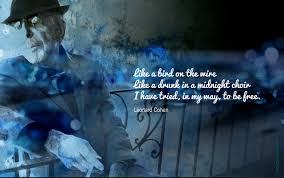
I once asked a musician friend to sing Leonard Cohen’s Bird on the Wire at my funeral.

“No.” He replied.

“Aw, c’mon. Just say yes. I won’t know. I’ll be dead.”

“Better to atone when you’re alive.” He said.

I bowed to my ignorance and he agreed to sing just these words.

Like a bird on the wire

Like a drunk in a midnight choir

I have tried in my way to be free

Like a worm on a hook

Like a knight from some old-fashioned book

I have saved all my ribbons for thee

If I, if I have been unkind

I hope that you can just let it go by

If I, if I have been untrue

I hope you know it was never to you

God bless Leonard Cohen 1934–2016.

Listen to Bird on the Wire here.

MLK: The Drum Major Instinct

MLK: The Drum Major Instinct

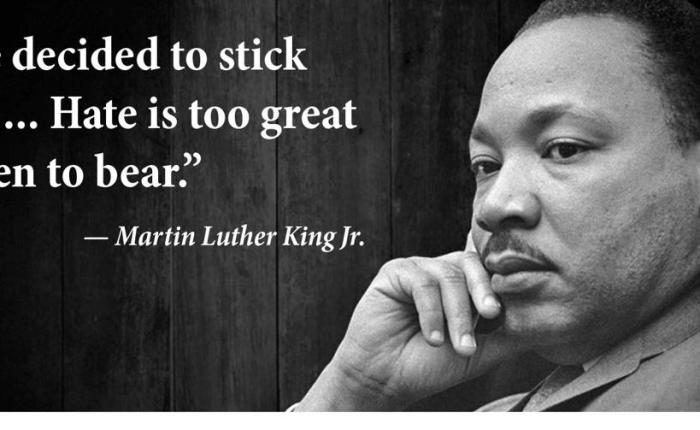
Fifty-four years ago Martin Luther King, Jr. delivered a prophetic sermon he called the The Drum Major Instinct. He riffed off a passage in the New Testament where Jesus’ disciples got mad at him because they wanted to be credentialed leaders, to be praised for their importance, the “drum major instinct”.  In the 1940s the founder of Alcoholics Anonymous, Bill Wilson, wrote in the Twelve Steps that this desire for an important place in society, the “social” instinct, is necessary for community survival. Both men cautioned that this natural god-given instinct, unbridled, can turn on us, become an obsession for power and supremacy and eventually distort our personalities. 

I know a bit about the desire for attention. During these pandemic shutdown months, online Zoom meetings have become the stage and meeting room for events. Last year I was the featured speaker in one square among nearly three hundred muted souls on Zoom. At the end all I heard was thank you from the host. People wrote kindly in the Chat but I still wish I had heard that applause. My book, In That Number, was published in October 2020 and the enthusiasm I needed to promote it waned, due to—you got it—no applause.

Donald Trump heard a lot of applause throughout his entire presidency, even during the months most of us were silent following the stay-at-home orders of Dr. Anthony Fauci, one of Trump’s Coronavirus Task Force leaders. Whew! Trump’s drum-major instinct rampaged so out of control that he still says the Democrats stole the election he lost to Joe Biden.

MLK:  “… the final great tragedy of the distorted personality is that when one fails to harness this instinct, he ends up trying to push others down in order to push himself up…by spreading evil, vicious, lying gossip on people…”

Trump spread evil, vicious lies to his duped white followers continually until they finally exploded into a blood-and-guts frenzy on January 6, 2021. They sacked the US Capitol in an effort to thwart the official declaration of the election results. People died. Martin Luther King, Jr. nailed this aberrant behavior in a prescient accusation: his drum-major instinct makes him think he is somebody big because he is white. 

MLK and Bill Wilson remind us we all have the drum-major instinct. We all want the admiration of others. They caution us to keep it in check, to watch out we don’t let our drum-major emotions go awry, that we don’t act superior to others. I confess I do feel and act superior to the insurrectionists, the white fundamentalists, the angry male mob who sieged the Capitol. I condemn them in conversation, even post condemnations on social media. Experience tells me if I don’t stop, I’ll soon be in a full blown mire of self-loathing, questioning how I got there. King and Wilson both offer an ancient solution to keep my own potential soul-sick personality at bay. Love and service. Be a drum major for love. Help others.

I’m open to it. That’s the best I can do today.

(originally published MLK Jr. Day 2021)

_________________________________________________________________________________________

The Drum Major Instinct,” Sermon Delivered at Ebenezer Baptist Church, Martin Luther King, Jr., February 4, 1968, Atlanta, Ga. Listen Here: http://okra.stanford.edu/media/audio/DrumMajorInstinct.mp3

MLK: The Drum Major Instinct

MLK: The Drum Major Instinct

Fifty-three years ago Martin Luther King, Jr. delivered a prophetic sermon he called the The Drum Major Instinct. He riffed off a passage in the New Testament where Jesus’ disciples got mad at him because they wanted to be credentialed leaders, to be praised for their importance, the “drum major instinct”.  In the 1940s the founder of Alcoholics Anonymous, Bill Wilson, wrote in the Twelve Steps that this desire for an important place in society, the “social” instinct, is necessary for community survival. Both men cautioned that this natural god-given instinct, unbridled, can turn on us, become an obsession for power and supremacy and eventually distort our personalities. 

I know a bit about the desire for attention. During these pandemic shutdown months, online Zoom meetings have become the stage and meeting room for events. Last month I was the featured speaker in one square among nearly five hundred muted souls on Zoom. At the end all I heard was thank you from the host. People wrote kindly in the Chat but I still wish I could hear that applause. My book was published in October 2020 and the enthusiasm I need to promote it has waned, due to—you got it—no applause.

Donald Trump heard a lot of applause throughout his entire presidency, even during the months most of us followed the stay-at-home orders of Dr. Anthony Fauci, one of Trump’s Coronavirus Task Force leaders. Whew! Trump’s drum-major instinct has rampaged so out of control that he still says the Democrats stole the election he lost to Joe Biden.

MLK:  “… the final great tragedy of the distorted personality is that when one fails to harness this instinct, he ends up trying to push others down in order to push himself up…by spreading evil, vicious, lying gossip on people…”

Trump spread evil, vicious lies to his duped white followers continually until they finally exploded into a blood-and-guts frenzy on January 6. They sacked the US Capitol in an effort to thwart the official declaration of the election results. Five people died. King nailed this aberrant behavior in a prescient accusation: his drum-major instinct makes him think he is somebody big because he is white. 

MLK and Bill Wilson remind us we all have the drum-major instinct. We all want the admiration of others. They caution us to keep it in check, to watch out we don’t let our drum-major emotions go awry, that we don’t act superior to others. I confess I do feel and act superior to the insurrectionists, the white fundamentalists, the angry male mob who sieged the Capitol. I condemn them in conversation, even post condemnations on social media. Experience tells me if I don’t stop, I’ll soon be in a full blown mire of self-loathing, questioning how I got there. King and Wilson both offer an ancient solution to keep my own potential soul-sick personality at bay. Love and service. Be a drum major for love. Help others.

I’m open to it. That’s the best I can do today.

_________________________________________________________________________________________________________________

The Drum Major Instinct,” Sermon Delivered at Ebenezer Baptist Church, Martin Luther King, Jr., February 4, 1968, Atlanta, Ga. Listen Here: http://okra.stanford.edu/media/audio/DrumMajorInstinct.mp3

My book, “In That Number” is available at ReganBurke.com, Amazon.com or in your favorite independent bookstore.

Speaking of God…

Speaking of God…

I’m not sure what day or year or even decade I stopped being ruled by men. Feminist pop psychology (and real shrinks) used to tell me I “allowed” men to rule my life. Of course I was roped into that, having been raised in the patriarchal Catholic Church where women are still not allowed to be priests. God was always a man and because of that men were always in charge. Recovery from those old ideas was precipitated not by strong women helping me see the light, but by some very important men acting badly.

My Amazon Dot is tuned into the impeachment vote of President Trump. He’s the worst example of male dominance I’ve ever known, but he’s an extreme case. I’ve experienced Christian cultist men telling me God wanted me to submit to a physically abusive husband; a married lover who insisted I wait by the phone on Christmas for his call; a father who dragged me into fraudulent schemes; and, bosses (Gary Hart and Bill Clinton) who got caught with women-not-their-wives. To paraphrase Nancy Pelosi, “I don’t hate them. I pray for them.”

It’s true. I’ve been taught by the Twelve Steps of Alcoholics Anonymous to pray for people I don’t like (or, more likely, who don’t like me). The words I use in prayer for God’s gender are still masculine though. To be modern, I could rant publicly against male-centric words like “Lord,” or mind my manners and quietly substitute the more gender-neutral (or is it gender-inclusive?) “God.” I want to do that because these days I think of God as non-binary, neither male nor female.

I pause to see She-He-It in the yellow leaves of the honey locust fluttering down in front of me when I walk Henry-the-Dog. I hear They-Them when the crows caw. I even smell Her/Him/Them in the spring (what are those fragrant shrubs called?). These delicate manifestations of God are indeed gender-neutral.

But my senses play tug-of-war. The Bible rarely shows these versions of God. Just as I see the streets of Edinburgh when reading Ian Rankin mysteriesOIP.oB0fL0JIYA1IHyc9P5Ik4AHaEK, I see God as a man when reading the Bible. I visualize men—Jehovah, David, the king on his throne, the Father, the Lord. God the man made a covenant with David the man. David’s seed, not his eggs will rule as kings, not queens, from generation to generation. 

The subtler Biblical images of God as a mother caring for her children undergird my faith that God will always be, always live and always love. That female-male God who loves me deeper than I can visualize, who enfolds me at the still point, who sees me as perfect and lets me be. That is the God whose help I seek, whose direction I want, whose words I hear. I sing to that God.

In another world, I will know God as intersex, non-binary, genderqueer, agender, gender fluid, androgynous, bigender, multigender or demigender. In this world, I await David’s seed to change the God-man language to align with my gender neutral spirit.