Not Dead Yet

Not Dead Yet

(written for Skyline Village Chicago March-April 2024 newsletter)

Robert Kramer, 74, talking to students at the University of Southern California: “You have far more at stake in changing how we approach aging than I do. You are far more likely, statistically, to live past 100 than I am. If you don’t change society’s attitudes about aging, you will be condemned to lead the last third of your life in social, economic, and cultural irrelevance.”  

A KFF News article,  Do We Simply Not Care About Old People? lays out the blatant disregard for our citizen elders, citing covid-19 statistics.

Around 900,000 older adults have died of covid-19 to date, accounting for 3 of every 4 Americans who have perished in the pandemic. In the last week of 2023 and the first two weeks of 2024 alone, 4,810 people 65 and older lost their lives to covid — a group that would fill more than 10 large airliners.

Yet, where is the outrage? Experts in the field of aging from around the country all agree ageism has always existed, but the pandemic elevated an intense, hostile prejudice against us.

“The implied message to older adults is: ‘Your time has passed, give up your seat at the table, stop consuming resources, fall in line,’” said Anne Montgomery, 65, of the National Committee to Preserve Social Security and Medicare. She says that baby boomers can “rewrite and flip that script if we want to, and if we work to change systems that embody the values of a deeply ageist society.”

In the years I’ve tried to advocate against ageism, I’ve heard everything from “I’m 80 years old, and I’ve never experienced ageism” to “Ageism? What’s that — not admitting how old you are?”

Gay rights leader Harvey Milk famously said in the 1970s, “Come out to your parents.” He knew, and he was right, that if people got to know gay people (can I say “queer” now?), their bias toward them would diminish.

Anti-ageism advocates say, “integrate, don’t separate.” The best way to overcome the ageist stigma is for the people who are stigmatizing you to get to know you. Don’t put “old” in the closet. Go out. Speak out. Be old.

Chicago has separated the old from the rest of the population — in housing, in social groups, in churches, and in health care. “They” don’t see us. ‘They” look through us. We defend ourselves by saying: I wrote a book! I walked the Camino! I volunteer! I have wisdom! I babysit! Walk dogs! Ride my bike!

Reminding people that we are still here, part of the human experience, walking through life like everyone else at any other age, is the best way to flip that script, not by bragging about our credentials but by our visible presence. And when we can’t hear or when our brain energy gets depleted at 3:00 in the afternoon, we ask people to speak up, and we excuse ourselves to take a nap. 

We’re old. Say it. Be it. It’s OK.

Is This Funny?

Is This Funny?

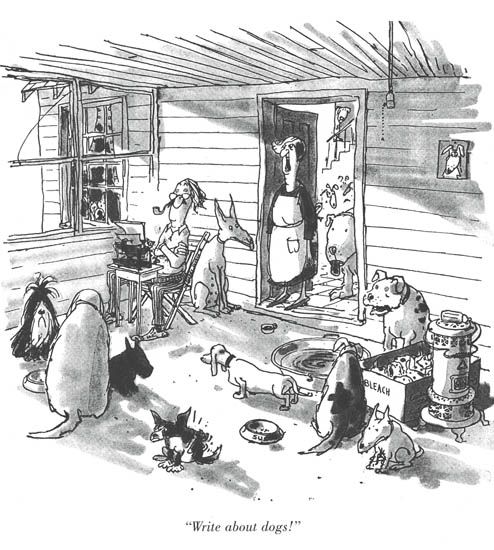
George Booth, the New Yorker cartoonist who died in November 2022, once created the funniest cartoon in memory. First of all, Booth’s silly line drawings were and remain funny enough–they don’t need captions. But the one I so love is a man sitting at his typewriter on a dilapidated porch wistfully smoking a pipe. Nine or ten dogs of different sizes and shapes laze around. There’s a bulbless socket hanging from the ceiling. His wife stands in the doorway. Caption: “Write about dogs!”

Ok. Ok. It’s not the funniest cartoon to you. But for me, a dog owner and a writer, it’s hilarious.

Obviously, the cartoon man has shouted, ‘What should I write about?’  ‘Write about dogs’ is a funny way of saying ‘write what you know’, writing’s first principle. Even fiction holds truths. Funny conversations and tales of goofy adventures are all around, like the dogs in Booth’s cartoon. I hesitate to write them because I don’t want my blog-reading friends to know how amusing their lives are to me. And what if the writing isn’t funny?

This summer I attended a free Comedy Writing Workshop taught by a professional, very intuitive, improv comedian. We didn’t have to pretend to be a tree or a bologna sandwich, though that would’ve been a kick; we simply pretended we were at job interviews and went back & forth with questions and answers. We could have answered any old way, and indeed creativity was encouraged, but everyone in this group seemed to answer like their jobs were on the line for real. And they. were not. funny.

Me? I said I was fired from my last job because I attempted to kill my husband with a stapler when he came to the office for a surprise lunch. Funny? I thought so, but no one laughed. Perhaps I actually look or sound like a murderer.

The comedy teacher smartened up to this over-55 group right away. She tailored the two-hour class to the cognition level of the twelve students she had before her. And still, no one was funny.

A friend of mine who’d recently been examined for dementia gave permission to the memory doctor to ask me how my friend had changed. Without hesitation, I answered, “She’s really funny but it’s taking her longer to get the punch line.”

Is this part of it? Aging, I mean.

Most researchers I skimmed agree that age-related cognitive decline contributes to difficulty with “humor comprehension”. The list of symptoms includes:

  • An inability to understand satire
  • A childlike sense of humor or enjoyment of slapstick comedy
  • Laughing at things that are not particularly funny, such as a dog barking
  • Taking jokes literally
  • Making inappropriate comments about strangers in public

George Booth created his last New Yorker cartoon ten months before he died from complications of dementia at 96. The cartoon cover is a goofy white dog glancing at a clock. Is that funny? A dog checking the time? 

If not, George and I share the same demented symptom of chuckling at things that aren’t particularly funny

.

Get A Grip

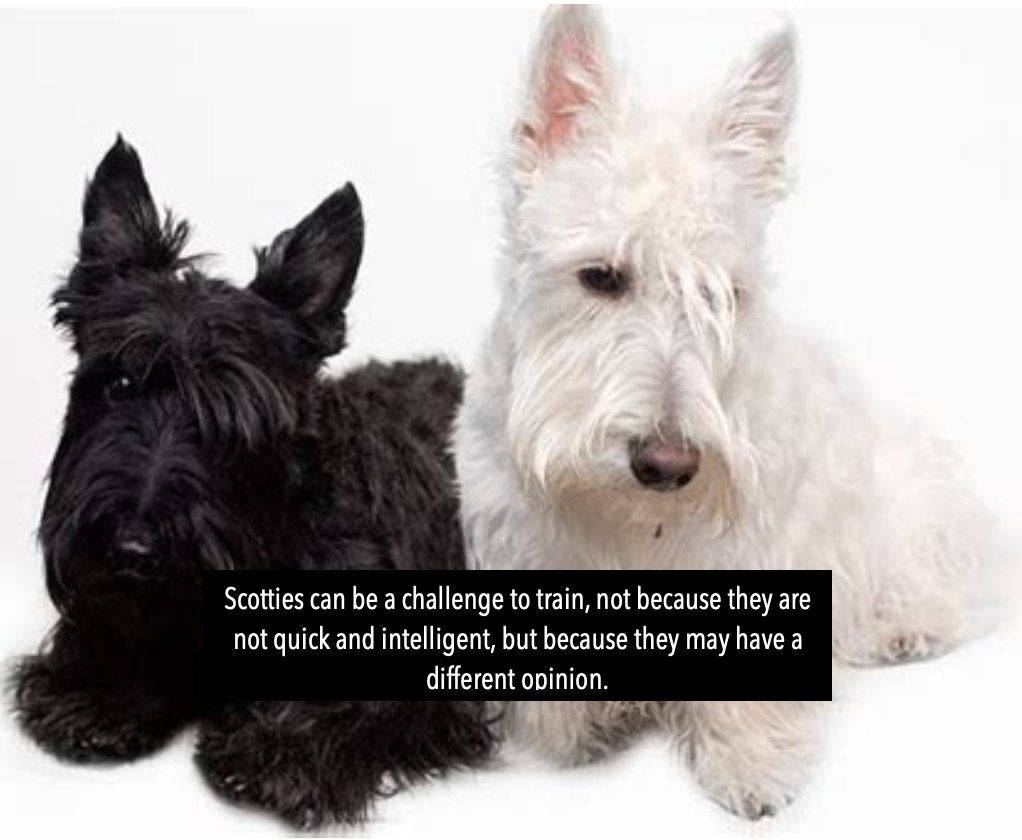
Over the years, I’ve acquired one untrained dog after another. I dismissed the American Kennel Club admonition, “Scottish Terriers are hard to train” as if it didn’t apply to me, Scottiesbecause I simply love them. The AKC is right, of course. Scotties are hard to train in all
areas particularly in their nasty habit of “marking” any old spot they please including inside, on the carpet. My last Scottie yanked so hard on his end of the leash to protect me from sidewalk dogs that I’d lose my grip as he went on the attack. I’d been to court twice for his biting dogs and their owners. He was finally sentenced to permanent muzzling but before I could carry out his punishment, five-year old Ozzy inexplicably and suddenly died.

After Ozzy’s death, bottomless-pit grief drove me to vow to be forever dog free. This made the decision to rip up the stinky carpet an easy one. I replaced the old stained wall-to-wall with Home Depot’s TrafficMASTER Luxury Vinyl Plank Flooring. No more dogs with their curious canine mating rituals. No more carpet cleaning. And no more vacuuming, which I hated even more than the dentist’s three-hour procedure to extract my ankylosed tooth. I didn’t need to worry about traumatizing the dog with such a drastic change. Ozzy was dead. I’d never have another. I didn’t know I’d parked the idea of a dog in a sub region where ideas slow cook before the boil.

The first week of the new cherry colored hard floor, one of my favorite CB2 glasses slipped from my grasp and smashed to pieces. The next week another fell out of my hand to the floor.

The Marta glass collection from CB2 has a cult-like following. The glass itself is micro-thin. Your lips close in on the minimalist rim with ease. Liquid doesn’t sneak out of the edges between the glass and your cheeks, dribbling down your neck onto your new pink velvet blouse. The sides are smooth and straight; no prismatic mystery of what’s inside. They are a joy to embrace, these perfect affordable glasses. I loved to open the kitchen cabinet and see my whole Marta collection lined up like gossamer terra cotta warriors. 

The hard floor brought a hard reality. With carpet, when my hold weakened on breakables, and they dropped, they didn’t break. With the hard floor underfoot many treasures have slipped out of my grasp and smashed to the ground before I remembered to get a grip. Glass slivers embedded in my feet led me to question what was wrong with my hands. 

Hand grip strength is a test the doctor performs on the aging. Greater grip strength equals greater mortality. There it is. That old mortality jumpin’ up trying to scare the bejesus out of me, tempting me to obsess over how long I have to live.OIP.G7cFtu7ChS0N98F2VAjjqAHaFj

Only one of my treasured glasses have survived. All is not lost though. I have a new well-trained non-Scottie dog who doesn’t test my impotent grip on his leash. And I’ve softened  my grasp on mortality, leaving the fear of dying for another day.


Good Memories by Veronica Cook

Good Memories by Veronica Cook

9384D35F-AB47-40E6-B9BE-4ECC850A08F1_1_201_a


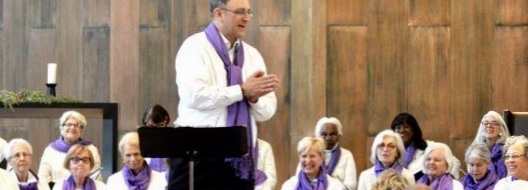
Guest blogger Veronica Cook and I share in the joys and benefits of the Good Memories Choir in Chicago. Veronica reflects here on her musical life.  


When I was a child, we weren’t what you’d call a musical family, but there were always songs. It might have been my big sister boogying around with her finger in the air to Jeepers Creepers, Where’d you Get Those Peepers. Or my mother and I humming along with a light opera song on the radio (O Rosemarie, I  love  you…). All through my life there have been refrains to hum. However in the last few years, while a tune may have played in my head, my voice was having a hard time matching it. Wonderfully enough, it’s coming back little by little because I’ve joined the newly-formed Good Memories Choir.

I now can hear myself carrying the harmony.

At the beginning of each new concert season comes a whole new repertoire of tune fragments to spin around in my brain. At Christmas it was the haunting lyrical tenor of Ose Shalom; the beginning of White Christmas …there’s never been such a day-ay, in Beverly Hills L.A…; and the upbeat conclusion of Go Tell It on the Mountain …that Jesus Christ is born-orn, that Jesus Christ is born-orn.

As I reflect on my choir, a theme emerges that is much more than any one song or one concert. In fact, it’s more than even the music. Founders Jonathan and Sandy Miller have begun a far reaching and profound community. It is heartening to recognize each of us has a hand in shaping this new creation.

The Good Memories website describes the choir as “… a fun, upbeat community where people with early-stage memory loss and their care partners sing together, enjoying familiar music they love.” Yet, there are no one-size-fits-all categories describing the folks in this choir. Unique life circumstances puts everyone at a different way-station along the journey into aging.

I’ve become aware that in the struggle with physical and cognitive decline, we differ only in degree. Likewise, the loneliness and isolation that can so often accompany the onset of memory loss is something that all of us experience in some form. The support, encouragement, the warmth of friendship that we exchange are grace-filled gifts for us all.

Tuesday morning gatherings that get us started seem deceptively simple and down to earth. We are welcomed by the familiar smiles of fellow choir members as we gather in our rehearsal room. We cluster around the coffee pot, savor an array of sweet and savory homemade snacks. There is a collage of expectant faces, the beaming smile of one, the delighted greeting from another, the oohs and aahs over special treats. Compliments are exchanged: earrings, a new coat, a sweater pattern. We catch up with each others’ news. We are at home here, surrounded by new friends. And then it’s time to warm up with Oh What a Beautiful Morning! 

Always front and center is the music. Singing! Having come close to my voice deserting me, I glory in what this means: making a melody emerge from within my being, and even better, to make it harmonize with others. Joining our voices in song is central. This is the precious gift we give and receive from each other.

I stole a look at the Spring 2020 Good Memories repertoire. I invite you to come hear us on May 12th at 12:00 noon, Fourth Presbyterian Church, 126 East Chestnut St, Chicago. You’ll hear Waitin’ for the Light to Shine, Kol Haneshama Tehalel Yah Bonia Shur, Storm is Passing Over, What a Wonderful World, Long Ago and Far Away, Bridge over Troubled Water and the finale that says it allHow Can I Keep from Singing! 


Join a Choir! If you live in the Chicago area, click here.

If you live elsewhere, check out the worldwide Giving Voice Initiative (GVI). If you don’t see a chorus listed near you, start your own!  www.givingvoicechorus.org.

A6B6723F-42BF-4BF9-BCC8-23831959EF4A_4_5005_c

Just in Time, I Found You Just in Time

Just in Time, I Found You Just in Time

I used to ignore articles that say cognitive decline slows if I eliminate sugar or play bridge. I found work-arounds instead. When I lost my numbers I set up automatic bill payments with the bank. I can never remember if choir practice is on the fourth or fifth floor; I simply follow my fellow singers. And I rely on my phone or friends to tell me the dates and times of my appointments, events and plans.

Memory loss has been gradual. I’m in good company though—my friends and I laugh Unknownwhen we can’t remember the name of the movie we just saw. But when I started hyperventilating with disabling anxiety in airports and receiving bizarre Chinese packages I’d ordered from ads on Face Book, I called Northwestern Hospital to see a

neurologist.

“Someone will call you back,” the receptionist said.

“Can’t I just make an appointment?”

“No. Someone needs to do an intake over the phone first.”

“I’ll wait.”

“No. Someone will call you.”

I missed the callback. Called again. Missed again. And again.

I felt like I was racing against the clock. Processing the TV news was becoming difficult. It moved too fast and I couldn’t retain information from one sentence to the next. To understand NPR’s Morning Edition, I had to stop getting dressed or making my bed, sit down with a cup of coffee and listen. Reading the news wasn’t impossible, just clunky. Some words on the page faded. Some didn’t. I went to the eye doctor three times within six months. She told me there was nothing wrong with my eyes or my vision.

I consulted Dr. Google. Indiscriminate shopping, getting lost, difficulty with numbers or language as well as forgetting dates, names and places are all a part of the normal aging process called cognitive decline. Researchers say eat right, exercise, socialize and learn something new to keep your brain from slipping past the point of no return. Some say singing actually heals the brain, so I joined the Good Memories Choir.

IMG_1112
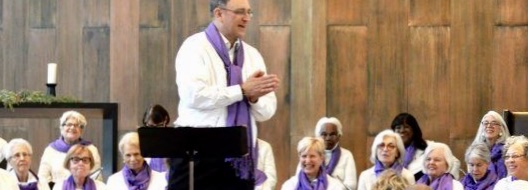
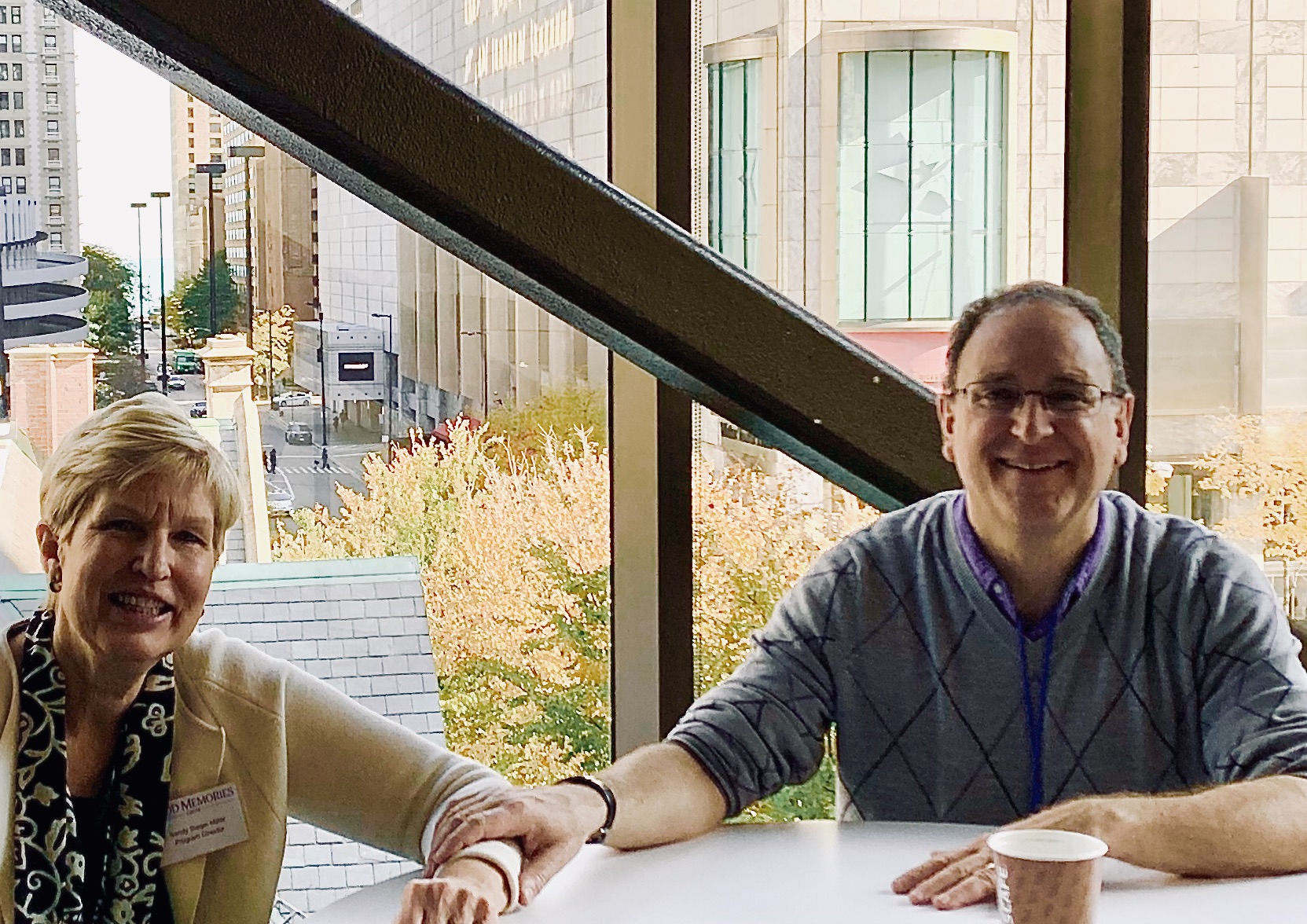
Jonathan and Sandy Miller • Founders of Good Memories Choir               Fourth Presbyterian Church • Chicago

On the first day I hesitated accepting my songbook. Would I remember to bring it to weekly rehearsals? Would I even remember the day and time of weekly rehearsals? People asked me what “part” I sang. I had no idea.

“I have to sing the melody,” I said.

Alice sat next to me in the last row of the soprano section. I love to sing along but I know nothing about music. The singing was running ahead of me—I couldn’t catch the words. After singing a few songs, Alice showed me the soprano lines and suggested I highlight the words. She told me to sing the notes with the stems pointing up. I focused. I was learning a new language.

Good Memories is a choir of people with early-stage memory loss, their care partners and volunteers. I met the Google criteria for cognitive decline but I didn’t have an official diagnosis. I joined as a volunteer, unsure where, or even if, I fit. After singing every week for over a year, I never forget my songbook, the lyrics are nailed to the page and I follow the notes.

One of the first songs we sang, The impossible Dream, seemed impossible for me. There were too many words too close together. At the concert I sang every word. And Alice whispered, “You made it.”

Yes, I did. Just in time.


Learn more: Five Symptoms of Cognitive Decline

Join a choir! Jonathan Miller, Artistic Director of Good Memories Choir will help find one in your area. Contact him.


Treat yourself. Watch Judy Garland sing Just In Time

Shallow, I’m Into The Sha-la-la-low Now

When the attendant told me I was at the wrong gate, I froze. I’d been at Midway Airport for two hours waiting to fly to Salt Lake City for my granddaughter’s 2018 graduate school graduation. My vision blurred, my legs shook and I gaped at him without speaking. I actually couldn’t hear him. Someone grabbed my arm and raced me over to the correct gate just before the jetway closed. Inside the plane, I was escorted to Row A
where they keep an eye on people. th-4

I traveled twice more that summer. Once I was in the wrong TSA line, so confused that a stranger brought me to where I needed to go, again. I’ve since developed a phobia, thanks to nightmarish remembrances of Tom Hanks in the movie Terminal—about a man who lives in the airport after he is denied entry into the US.

A friend who works for O’Hare tells me airport workers regularly experience confused old people wandering around lost and panicked. I’ve traveled a lot in my life but familiarity with airport commotion holds no weight now.

When I first retired, I was unsympathetic to people with cognitive disorders. I joined the morning exercise classes at church but not to make friends. I told myself I wasn’t like those old people. Well, those old people have subsequently shown me how to be old, have compassion for those who talk slower than I do, who will never remember my name nor I theirs, nor the title of the book we just read or the movie we all saw. Our get-th-7togethers are often hilarious games of 20 Questions where we all guess what someone is trying to remember.

There’s just not enough room for all the bits lodged in my aging brain. A mysterious natural phenomena controls the shedding and changing of my grey matter, like menstruation and menopause in my body. Trouble is, the shedding seems to be more active these days. Oh sure, curiosity fills my brain with new information but its cells refuse to let those memories form and what I learned yesterday is soon forgotten.

One technique I use to block braincell destroyers is to ignore anxiety-producing articles that say cognitive decline slows if I eliminate sugar or learn chess. Perhaps the content is correct, but I’m possessed of my own version of old age, not a researcher’s cookie-cutter version. Similarly, I cast off brain-shrinking agitations delivered by younger friends who tsk me for walking too slow or for asking them to speak up. 

However, I love music so I responded to an article about choir singing strengthening the memory and joined the Good Memories Choir. Singing won’t get me back in airports, but learning music keeps me attached to the real world. In Bradley Cooper’s remake of A Star Is Born, Lady Gaga sings about the love of the two main characters as “far from the shallow now,” as if the brain has no choice but to deepen the couple’s experience. In my case, like the reversed flow of the Chicago River, I have no choice but to spill out of the deep and into the shallow now.

___________________________________________________________

For those who don’t understand my title, I give you, with love, Shallow