Is Scott Galloway out of Touch?

FeaturedIs Scott Galloway out of Touch?

For the first time in my life, I attended a Sunday service at a Unitarian Universalist Church, to see Chicago’s mayor, Brandon Johnson, in dialog with the pastor. I was curious to hear what this progressive Black mayor had to say to a progressive Northside (White) church.

The pastor began the service with an announcement.

“The Unitarian Universalist Church was established by and for people who do not believe in hell.”

“Whaat?” I was so startled I hardly heard the rest of the preamble. I don’t believe in hell. No one I know believes in hell. But I’ve never heard nor would I ever expect to hear such good news from any church pulpit. 

But wait, there’s more good news! The “UU’s” reject original sin, believe in a God who loves and redeems all human beings, and trains congregants in social justice work. These are my beliefs too.

The bias I’ve had against the Unitarian Universalist Church stems from old thinking that Unitarianism is a heretical religion because they don’t display a cross. Where did I get that crap? Since I’ve been attending a Presbyterian Church for over 45 years, it must have slipped into my head when I was half asleep some Sunday morning. 

Speaking of old ideas, on Friday, December 5, podcaster Scott Galloway responded to a young man who asked:

“How do I get more involved in politics?”

Galloway said “… because young people don’t vote, old people keep voting themselves more money, right? $40 billion child tax credit gets ripped out of the infrastructure bill, but the $120 billion cost of living adjustment for Social Security flies right through.

…our old people have figured out a way to vote themselves more money, and the fact that people under the age of 18 don’t vote, the budget reflects values, and our values are that we don’t really love our children.”*

This is a typical Scott Galloway motivator: money. He will happily reveal how much he’s worth and how he manipulated the modern system to get there. But his statement pitting the young against the old using the antiquated idea that we old citizens are sapping federal dollars from the young shows a decided lack of sophistication and reality. 

First of all, we want young people to succeed. We were young Pete Buttigieg’s biggest voting bloc, long before he announced his Gray New Deal in Iowa 2020. We vote for SNAP and child tax credits. We volunteer at food kitchens, tutor at public schools, babysit our grandchildren and are worried about ours, yours and future generations.

Secondly, we pay. We will pay the government $202.90 a month in 2026 for Medicare Part B, which covers doctor’s visits. That’s a 9.7 percent increase from 2025. We count on the Social Security Cost of Living Adjustment (COLA) to offset that Medicare increase. But in 2026, the Social Security COLA is only a 2.8 percent increase, posing a hardship for Social Security recipients who live check to check in this era of (non) affordability.

Third, don’t we all know that the way young people get involved in politics is to volunteer? What? Is that just a Chicago thing?

After 40 years, curiosity brought me, 79 years old, to an unexpected new idea about the Unitarian Universalist Church. 

Let’s hope Scott Galloway, 61years old, becomes curious enough to come to a new idea about how the real world works.

______________

You can find Scott Galloway’s email address here:

*The Prof G Pod with Scott Galloway: How to Get Involved in Politics, How Scott Galloway Writes, and How He Follows the News, Dec 5, 2025https://podcasts.apple.com/us/podcast/how-to-get-involved-in-politics-how-scott-galloway/id1498802610?i=1000739823645&r=196.38 This material may be protected by copyright.
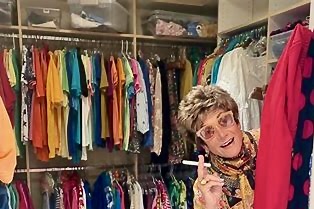
Not Dead Yet

Not Dead Yet

(written for Skyline Village Chicago March-April 2024 newsletter)

Robert Kramer, 74, talking to students at the University of Southern California: “You have far more at stake in changing how we approach aging than I do. You are far more likely, statistically, to live past 100 than I am. If you don’t change society’s attitudes about aging, you will be condemned to lead the last third of your life in social, economic, and cultural irrelevance.”  

A KFF News article,  Do We Simply Not Care About Old People? lays out the blatant disregard for our citizen elders, citing covid-19 statistics.

Around 900,000 older adults have died of covid-19 to date, accounting for 3 of every 4 Americans who have perished in the pandemic. In the last week of 2023 and the first two weeks of 2024 alone, 4,810 people 65 and older lost their lives to covid — a group that would fill more than 10 large airliners.

Yet, where is the outrage? Experts in the field of aging from around the country all agree ageism has always existed, but the pandemic elevated an intense, hostile prejudice against us.

“The implied message to older adults is: ‘Your time has passed, give up your seat at the table, stop consuming resources, fall in line,’” said Anne Montgomery, 65, of the National Committee to Preserve Social Security and Medicare. She says that baby boomers can “rewrite and flip that script if we want to, and if we work to change systems that embody the values of a deeply ageist society.”

In the years I’ve tried to advocate against ageism, I’ve heard everything from “I’m 80 years old, and I’ve never experienced ageism” to “Ageism? What’s that — not admitting how old you are?”

Gay rights leader Harvey Milk famously said in the 1970s, “Come out to your parents.” He knew, and he was right, that if people got to know gay people (can I say “queer” now?), their bias toward them would diminish.

Anti-ageism advocates say, “integrate, don’t separate.” The best way to overcome the ageist stigma is for the people who are stigmatizing you to get to know you. Don’t put “old” in the closet. Go out. Speak out. Be old.

Chicago has separated the old from the rest of the population — in housing, in social groups, in churches, and in health care. “They” don’t see us. ‘They” look through us. We defend ourselves by saying: I wrote a book! I walked the Camino! I volunteer! I have wisdom! I babysit! Walk dogs! Ride my bike!

Reminding people that we are still here, part of the human experience, walking through life like everyone else at any other age, is the best way to flip that script, not by bragging about our credentials but by our visible presence. And when we can’t hear or when our brain energy gets depleted at 3:00 in the afternoon, we ask people to speak up, and we excuse ourselves to take a nap. 

We’re old. Say it. Be it. It’s OK.

Ageism and Activism

Ageism and Activism

From the Board of Directors of Skyline Village Chicago reprinted from the November-December 2021 Newsletter
 
Age-related shaming can occur anywhere—the shove in the street, the cold shoulder at the cosmetics counter, the deaf ear at community meetings, and the big one—the obtuseness of the health care system.
 
Activism-Against-Ageism-2Ageism and age discrimination are different. Age discrimination raises its ugly head in institutions, corporations and housing. Experts often refer to ageism as complex and subtle. It is subtle, but not that complex. When someone addresses us as “young lady”, the implication is that young is good, old is bad. If we act flattered, we’re perpetuating the stigma. The expression “senior moment” aims to joke about aging memory loss as if it is an embarrassment rather than a normal part of getting old. One of our neighbors is often called “young at heart”. She’s an eighty year old woke grandmother who likes Chance the Rapper and marches in anti-racism demonstrations. “Young at heart” diminishes the lifelong experiences that have brought her to her own reckonings. Yes, ageism is subtle, but really, it’s not so complicated.
 
People in power have implicit or unconscious biases, baked-in at birth, passed down from generations like old recipes. Their unrealized thoughts are that people much older can be ignored because they are close to death, or they have had “full lives,” or they no longer care to survive. These never-expressed sentiments influence and often determine public policy.
 
Acquiring awareness of our own ageism warrants self-education and introspection. When we experience ageism from without, we tend to think “this is my problem,” rather than, “this is OUR problem.” Dismantling ageist thinking and behavior requires collective action, just like movements against racism, sexism and ableism. 
 
Anti-ageism activism is turning intimate suffering into public grievance. “In our society, there is this endless drumbeat of youth. We need to challenge the underlying message that age decreases your value,” says Ashton Applewhite, author of This Chair Rocks: A Manifesto Against Ageism and a blog called Yo, Is This Ageist?
 
Recently two members of Skyline Village challenged ageism by writing letters to the editor. Nancie Thompson and Regan Burke assure us they have been lifelong submitters of letters to editors. They had no expectations their letters would be published and yet, there they were—in the same week! 
 
Let’s keep it up. Write your own letters to the editor the next time you hear, see or read ageism. 
 
The links below will take you to contacts for your own submittals of letters to the editor.
 
 
While you’re at it, email us examples of ageism you’ve experienced: info@skylinevillagechicago.org. We’re compiling a list for Skyline’s advocacy work. Don’t worry! If we use your example it will be anonymous unless you tell us otherwise.
 
Thank you for your contribution to this important effort.
 
Skyline Village Chicago Board of Directors
Phyllis Mitzen, Sandra Herman, Evelyn Shaevel, D Clancy and Regan Burke
 

Ageism and Activism

Ageism and Activism

From the Board of Directors of Skyline Village Chicago reprinted from the November-December 2021 Newsletter
 
Age-related shaming can occur anywhere—the shove in the street, the cold shoulder at the cosmetics counter, the deaf ear at community meetings, and the big one—the obtuseness of the health care system.
 
Activism-Against-Ageism-2Ageism and age discrimination are different. Age discrimination raises its ugly head in institutions, corporations and housing. Experts often refer to ageism as complex and subtle. It is subtle, but not that complex. When someone addresses us as “young lady”, the implication is that young is good, old is bad. If we act flattered, we’re perpetuating the stigma. The expression “senior moment” aims to joke about aging memory loss as if it is an embarrassment rather than a normal part of getting old. One of our neighbors is often called “young at heart”. She’s an eighty year old woke grandmother who likes Chance the Rapper and marches in anti-racism demonstrations. “Young at heart” diminishes the lifelong experiences that have brought her to her own reckonings. Yes, ageism is subtle, but really, it’s not so complicated.
 
People in power have implicit or unconscious biases, baked-in at birth, passed down from generations like old recipes. Their unrealized thoughts are that people much older can be ignored because they are close to death, or they have had “full lives,” or they no longer care to survive. These never-expressed sentiments influence and often determine public policy.
 
Acquiring awareness of our own ageism warrants self-education and introspection. When we experience ageism from without, we tend to think “this is my problem,” rather than, “this is OUR problem.” Dismantling ageist thinking and behavior requires collective action, just like movements against racism, sexism and ableism. 
 
Anti-ageism activism is turning intimate suffering into public grievance. “In our society, there is this endless drumbeat of youth. We need to challenge the underlying message that age decreases your value,” says Ashton Applewhite, author of This Chair Rocks: A Manifesto Against Ageism and a blog called Yo, Is This Ageist?
 
Recently two members of Skyline Village challenged ageism by writing letters to the editor. Nancie Thompson and Regan Burke assure us they have been lifelong submitters of letters to editors. They had no expectations their letters would be published and yet, there they were—in the same week! 
 
Let’s keep it up. Write your own letters to the editor the next time you hear, see or read ageism. 
 
The links below will take you to contacts for your own submittals of letters to the editor.
 
 
While you’re at it, email us examples of ageism you’ve experienced: info@skylinevillagechicago.org. We’re compiling a list for Skyline’s advocacy work. Don’t worry! If we use your example it will be anonymous unless you tell us otherwise.
 
Thank you for your contribution to this important effort.
 
Skyline Village Chicago Board of Directors
Phyllis Mitzen, Sandra Herman, Evelyn Shaevel, D Clancy and Regan Burke
 

Don’t Call Me Senior

Don’t Call Me Senior

Don’t call me senior. I’m old. This is what old is, looks like, sounds like. My old may not smell like your granny. My old moves slow. Stand aside. Wait for me. Hold the door.

My old eats cooked vegetables. So take me to that restaurant. My old says f**k too, so give me that freedom. My old is curious and just because I can’t remember your name doesn’t mean I can’t hear you.fullsizeoutput_2967.jpeg

Oh, and sometimes I can’t hear you.

My old needs your company. They just told me loneliness kills. I already knew that.

My old loves to ride the bus, to look out, to see the changes on Clark Street from Chinatown to Rogers Park. My old likes change. Did you hear I didn’t?

My old feels close to heaven—like how much closer can I get? Like, can I get closer without moving into the next day, or the next week, or the next minute?

Yeah, so don’t call me senior. I’m just old.