County Fair

County Fair

Boosters say the Taste of Chicago is the world’s largest food festival. The world’s largest!

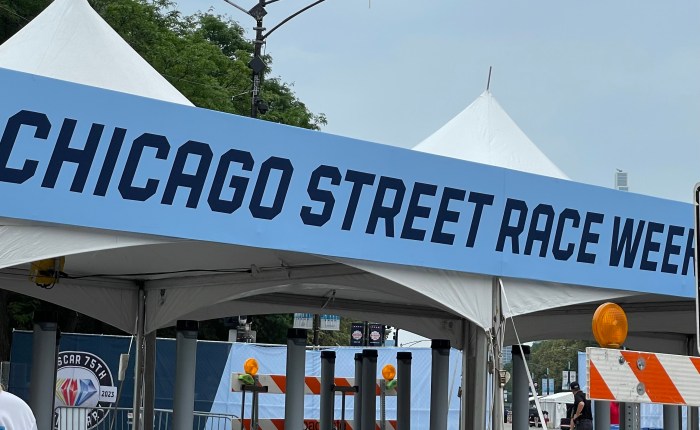
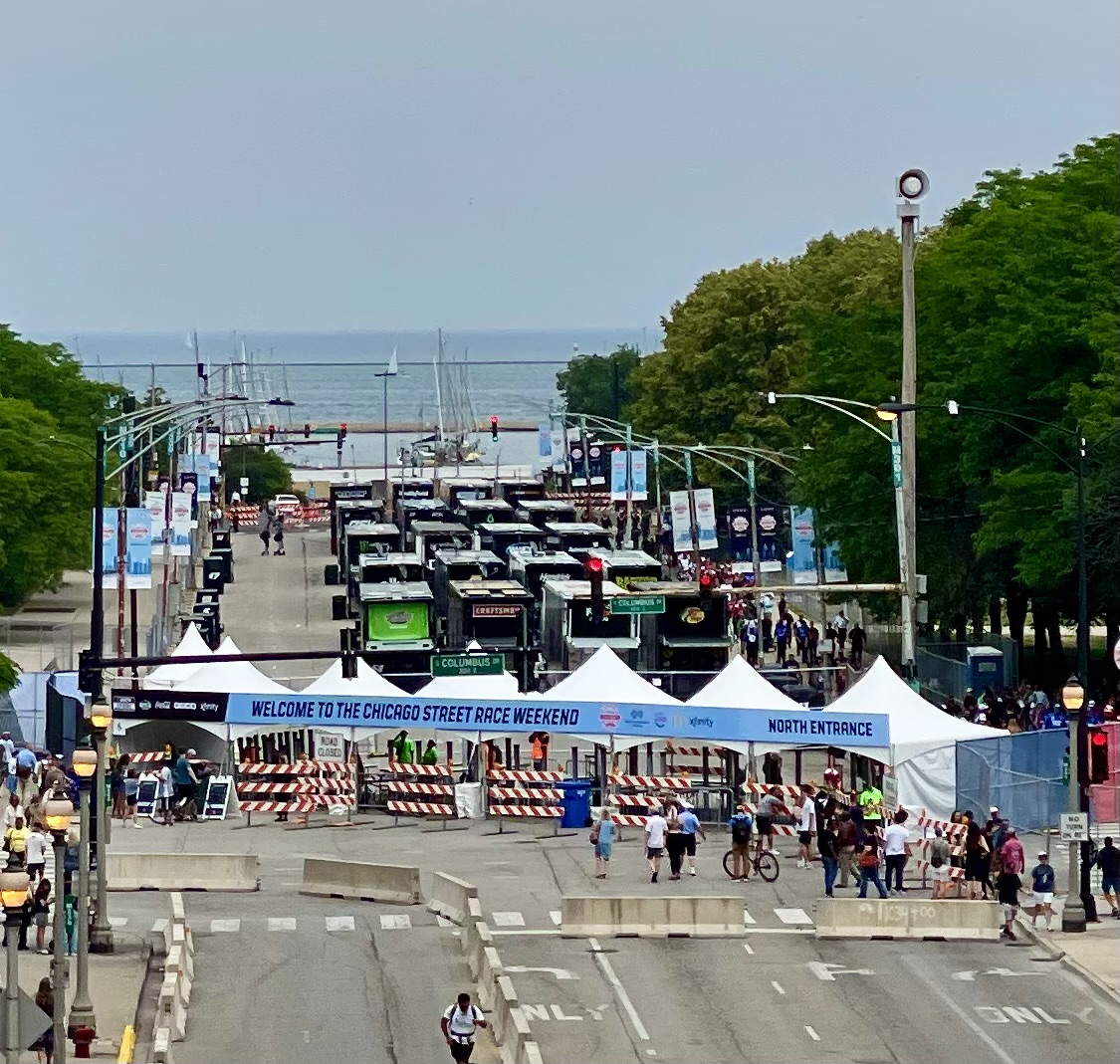
It’s usually held around the Fourth of July. This year, with the newly-scheduled NASCAR race taking up the festival space over Independence Day weekend, the city moved the Taste of Chicago to less touristy September 9-10.

The quaint idea of having Chicago restaurants give people a “taste” of their signature dishes appealed to the legacy-obsessed Mayor Jane Byrne in 1980. She predicted there’d be about 100,000 people showing up on the two blocks of closed-off Michigan Avenue during the three-day festival.

On the first day of the first “Taste,” my thirteen-year-old son and I waded into the sidewalk crowd at the Ohio Street entrance, heading toward the Michigan Avenue bridge. Our nostrils itched with anticipation as each aroma swirled around us until the crowd thickened to an immovable throng. Signs for hamburgers, Chinese dumplings, deep-dish pizza, and sushi were in sight, but the food was out of reach. We all moved in a slow flow of claustrophobic, sweaty goo, trying to break loose.

“Thanks, Jane,” shouted my son.

And a roaring chant rose from the street like the fumes of the smoldering barbeque ribs: Thanks, Jane! Thanks, Jane! Thanks, Jane!

Chanting turned to laughter by the time we disentangled ourselves over the bridge at Wacker Drive. And really, it was hilarious. A crowd of 250,000 showed up. Jane had blocked off streets for the Taste next to downtown office buildings with only two openings in and out.

The following year, the Taste spread out at the edge of Grant Park. My son and I stuffed ourselves with various restaurant pizzas but avoided Greek, Chinese, and Thai food. Neither of us had elevated taste buds at that point in our lives.

Chicago moved the Taste farther into spacious Grant Park in 2023. The ornate 1927 Buckingham Fountain backdropped every photo. Food tasting required an adventurous spirit and a healthy gut. I ran into Lorraine, staring at the sign over the stand selling deep-fried Oreos, crab rangoon, and fried rice. We strolled past little and big hands clutching funnel cakes, rib tips, and Seoul tacos in dinky paper bowls—a hot Cheeto burger sold for sixteen dollars. The longest lines queued up at Harold’s Chicken and Badou Senegalese Cuisine. We sniffed out Chicago Doghouse to chow down on our favorite hot dog, but my throat clogged with the invisible flying grease of deep-fried Twinkies. I couldn’t do it.

“Try a “Beyond Meat” burger,” Lorraine said.

Nope.
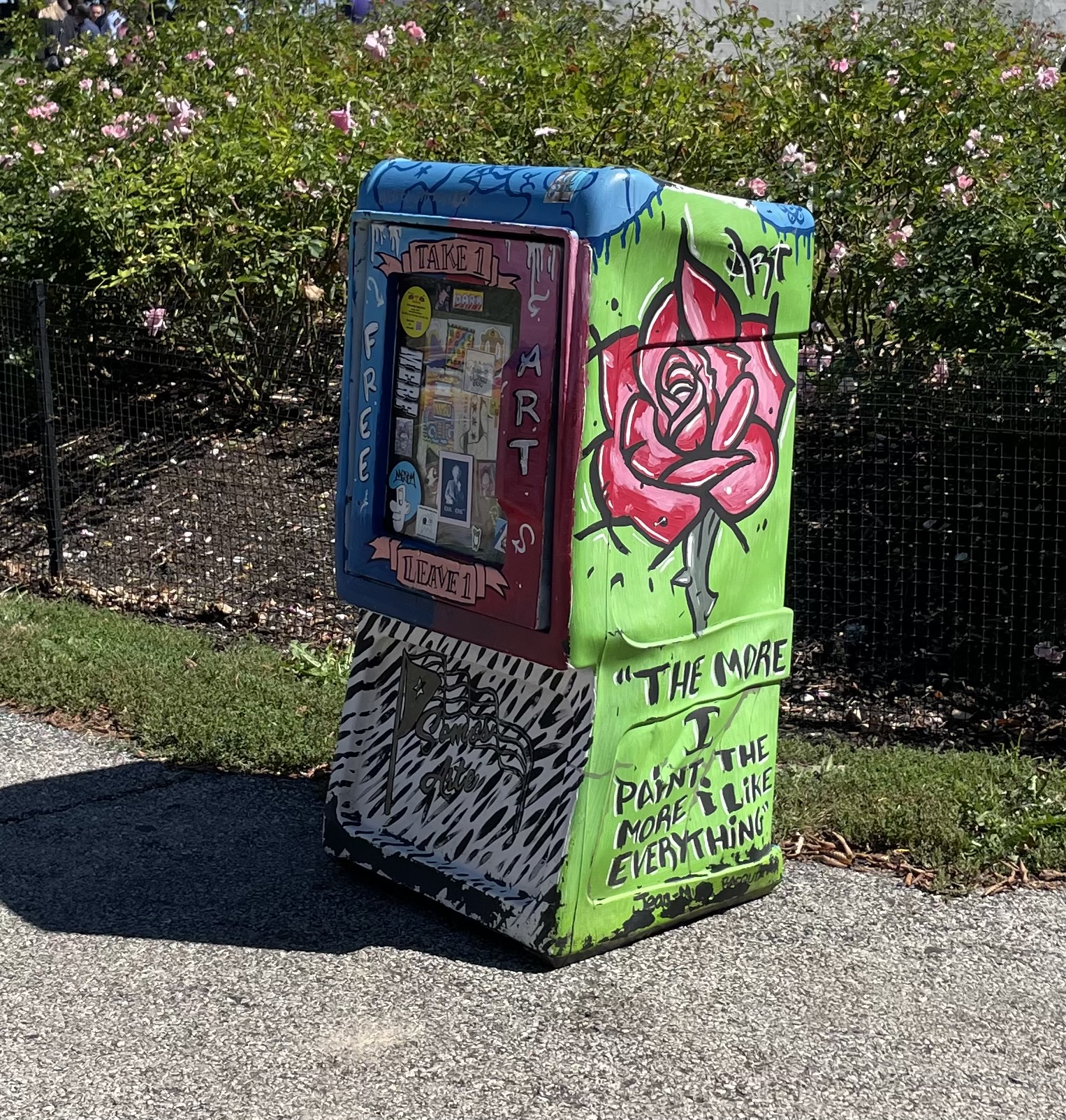
“The More I paint the more I like everything” Artist unknown. Grant Park Rose Garden, Taste of Chicago 2023

Blow-up slides, band stages, and a karaoke contest all spread out among the well-gardened rose bushes and the native hibiscus. Lorraine joined hundreds of line dancers under the “Summer Dance” tent. This was indeed Chicago’s very own county fair.

My son has developed far more sophisticated eating habits in the forty-three years since the first Taste of Chicago. This year, he would have coaxed me into tasting unfamiliar foods or, at the very least, eating a hot dog. As it was, I walked home hungry.

I wish we’d gone together.
Jobs I Could Never Do

Jobs I Could Never Do

Every spring at Walsingham Academy, Sister Walter Mary selected a few students to prepare Catholic children for their First Holy Communion. The children were patients at the local mental institution, Eastern State Hospital in Williamsburg, Virginia. I have no idea why there were young children locked up in an insane asylum. We were trained to teach these pre-Ritalin six-, seven-, and eight-year-olds to memorize answers to preposterous questions such as “Why did God make me?” from the Baltimore Catechism. 

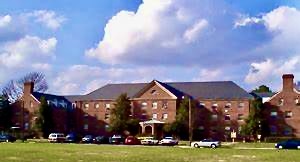
Eastern State Mental Hospital, Williamsburg, Virginia

It was pre-HIPPA 1963. We received basic training in mental illness. A hospital attendant walked us teenage tutors through the children’s wards, pointing out caged paranoid schizophrenics, psychopaths, and catatonics in their soiled grey tunics. Some children sprang at the chain-link fences, grabbing us and screaming obscenities. We didn’t teach this group. Our students lived in cozy dormitories and wore regular clothes. 

Eastern State—the oldest psychiatric facility in the country—had been founded on the forward-thinking concept that insanity was an emotional disorder, not an aberrant behavioral condition. Treatment included exercise and social activities. Catholic parents treasured the outside instruction their little ones received. I’m not sure how much my first-grader learned because all she wanted to do was sit next to me and play with my hair. I helped her into her white veil and gloves and took her to nearby St. Bede’s, where she made her First Holy Communion with the local children. I met her parents at the church. I never saw them again, never learned her diagnosis, or if she ever left the institution.

A few years later, I worked an overnight shift at the Point Pleasant Nursing Home in New Jersey.  My job was to straighten up—put games like Monopoly, bingo, and chess in their boxes and wiggle them into overstuffed cabinets. I wrote down missing pieces of each game so the next shift could look for them in patients’ hiding spots—pockets, drawers, purses.

A completed jigsaw puzzle of an Impressionist painting lay on its box cover under a window. I put the pieces back in the box and stuffed them into the cabinet with art supplies, books, and magazines. Before my shift ended, a patient wandered into the day room. She stopped at the space where the completed jigsaw had been and looked at me, panic-stricken. She grabbed my hair in a flash, shrieked I stole her art, and smacked me in the face. By the time the nurse reached us, we were both screaming. 

In dementia, my mother, Agnes, carried an ever-present small clutch purse. At that same nursing home, the nurses gave her their old lipsticks because the click-clacking sound as she rifled in her bag calmed her down. 

The day she died, I visited the nursing home and thanked the staff for giving my mother what I couldn’t: a proper confinement of love and respect to keep her from wandering around and terrifying her fellow creatures. Only then did I ache for the parents of the Eastern State girl I’d met twenty-five years earlier.

Back to school

Back to school

By the time I’d left the eighth grade, I’d attended thirteen schools. Dealing with all those changes led to the development of uncanny protean skills, including the art of answering questions before they were asked. For instance, my mother, Agnes, an ace at avoiding small talk, taught me:

“When you meet new people say, ‘My name is Regan. It’s from Shakespeare and it means queen in Gaelic’, so you won’t have to answer all their questions.”

This tactic thwarted the name questions on the first day of any new school, especially since my grade school classmates didn’t know what the heck I was talking about. 

Word Daily, coughed up “protean” the other day, a word seen once in every 16,000 pages you might read. I never use it, though I completely click with the namesake origin, Proteus. He was a Greek sea god who knew all things, past, present, and future. Recognized as a shepherd of sea creatures, he slept among the seals and otters, which, save for the smell, appeals to the phantasms leftover from my childhood mermaid dreams.

Proteus escaped those seeking his knowledge by changing his shape to avoid answering questions. In modern parlance, not a shape-shifter, but rather someone flexible and adaptable, is protean.

Proteus sleeps with the seals. Artist: N.C. Wyeth

In the lower grades, adapting to mean-girl culture, I inevitably and reluctantly had to announce, “I repeated first grade because I was sick; then I skipped second grade.” This answered the question of why I couldn’t add or subtract. If I had remained in that first-grade school, my parenthetical nickname would have been “The Repeat” all the way to the eighth grade. The Repeats were few but well-known. We bonded with knowing glances passing silently in the hallways. 

We were Catholics. My sisters and I attended parish schools, wore parish uniforms. There was never a back-to-school ritual in our house because we never went back to a school we had been to before. The beginning of each new school year was a fresh start. 

In Terre Haute we rode our bikes; in St. Louis the school bus. In downtown Indianapolis, we caught a public bus crammed with garlic-breathed commuters. In the Chicago suburbs, a school bus, my mother’s station wagon, bicycles, and walking, all brought us each year to a new building, a new neighborhood. 

I never learned how to predict the future like Proteus (though a spiritualist on LSD once told me I had the gift of prophecy). Predicting what the next parish would be was never in the cards—it was always a mystery. My ears didn’t reach high enough to hear my parents deliberating the matter. But I could easily predict we’d be in a different school for the next grade. For better or worse, we all exhibited protean traits: flexible and adaptable. 

Early on, knowing stuff came to be my raison d’être. I became and remain an insufferable know-it-all. Geographic stability has diminished the necessity for protean mental agility of late. 

But protean knowledge? It continues to inoculate me from ever being called any version of “The Repeat”. 

Lessons Learned: God

Lessons Learned: God

First Grade—Third Grade

God is a white man with a white beard and white flowing hair, sometimes holding white stone tablets, later to be revealed as the Ten Commandments. Then He has a son, Jesus, and simultaneously is Jesus. Jesus’ mother, Mary, and God aren’t married. Then God becomes a ghost, the Holy Ghost. Then He’s all three. Three persons in one God.

All people who were ever born are sinners who can never redeem themselves. But God gives Jesus to Catholics for salvation from their sins. Only Catholics have access to Jesus. They go to heaven when they die, thanks to Jesus dying on the cross for their sins. Everyone else goes to hell.

Lesson: Everyone is bad and God only likes Catholics.

Fourth Grade—Sixth Grade

God created Adam and Eve in His likeness and placed them in Paradise, a tropical garden with no predators or stinging bugs, and all the animals, flowers, and fruit in the world. God forbade them to eat apples from the Tree of Knowledge, but they wanted to be like God, to have His knowledge, so they ate the apples. He got mad and threw them out of Paradise. They had to fend for themselves—grow their food, make their clothes, and pay attention to God.

Adam and Eve had two sons, Cain and Abel. God seemed to like Abel better. Cain got jealous and killed Abel. God punished Cain by throwing him out of his hometown into the desert.

Lesson: Avoid God.

Seventh Grade—Eighth Grade

Jews and Romans alike feared Jesus for riling up the citizenry against their oppressive power structures. The Roman king of Jerusalem sentenced Jesus to a brutal crucifixion. Even though He was a Jew, the Jews didn’t come to his defense.

When Jesus’ followers went to the tomb to see His dead body, Jesus was gone. God resurrected Jesus, body, and soul to live forever. This is what happens to Catholics. They live forever. In Paradise.

“Tiger, Tiger, Burning bright, 
In the forests of the night,
What immortal hand or eye
Could frame thy fearful symmetry.”

Lesson: I want to be a nun.

Ninth Grade

Using my leaky Esterbrook fountain pen,  I write “How can God make evil” in the margin of my English literature textbook next to William Blake’s first stanza of “The Tiger”.  

Lesson: God is confusing.

Teenage—Twenties 

I look for the heavenly in alcohol, drugs, and men. I see God. Then I don’t. 

Lesson: There is no God.

Thirties—Sixties

There is a Higher Power. Maybe God. Maybe Jesus. Maybe the Holy Spirit. Maybe Buddha. Not a Catholic. Not even a Christian.

Lesson: Keep looking.

Seventh Decade

Casting off the lifelong mantle of sinner; I’m finally hip to the knowledge no one is born bad. God does not create evil and Jesus didn’t die to save me—God doesn’t need atonement from me or Jesus. There’s no heaven. No hell. Resurrection may be so. At the end, perhaps time and space will simply let go of me and I’ll wander an endless field of puppies, aka, Paradise.

Lesson: I’m OK. 

You Went to Woodstock?

You Went to Woodstock?

R-13471089-1563892691-9421.jpegToday, August 15 is the anniversary of the 1st day of Three Days of Peace and Love at Woodstock. There’s not been an event in my life that’s made me feel more like a hot shit than going to Woodstock.
On August 15,1969, everyone I knew in my small circle of dope-smoking friends was either headed there, planning to meet there, or trying to get there. Hundreds of miles of caravans disrupted the pastoral dairy farms of lower New York state, rolling upcountry from the Jersey Shore. Reveling in the world’s greatest rock and roll bands melded our bodies and souls into three days of peace and love.

Throughout the festival, Wavy Gravy danced to the microphone with updates on the number of cool cats sitting on the hillside of Max Yasgur’s farm. When he exclaimed half a million, whoops and whistles rose up to the spirit in the sky. All the hippies in America, maybe the world, had come together. I was right where I was supposed to be.

My friends and I told and retold Woodstock tales for a time afterward. And then it was over. Or so it seemed.

Eight years later as I stirred spaghetti sauce in my Sandburg Village kitchen in Chicago, my ten-year-old son and his friends were snickering in the doorway.

“Go ahead. Ask her.” My son elbowed his friend.

“Did you really go to Woodstock?” He asked.

“Yes, I did.”

“See, I told you.”

“Wow. What was it like?”

I brought out a small box of photos and souvenirs including my prized ticket to Woodstock to show the unbelievers. Until that point, I’d kept Woodstock quiet.  No one in my new crowd of straight and sober friends was or ever had been a hippie. Woodstock wasn’t yet a badge of honor, but rather the confession of a derelict life.

But after wowing those ten-year-old boys, I knew I was on to something.

In 1969, half a million was only .2% of the population. By 1979 we were an elite group, only 500,000 of us. In 1994 I interviewed for a twenty-fifth-anniversary story in a local Chicago paper. The Presbyterian church showed Woodstock the movie and asked me to give a talk about my experience. 

My ten-year-old grandson called one day in 2007 and asked, “Regan, my dad said you went to Woodstock. Is that true?” I assured him it was.

“We just watched the movie. It looks pretty wild.”

That box of souvenirs mysteriously disappeared after I showed it to his father’s pals at the same age. My grandson didn’t need proof to tell his friends though. Unbelievable reality turns believable with age. He asked about my favorite Woodstock band. The next Christmas he gave me a complete set of Janis Joplin.

Using “Woodstock” in the description of my upcoming book on Amazon optimizes search engine results. Even in my seventies friends introduce me as “…she went to Woodstock.” What are they implying? Drugs? Hippie? ‘60s radical? Or simply that I used to be a hot shit badass.

Read: https://www.euronews.com/culture/2023/08/15/culture-re-view-why-is-woodstock-still-so-iconic-54-years-on

Is This Funny?

Is This Funny?

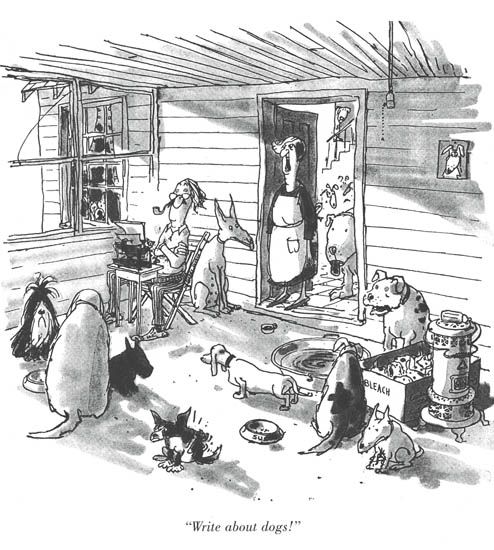
George Booth, the New Yorker cartoonist who died in November 2022, once created the funniest cartoon in memory. First of all, Booth’s silly line drawings were and remain funny enough–they don’t need captions. But the one I so love is a man sitting at his typewriter on a dilapidated porch wistfully smoking a pipe. Nine or ten dogs of different sizes and shapes laze around. There’s a bulbless socket hanging from the ceiling. His wife stands in the doorway. Caption: “Write about dogs!”

Ok. Ok. It’s not the funniest cartoon to you. But for me, a dog owner and a writer, it’s hilarious.

Obviously, the cartoon man has shouted, ‘What should I write about?’  ‘Write about dogs’ is a funny way of saying ‘write what you know’, writing’s first principle. Even fiction holds truths. Funny conversations and tales of goofy adventures are all around, like the dogs in Booth’s cartoon. I hesitate to write them because I don’t want my blog-reading friends to know how amusing their lives are to me. And what if the writing isn’t funny?

This summer I attended a free Comedy Writing Workshop taught by a professional, very intuitive, improv comedian. We didn’t have to pretend to be a tree or a bologna sandwich, though that would’ve been a kick; we simply pretended we were at job interviews and went back & forth with questions and answers. We could have answered any old way, and indeed creativity was encouraged, but everyone in this group seemed to answer like their jobs were on the line for real. And they. were not. funny.

Me? I said I was fired from my last job because I attempted to kill my husband with a stapler when he came to the office for a surprise lunch. Funny? I thought so, but no one laughed. Perhaps I actually look or sound like a murderer.

The comedy teacher smartened up to this over-55 group right away. She tailored the two-hour class to the cognition level of the twelve students she had before her. And still, no one was funny.

A friend of mine who’d recently been examined for dementia gave permission to the memory doctor to ask me how my friend had changed. Without hesitation, I answered, “She’s really funny but it’s taking her longer to get the punch line.”

Is this part of it? Aging, I mean.

Most researchers I skimmed agree that age-related cognitive decline contributes to difficulty with “humor comprehension”. The list of symptoms includes:

  • An inability to understand satire
  • A childlike sense of humor or enjoyment of slapstick comedy
  • Laughing at things that are not particularly funny, such as a dog barking
  • Taking jokes literally
  • Making inappropriate comments about strangers in public

George Booth created his last New Yorker cartoon ten months before he died from complications of dementia at 96. The cartoon cover is a goofy white dog glancing at a clock. Is that funny? A dog checking the time? 

If not, George and I share the same demented symptom of chuckling at things that aren’t particularly funny

.

Surviving Amnesia

God! How I love WebMD! This online ingenious, comprehensive, and reliable health and medical source has saved me from many time-gnawing trips to the Emergency Room.

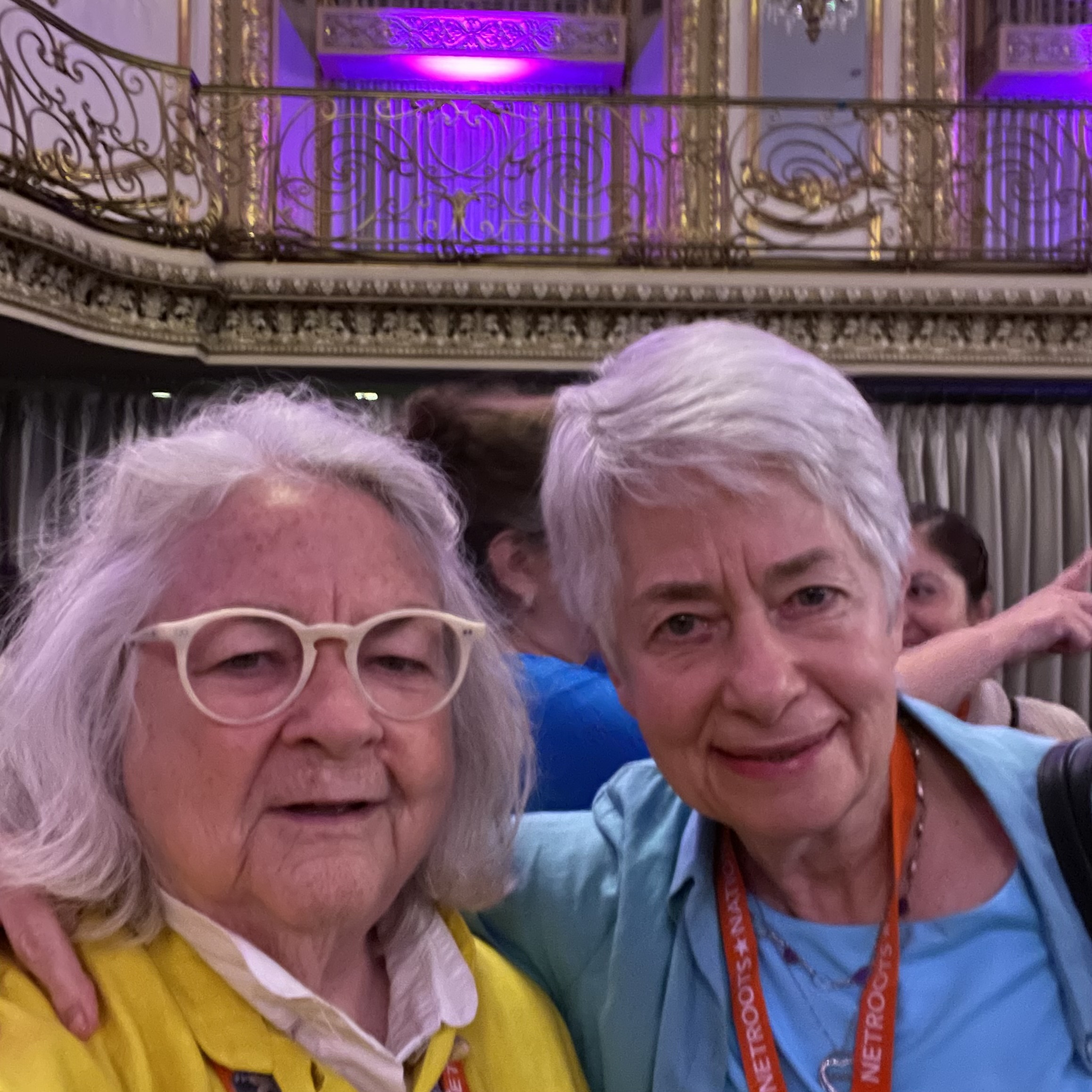
Last week I found myself at the bus stop on State Street near the Hilton Hotel with a “Netroots Nation” Convention credential swinging from my neck. I have no memory of the previous four hours. Zilch. I’d planned to attend the Netroots Nation Convention at the Hilton; the swinging credential assured me I’d at least registered.

Are you thinking I may have experienced an alcoholic blackout? Nope. Those days are long gone. I haven’t had a drink in forty-five years. Arriving home around 9:30 pm, I dove right into my laptop and searched for “lost memories”, which returned a description of something I’d hoped hadn’t happened to me: 

“Losing time, or having large blocks of time for which one has no memory is a symptom of Dissociative Identity Disorder. Sometimes a person will lose so much time that they “wake up” in an unfamiliar town or place. This is called Dissociative Fugue.

Uh-oh. That sounds like the multiple personalities portrayed by Sally Field in the horror movie, “Sybil”. I’d hoped I didn’t murder anyone, or go to some stranger’s hotel room whilst in a fugue state. I searched further—typed “sudden memory loss”:

“Transient global amnesia, TGA, is a sudden loss of memory. It’s an alarming but harmless condition. Symptoms usually last for hours and then memory returns. It has no lasting consequences. Doctors aren’t sure what causes it. It’s more common in people over 50 and with a history of migraines.

Whoa! That’s me! Thank you WebMD and for the good news:

“TGA …is not caused by a neurological condition like epilepsy or stroke. With TGA, you remember who you are and recognize the people you know well.

Netroots Nation’s mission is “to bring together online citizens across America, inject progressive voices into the national conversation, and advance the values of justice, equality, and community in our nation’s politics.” Their annual convention in my hometown came at the right time for my aging activism. Chicago had just elected a progressive, smart, kind-hearted new mayor, Brandon Johnson. I believe with my whole heart that within a few years, Chicago will be a role model of common solutions for all American cities. At the convention, I’d hoped to replenish my quiver’s rah-rah-cis-boom-bah that had fizzled since Mayor Johnson’s inauguration. 

In the late afternoon of the TGA incident, I planned to attend an event in the Waldorf Room, “Solidarity Across Differences: Organizing When We Disagree.” There’s no evidence I was there. But I was somewhere. My little black-and-white pocket notebook has three new quotes in my handwriting:

“There’s a collective out there that wants to shrink the hope of the possible.” Emma Tai, Director United Working Families—the grassroots organization that helped elect Brandon Johnson

“Chicago is a town that’s gonna show the world what the future looks like.”  Randi Weingarten, President American Federation of Teachers

“Safety is not blue lights.”  Brandon Johnson, Chicago Mayor

My iPhone displays several close-up photos of Mayor Johnson giving a speech, two selfies at the food table, and one selfie with Heather Booth a long-time political activist from Washington, DC. With the exception of the food table, these are exactly what I would have photographed, had I been in my right mind, proving once again how competent my online doctor, WebMD, is. 

“…in TGA the patient cannot acquire new memories but otherwise can function normally; personal identity is retained…”

Whew! What a relief; between the notebook inscriptions and my photos, I have proof I acted my best self, and confirmation I had all the symptoms of an episode of  TGA, Transient Global Amnesia.

Do I feel safe? Absolutely. Dr. WebMD tells me there’s rarely more than one occurrence. And no one has come forward to tell me I acted like Sybil.

At least not yet.

Mea Culpa NASCAR

Mea Culpa NASCAR

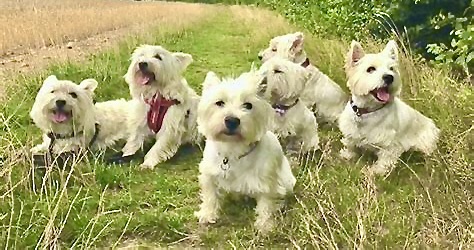
Elsa the Westie and I routed ourselves around the sidewalk construction barrier, down the block and around the corner to the park. I’d spent the early morning alone, lamenting this week’s Supreme Court decisions that flattened civil and human rights. A fellow dog-walker stopped me mid-thought.

 “Now they’re giving driver’s licenses to those immigrants!”

It mattered not that she was the owner of a cute little dog, she instantly turned savage in my eyes.

“So what?” I said. “Now they can drive to work.”

‘Work? They’re not working. They’re just laying around outside the police station.”

Elsa and I were both satisfied with her morning duties. I grabbed a coffee at the walk-up cafe. We settled in to soak up the morning airs with a friend on a bench near the tennis courts, dismissing the ugly of the street conversation.

A couple wearing Purdue t-shirts had circled the track and eyeballed Elsa. As they approached, my thoughts turned to the political atmosphere in Indiana. I wondered if they, too, wanted to speak hatefully of the asylum-seekers who made their way from Venezuela to Chicago, mostly on foot. 

“We had a 16-year old Westie who just died.”

Ah, sweet relief. Dog talk.

After sympathies for their dead dog, my recent dead dog, and all the dogs we’ve ever owned, the conversation turned to their new home in Carmel, Indiana, where they retired from a life of teaching in central Illinois. An arts colony, they called it. I must give off an it’s-ok-to-talk-to-me-about-politics aroma since the conversation led into the difference between the people of Indiana and Illinois. They gave us a for-instance.

 “We went to a James Taylor concert a few weeks ago in Carmel,” the man said, “when he announced he lived in California, the audience booed.”

 And there it is again; uninvited discomfort creeping into my life, demanding an audience. More sympathies all around for the Illinois couple and their unanticipated Hoosier life. At least they had a Chicago retreat and park-bench strangers like me to complain to. 

 But who am I kidding? 

I started the weekend so contemptuous of NASCAR coming to Chicago that I was itching to be heard. The sidewalks were so empty at the start of the Fourth of July weekend, I figured all the residents had Air B&B’d their condos to NASCAR fans. Every time I saw people wheeling their suitcases down the street, looking at directions on their phones, I muttered to myself, “NASCAR”.

 And then it rained. In fact Mayor Johnson said it was the most rainfall on the city since 1987. I turned on the TV to guess what? NASCAR—just as Dale Earnhardt, Jr. announced the cars were passing Chicago Symphony Center. What a thrill to see my city washed clean, a shining backdrop to those who came here to show it off. 

I’ve never been comfortable with monoculturalism, where everyone looks and thinks alike. But contempt for the Other, those with differing views and interests, has given me nothing but backaches.


Driven to Risks

Driven to Risks

In 1950s Wilmette, Illinois, children followed rules. Not many ten year olds would steal onto the public works property and play around on the Water Plant roof. The first taboo my sister and I broke was to gather stones and toss them from the roof into the sand below. Next, we dared each other to jump off the 1930s one-story building. The sand provided a warm soft landing and extracted plenty of triumphant giggles from two adventurous little girls.

The Wilmette Water Plant, built into a low cliff on the shores of Lake Michigan, is walled off by an eight-foot cast iron spiked fence. The street level roof sits back far enough from the shore road to avert curiosity. A 1956 building expansion required a construction entrance in the fence leaving the Water Works temporarily defenseless.

We waited until the workers left for the day and again and again sneaked onto the roof to throw ourselves off. Eventually my sister slacked off and I jumped alone. Each leap to the unknown helped transcend the uncertainty of our volatile home life. For years afterwards I dreamed I was flying. Indeed, when I took a lot of psychedelic drugs in my 20s, I relived those jumps. 

In winter, down the street from the Water Works on the same cliff system, the fire department hosed down a steep hill for sledding. Devil-may-care pre-snowboarders sailed down the icy slope standing on cardboard slabs. Eventually I tossed the cardboard and flew downhill toward Lake Michigan standing only on my brown rubber boots. Ambulances, always at the ready, carted off sledders everyday to Evanston Hospital. Never me.

I see no reason to examine why I’m driven to dangerous adventures. Risky jumps and high-flying sledding sparked a fire in me that can’t be extinguished. Perhaps those early escapades instilled self-confidence, or more likely, false invincibility. 

For a few years I spent all my expendable income on scuba diving in the Bahamas. After a short course in diving, and a few failed attempts, I jumped to the unknown once again and flippered around with the fish. I never once thought of the risks. And there are plenty. 

Scuba Diving in the Bahamas

One morning before I left the islands, I suited up and waited for the divemaster to outfit the boat. I casually mentioned to a fellow diver I was leaving that afternoon.

“Are you flying?” asked the divemaster.

Yes I was. 

“Hang up your wetsuit and get out of here! Don’t you know you’ll get the bends if you dive and fly the same day? Your insides could explode in the plane!”

On social media last week, many posts begrudged the efforts to rescue five wealthy souls lost in the Titan submarine. My risky adventures are over now, and were never so grand. But I join adventurers everywhere who cherish the U.S. Coast Guard’s salvation message:

“We don’t put a price on human life. Every person who is missing deserves to be found. That’s the mission, regardless of who you are.”

Father’s Day: What Remains

Father’s Day: What Remains

His wavy black hair glistened as the light from oncoming headlights and street lamps streamed in and out of the front seat. With his left hand on the steering wheel, my father opened a pack of Pall Malls with his right, pulled out a cigarette between his teeth, and plugged in the lighter, all in one smooth move. I couldn’t wait to see the sparks, hear the hiss, and smell the burn as the lighter pressed up against the tobacco. The Pall Mall dangled between two yellow-stained fingers while the other two fingers and thumb encircled the steering wheel. In the passenger seat my mother scissored her cigarette between two Revlon-tipped fingers.

“We’re almost at the Pennsylvania Turnpike,” my mother announced.

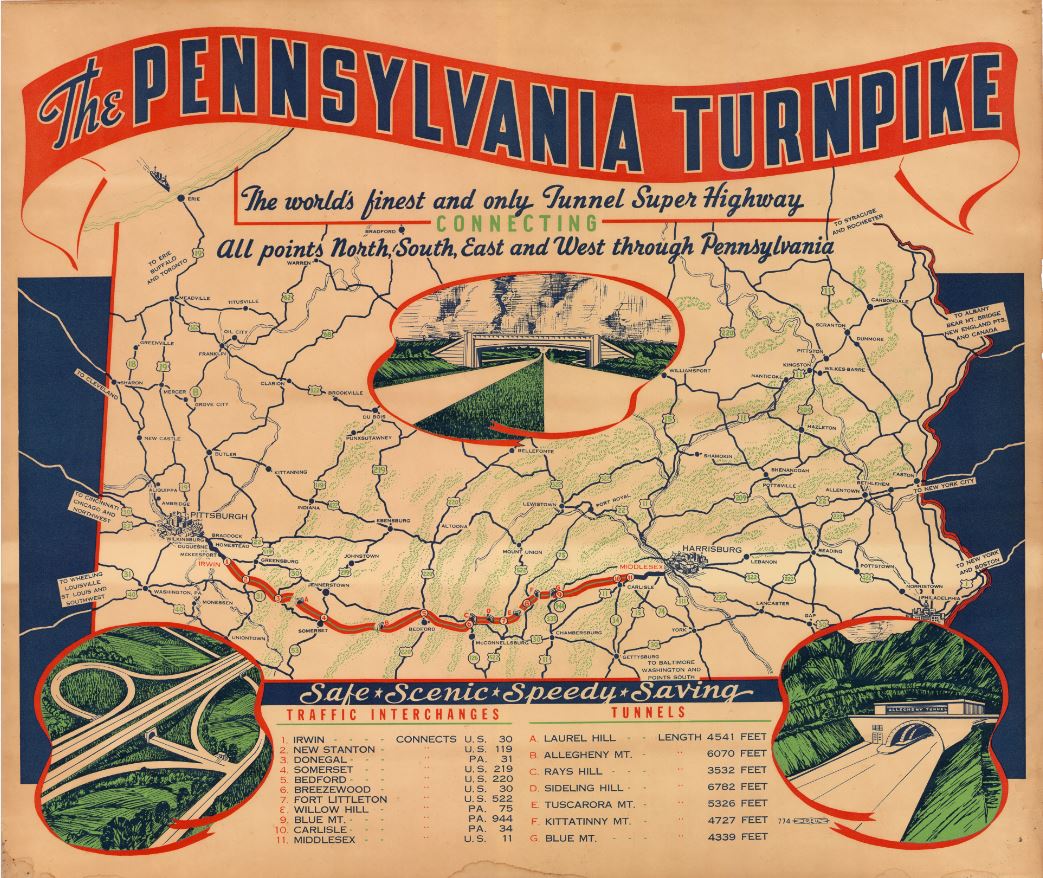
The Pennsylvania Turnpike. My earliest memory of my father is watching the back of his head  moving up and back searching for signs for the Pennsylvania Turnpike. He’d driven my mother, my two sisters and I away from our home in Washington, DC, with the false hope of finding a saner life in Terre Haute, Indiana, his hometown. In 1952, driving north on two-lane roads through rural Maryland to hook up with the Pennsylvania Turnpike was a challenge, accepted by both parents. They knew their geography.

The Pennsylvania Turnpike ranks as the first long-distance highway built in the nation’s interstate highway system. Drivers and non-drivers alike bragged that call boxes were installed every mile to connect to an emergency service. Radio stations and newspapers across the U.S. followed the progress of the Pennsylvania Turnpike for its entire sixteen-year construction period.

“We’re headed into the Allegheny Mountain Tunnel,” my father said.

“How did they make this tunnel?” I asked.

“They dynamited a hole through the mountain.”

As we drove into the dimly-lit black cavern, I involuntarily stopped breathing. I could feel the full weight of the mountain above. I gripped the side of the window with my fingernails until we emerged a mile later into the Allegheny Mountains on the Pennsylvania Turnpike.

The super highway crosses the Appalachian Mountain Range in the central part of the state, passing through four tunnels and over five bridges. My mother called out the names of each map marker, a verification that we were on the right track. Allegheny, Susquehanna, Kittatinny, Mechanicsburg, Harrisburg, Pittsburgh, Blue Mountain.

Such was my introduction to the joy of map reading. My parents had the bug already. Nothing delighted them more than seeing a name printed on a big sheet of paper, driving in that direction, and coming across it in real life. It was more than just the practical accomplishment. They interacted with the world around them.

“Look! Shippensburg. That’s where your Navy friend is from.”

“There’s Hershey, where they make chocolate.”

“See the sign for Johnstown, home of the flood?”

There’s no chance we crossed Ohio and Illinois into Indiana without my parents’ succumbing to a drunken brawl. But grace abounds in recollecting those melodious names; navigating the Pennsylvania Turnpike is the only memory I have of my parents ever enjoying each other.