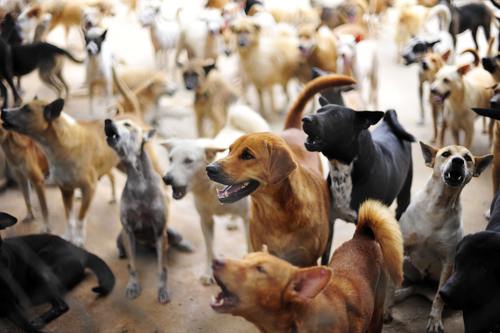
Facebook told me this the other day—that talking to my dog is a sign of intelligence. Whew. I’m glad of that. I talk not only to my dog but to all dogs. Out loud. In public. On the street. I’ve questioned whether their tethered humans might think I’m crazy but I can’t help it. It’s an irresistible impulse, a compulsion, this talking to dogs. And now I know it’s smart.
“Thank you for saying hello to me,” I say to the miniature poodle springing up and down in boyish spirals in the elevator.
“Mac, Mac, come see me,” I yell to Angie’s labradoodle on the sidewalk.
“Henry! Here comes that German Shepherd. Hang tight. Let ‘im sniff. Uh. oh. That scrappy Spitz. Just go ‘round him.”
The word for this is anthropomorphism. Facebook quoted behavioral scientist Nicholas Epley, a University of Chicago anthropomorphism expert. He says that I and others like me are actually showing signs of “intelligent social cognition” in talking to our pets. Because God made us social creatures, we talk to things we love, to be social, to have friends. For thousands of years dogs have adapted as companions to humans. They want to bond with us too, to be a part of the family, to please us. They even want to talk to us, which is why they bark. Dogs evolved from wolves. Wolves howl. They don’t bark.
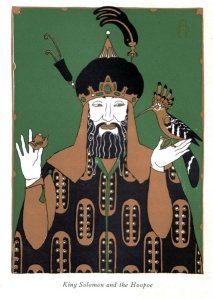
Somewhere along the evolutionary highway, dogs learned to bark to communicate with their human packs.
Literature old and new is full of talking animals. Some writings are called fables as in Aesop’s The Hare and The Tortoise, who challenge each other to a race. Some are fairy tales—the big bad wolf misleading a red-caped girl in the woods. Snakes and donkeys converse with humans in the Bible. The Koran says Solomon communicated with birds. How could all these stories be based on non-facts? Surely humans once chitchatted with both household pets and wild animals.
Henry retired at seven years old as a West Highland Terrier stud. His official registered name was Clipper. My friend, John, drove me to Indiana Amish country to fetch the castoff sire. I sat in the back seat with the dog on the way home so I could talk to him, bond. It was the month I first feared I was slipping into cognitive decline.
“He’s not responding to the name Clipper,” John said. “I’ll bet they never called him that. They just bred him. Why don’t you call him something like Henry?”
And so I did. All the way home to Chicago. The next morning I hollered, “Henry?” He ran from the next room and jumped in my lap. We’ve been conversing ever since.
I suspect the non-pet owners who find me talking to Henry when the elevator door opens haven’t heard of Dr. Epley’s research. To them, I’m just the batty old pensioner with the 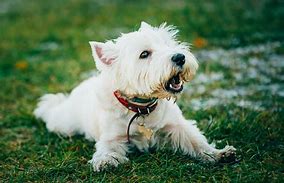 fluffy white dog on the third floor.
But I know better.
I talk to animals.
 Gary had no barber, we had we had to go downtown to the city, i.e., Gary (population of East Gary was 6500, Gary was 100,000).
 called, you quickly went to the barber and sat down in his chair. The barber asked you what kind of haircut you wanted: a Baldy (where the barber took off all your hair) or an Inchy (where the barber set his electric shears to cut hair 1 inch above the skull). Either haircut could be done in 45 seconds. Combs and scissors were not used. I think the barbers worked on commission and became millionaires.
 our kind and generous relative, Ann—sisters and brothers, cousins, 2nd cousins,1st cousins once removed, spouses, partners and all their small children. Our casual salutations were loving and genuine but often cut short.
 I saw old tires, a broken lawnmower, lots of papers and magazines on a wooden counter along with old tools and flashlights. Since there was no stranger in there, I reasoned that I could go inside. I slid the door open and went over to the bench, hopped up and that is when I saw the pile of colorful magazines in a box on the floor.
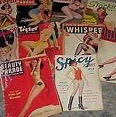 saying, “Lots of people keep old magazines.” “But Gram,” I persisted, “Why were all the women naked?” She said she didn’t know, but that my dad loved to read and was called “the magazine man” in our family. This was puzzling to me, but I was resolved to look again.
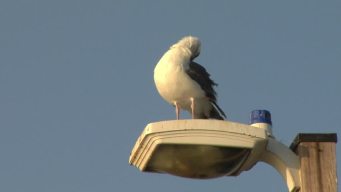 motionless in the shopping cart transfixed by a seagull preening in the sun at the top of a lamppost. A few years later, John and I were sitting on the sunny side of Navy Pier, taking a lunch break after whiffling around first-grader attractions in the Children’s Museum. Sparrows started hopping around our table and John surrendered his bagful of beloved McDonald’s fries to the birds. Crouching down on the pavement stretching his arm as far as it would go with a soggy cold fry dangling between his thumb and finger he tried to get the birds to eat from his hand. The outstretched arm tired and weakened so he propped it up with his other arm and went for at least a half hour.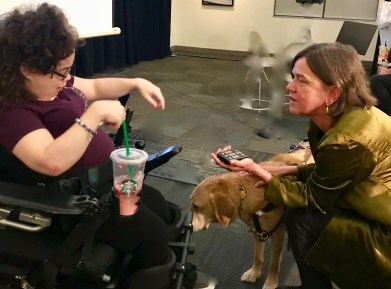

 Regan Burke