Anita Bryant’s Legacy: Gay Rights Activism

Anita Bryant’s Legacy: Gay Rights Activism

As I was about to cross the threshold toward the elevator with Elsa tethered to my thick gloves, I reached back for the handle to close the door behind me. At that moment, WBBM news radio announced Anita Bryant had died. Out in the park, Elsa tiptoed on the crunchy December earth — a slower walk leading to a longer think. Memories arose about Anita Bryant and her anti-homosexual campaign in the 1970s.  

Anita Bryant, a Miss American pop singer who sold Tropicana Orange Juice on TV was so well-known in US culture that her startling attack on homosexuality betrayed her seemingly good-natured Christian persona.

Elders in the fundamentalist Christian cult where I spent a few years in the 1970s never addressed homosexuality. They also ignored any other moralistic culture clash that evolved because of Bryant’s media campaign. I doubt any of us in that community even knew a homosexual. Oh, there were instances of men going off on drug-addled toots and ending up in gay bath houses. They’d come crawling back to church asking forgiveness from an uncomfortable congregation that had no knowledge of gay life. I was never sure what we were meant to forgive since no sin was committed against us.

Bryant, sparked by a Dade County, Florida decision to protect sexual orientation as a civil right, created the Save Our Children coalition to build anti-gay public support. She succeeded. In June 1977, the Miami area voted against homosexuality as a civil right, an act that lasted twenty years. 

Fresh from the Florida victory,  Anita Bryant brought her teethy bigotry to Chicago to perform a white-bread repertoire including her signature “Paper Roses” at the Medinah Temple. She was met by 5,000 gay rights protesters.

Christian churches throughout the country were called upon to take a stand, including mine. Homosexuality was justified as sin through church elders’ literal interpretation of a few bible passages. It became a disqualifying dictum for church membership. I knew nothing about homosexuality. Shunning people, however, didn’t fit with what brought me to Jesus, namely the parable of the Good Samaritan, or love one another, especially the least among us. I’ve needed that Jesus all my life. Extending unconditional love is a hard practice. In fact, it’s really impossible. I’ve always known it’s required of me nonetheless. 

Anita Bryant’s anti-gay campaign invigorated gay activism in the civil rights movement. We had a new cause. We boycotted orange juice. We attended Chicago’s Gay Pride parade that year. We mocked Tropicana’s tagline by wearing t-shirts that said, “A day without human rights is like a day without sunshine.” Gay rights, women’s rights, equal rights, all blended into one big active advocacy movement. 

I moved on to La Salle Street Church, which made no small point of accepting all people. Founded by rejects from the Moody Bible Church down the street, these Christians were definitely descendants of the real Jesus. They left Moody because the church elders required blue-jeaned converts to sit in the balcony and wouldn’t allow them to receive the Eucharist. In the 1970s, no one wore blue jeans except anti-establishment long-haired hippies, known these days as Progressives. 

The noise generated by the blue-jeaned Christians galvanized the nascent Christian fundamentalists, known these days as White Christian Nationalists. 

I’m not sure what happened to separate the civil rights groups. Gay rights, abortion rights, voting rights and anti-violence organizations eventually established their own fundraising machines side-by-side with their own causes.  Everyone started marching to a different drummer. We came together to protest the Iraq war and for the pink-hatted Women’s March after the 2016 election. But not all my friends showed at the NATO protest in 2012.

As a straight white old lady, I’ve recently tried with scant success to advocate against ageism. I no longer wear blue jeans. Dress codes are almost extinct. This is evident by Elon Musk’s t-shirt, MAGA hat, and long, black, steampunk coat at an Oval Office press conference. 

Anti-ageism is the most difficult cause to rail against. It’s an implicit or subconscious bias, practiced by those who are discriminated against and by those who do the discriminating. Dismissing Elon Musks’ functionaries as teenagers and constantly stating their ages is a display of age-bias. The same applies when stating Joe Biden’s or Donald Trump’s age. Or mine.

“You don’t act like a 78-year old,” remarked a friend last week.

“Yes I do. This is what 78 acts like.” I shot back.

It’s not that age isn’t a good descriptor to place people in their lived experiences. But age as a descriptor is most often used to put people in their place. The unchecked functionaries have stolen my Social Security records inside the US Treasury Department. They are no better or worse than me because of age. They are wrong no matter how old or young they are.

As happened with Anita Bryant, is it too dreamy to imagine a galvanizing backlash? Is a movement forming to neutralize the extreme bigotry falling out of the dirty mouths of Washington DC?

____________________________

Click to see Anita Bryant sing, “Paper Roses” https://youtu.be/0UoRKstI8Q4?si=3ar2deoIWIu6YwVN

___________________________

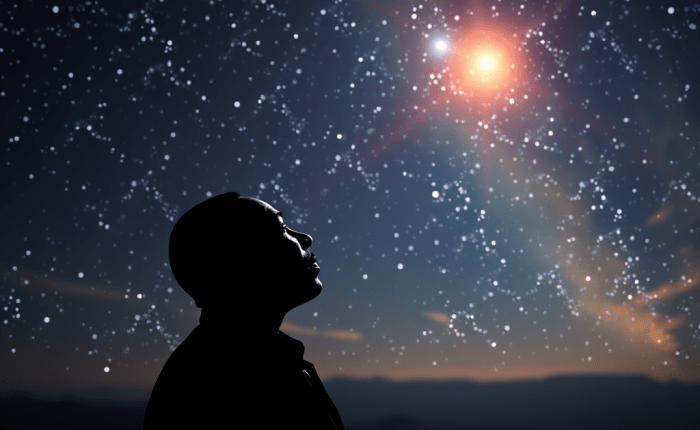
MLK: “…only when it is dark enough can you see the stars.”

MLK: “…only when it is dark enough can you see the stars.”

On a podcast about grief, artist Laurie Anderson revealed to Anderson Cooper that she felt sad without being sad when her husband, rocker Lou Reed died in 2013. She came to this awareness at a class on the Tibetan Book of the Dead. The teacher, Bob Thurman, said there is no dead. Dead doesn’t exist. He was referring, in part, to post mortem existence.

Different concepts of the afterlife exist in most religions and philosophies. For atheists who believe nothing happens after death, Thurman, a Tibetan Buddhist, teaches there is no nothing. Dead is not nothing.

I’m about as sure of what happens when the body breathes its last as I am of next week’s weather. Oh, I tacitly agree with those who suggest I’ll see my dead dogs again, the same way I concur it’s going to snow tomorrow. Maybe. Maybe not. Surely, dead is not nothing?

On November 22,1963, my mother called from New Jersey to the Catholic boarding school where I was sent to “shape up” in Williamsburg, Virginia. I picked up the black handle dangling from its stretched out cord in the one allowable phone booth for us wayward boarders.

“Kennedy’s been shot.” She said.

I replied, “I know. He’s dead. It’s on the radio.”

There’s a reason my mother called me. She knew, even at seventeen years old that I’d be upset, more like hysterical. Politics had grabbed me as a pre-teenager watching the Vietnam war on TV. By the time Martin Luther King Jr. was assassinated, I, a twenty-two year old hippie, had been to two marches on Washington and written hundreds of letters to Congress and President Johnson. I was in support of the Civil Rights bill, the Voting Rights bill, banning the bomb and against the Vietnam war. Anytime the morning news stirred an injustice I had to fix, I reached for my stash of pre-stamped postcards to fire off messages to Congress. I harangued my friends—at work, in bars, on the beach, at parties—to think and talk like me. They didn’t. I kept going.

MLK’s admonition, “Our lives begin to end the day we become silent about things that matter,” initially whipped me into a frenzy of activism—more letters, more phone calls, more marches, more recruiting. Then in his “Drum Major Instinct,” speech in 1968 he preached to act as a servant, not a savior. It is noble to help just one person, change one person’s viewpoint, get one person to vote. Gradually, I adhered to King’s spirit and put into practice a daily mindfulness mantra:  the worries of the world don’t own me, I don’t own the worries of the world. 

DNA has proven dead is not dead. DNA, our physical manifestation of life itself, apparently lives forever. Anyone who has had a DNA test questions their reported trace variants of first peoples like Neanderthal listed in their results, as if our DNA was there at the beginning, or, before? Some religions teach physical immortality, that our dead bodies will rise (or have risen) to live in Paradise. It begs the question: wherever our raised bodies take up residence, will they have our same DNA?

Martin Luther King’s DNA lives in the generative marrow of his words. I always feel sad, without being sad on this day, his birthday, like Laurie Anderson grieving over Lou Reed. His death forever transitions into the endorphins between my dreams and awareness. He lives in that zero-gravity mirage of my inner life that says:  serve, get out there, be brave, do it, say it.

Yep. Dead is not nothing.


Listen: Laurie Anderson & Anderson Cooper

(updated from 2023 MLK day)

Cold Inaugurations

As an eighth grader I entered segregated St. Mary’s of the Assumption for two months at the end of the school year. My family had come apart in the Chicago suburbs and one of my sisters and I were sent to live with relatives in Upper Marlboro, Maryland. Whites and Blacks mingled at St.Mary’s only on the playground where I pitched in the integrated baseball games.  

On our first Sunday at St. Mary’s Church, my sister and I headed for the back pews. A white man ushered us out of our seats toward the front. Only Blacks sat in the back. The Sunday my mother visited from her temporary home in New Jersey, she pushed the usher aside and sat us all in the back. Her hangovers would not allow suffering through the entire hour of the Mass. She needed a quick exit after the obligatory Eucharist and delighted in integrating the back pew. 

One day St. Mary’s eighth grade class was bussed down the way to Andrews Air Force Base to greet President Dwight D. Eisenhower. Blacks in the back of the bus. Whites in the front. Having so little experience with segregation, I was sure it was wrong but had no idea how to take a stand. I wished my mother had come along to integrate the bus. We waved little American flags at President Eisenhower as he deplaned Air Force One, Blacks lined up on one side, whites on the other. It was 1959.  

Sixteen years later in a sleepy Jersey Shore borough, I read about Jimmy Carter’s campaign for president in Time Magazine. What caught my attention was Carter, as governor, in a surprise to fellow Georgians had denounced racism and segregation. I sent a note to Jimmy Carter, applauded his positions on race and volunteered on his campaign. He sent me a hand written thank you note. 

When we received an invitation to Carter’s Inauguration, there was no question that my then-husband and nine-year old son would head to Washington DC for the January 1977 swearing-in. Sitting high up on bleachers on the shady side of the Capitol, it was as cold as any day I can remember. Twenty-eight degrees with a wind chill to equal fourteen.  


My grandchildren, C.J. and Kirby, were 10 and 12, when we flew from Chicago to brave twenty degrees with 1.8 million others for Barack Obama’s 2009 inauguration. We stood for hours on the frozen ground by the Native American Museum on the Mall. Every once in a while I’d ask my shivering grandchildren if they wanted to go inside. No they didn’t! The clutch of strangers that formed in our section treated us like family—retrieving packs of hand warmers from a far-away tent for the inside of our mittens and boots.

It was sunny. Cold. And glorious.

Obama quoted Founding Father Thomas Paine in his in Inaugural address. 

”Let it be told to the future world … that in the depth of winter,  when nothing but hope and virtue could survive … that the city and the country, alarmed at one common danger, came forth to meet.”


Black Hole Jesus

Black Hole Jesus

First Holy Communion is a right-of-passage ceremony in the Roman Catholic Church where a seven-year-old is initiated into eating the body of Jesus Christ. I learned the elements of the Catholic service, the Mass, with my classmates in the second grade. The priest transforms the bread into Jesus’ body and the wine into Jesus’ blood. The wine, the blood of Jesus, is reserved for the priest. We the people eat paper-thin white tasteless wafers, the body of Jesus. Catholic children all learn that after we make First Communion, it’s expected we’ll eat the body of Christ every week for the rest of our lives.

“Let it dissolve in your mouth,” the nuns instructed, “It’s a sin to chew the body of Christ. And don’t touch it!”

The pomp and ceremony of my First Holy Communion overshadowed any eww!-ness related to eating Jesus’ flesh. Prim little girls wore white crinolined lace dresses, white shoes and socks, white cotton gloves and angelic white veils. Like brides. Squirmy spit-polished boys wore ill-fitting white suits and ties. Children sang a Gregorian chant, Tantum Ergo, in Latin. The ceremony shined as if the light of heaven broke through the ceiling and blessed us with all good things forevermore.

In the early grades, if anyone questioned how Jesus’ body and blood changed from bread and wine, there was only one answer.

“It’s a mystery,” they said. 

I fell hook line and sinker into this ethereal mystical world of Jesus-eating. He was inside me, outside me, all around me, all the time. Jesus, my imaginary friend, was under the bed with me when my parents’ raging drunkenness woke me in the night. And when long-fingered nightmares reached their talons in through the screens, Jesus saved me.

At Jesus’ Last Supper (and his First Communion) before he was tortured and murdered, he broke bread, sipped wine and said, “The is my body. This is my blood. Do this in remembrance of me.” Surely Jesus and his father knew what a theological shit storm this would cause for all time. There is no earthly world where anyone could possibly digest all that’s been interpreted by those simple words. 

In the upper grades, Catholic clergy gave fuller answers for Holy Communion, the Eucharist, they called it. Explanations always ended with, “It surpasses understanding.” When I joined a non-Catholic Christian church in my twenties, I learned that Protestant Communion is a public display of piety, not a mystery at all, a non-binding sacramental tradition.

Jesus, like the simple chassis of a computer, hides his infinitely more complex workings from the young in faith. It’s good he came as a baby. People love babies. I would have settled for a dog since I love dogs. This human Jesus soothed me as a child. In the second half of life I’m soothed by and troubled by the man or the myth at the same time. Jesus, a synonym for love, is comforting. His hidden complexities are troubling. Questions arise, starting, but never ending with, “Are you real?”

In Christopher Nolan’s movie Interstellar, a concrete love story moves in and out of a celestial black hole. A black hole forms when a star collapses in on itself, eventually creating a singular point of irresistible gravity. All matter, light, space and time are sucked into it and all instances of time become the present moment. 

These days, at my Presbyterian church, I sit motionless at traditional Communion, the Eucharist. When I hear the minister say Jesus’ words ‘do this in remembrance of me’, if I’m aware, I contemplate the past as present, as if in a black hole. The story of the Last Supper reminds me to honor the original Twelve, and others, who were in the room where it happened. They come through a black hole to my pew, in the hope that I see that the whole of the story is swallowed up and Jesus is the present moment. 

The veneer of the Communion tradition, like the computer chassis, hides the paradox of a simple complexity. Non-traditional Jesus, that black hole of pure love, that present moment, issues the most complex inhuman commandment, ‘love your enemies.’

Winter Rabbits in the City

Winter Rabbits in the City

Rabbits are born and live out their stories in the same patch their entire lives. The lineage of the fat rabbit I see in the spring may have begun sixty-seven generations back, when the park was first established. After a month or so of observing her in April, she allows me the honor of seeing her two small cottontails, the next generation. They’re never in sight for long before they scurry away to the low brush.

My dog Elsa has old eyes. They may catch the bunnies on the run. Yet, her little legs tire as soon as the furries stop moving. Neither can her thinning olfactory glands sniff out their burrows. I’m pretty sure the rabbits are on to her as they don’t go far. All to say, the wildlife in the little city park seems safe.

Except it isn’t.

On a chilly November morning, I approached the far side of the park with Elsa. I wondered if the rabbits had burrowed in for the winter. I glanced over to the street side of the park to see gardeners unloading a backhoe from their truck. They wasted no time starting that thing up and ramming through the waist-high boxwood hedge to the middle of the garden, ripping out vegetation where the rabbits live.

“Hey! Stop!”

With Elsa at my heels, I  barged through the boxwood on my side of the park, flailing my arms. I was about to jump in front of the moving machinery. The driver stopped. His companion came to me.

“What about the bunnies?” I shouted.

“No English!” he shrugged.

“The rabbits! The rabbits! They live there!”

He laughed at me and signaled to the backhoe driver to keep going. They were having a ball.

That was it. I had no choice in the matter. The feral gardeners yanked all the underbrush, faded lilies and droopy irises. They removed the clumpy hostas that cover wild animals and the prairie asters that catch goldfinches and warblers. The backhoe dug holes for six newly planted baby trees. 

December is here now. Arborists removed honey locusts and hackberries that no one realized were distressed. The winter trellis of bare branches is spare. Above and below the wide open space leaves no comfort. No place to hide. The left-behind soft brown and grey prairie grass, goldenrod and hydrangea are fallow and forlorn.

But all will be lovely in the spring. And the ancestral rabbits will return. 

Whenever one of my dogs died I experienced profound grief that turned to sadness, for a time. A season of sadness. These days, sadness lasts longer. It’s not because my dog died but because so much is out of my control, like the displaced rabbits. I pray not for the sadness to leave me, but to manage to live with it. I have a sense many seasons of sadness are afoot. All may not be lovely this spring.

I wish I had saved those bunnies.

The DOGE and Aging

The DOGE and Aging

Adlai Stevenson III (1930 – 2021) entered the 1982 race for Illinois governor just as I had become unemployed. My only memory of that forsaken job, like all the others, is my shameful obsequiousness to the forgettable male boss. 
 
A journalist friend, Paul Galloway (1934-2009) interceded on my behalf to the Stevenson campaign for a volunteer position. Yes, that was necessary. And still. The sublime expression, “We don’t want nobody nobody sent,” originated in a Chicago ward campaign office. Campaigns still scrutinize volunteers with more than an eye roll. Because of my juice through the local newspaper, people were cautious about what was said around me.

I floundered around the office of Adlai Stevenson’s wife, Nancy, who was usually out campaigning. One day, I had the great fortune to be tagged to drive her to Oak Park for an event. That fluke set off a campaign-long assignment as Nancy’s driver.

Nancy and I regularly stepped into community rooms where older adults were having lunch through the federal Meals on Wheels program. Older women would clasp Nancy’s wrist, pull her ear close to their lips and whisper messages for her to take back to her husband. The Meals on Wheels crowd assumed Adlai III was his father, Adlai II, the governor when most of them were young. Nancy, who had a gentle and keen understanding of aging, let most of them hold this holy untruth. She displayed genuine kindness in her friendly interactions with old people who were in obvious cognitive decline. This helped me admit my own subconscious bias toward the aging. My ageism has changed overtime, especially now that I’m old and experience age discrimination against myself and my friends.

Meals on Wheels is funded through the Older Americans Act Nutrition Program which was permanently authorized by Congress in 1972. The purpose is three-fold: 1) reduce hunger, food insecurity, and malnutrition; 2) promote socialization; 3) promote health and well-being by preventing health-related diseases. The Program is available to adults age 60 years and older. Priority is given to low-income individuals, racial or ethnic minorities, rural communities, those with limited English proficiency, and/or those at risk of institutionalization.

One of our campaign stops was a community space in the neighborhood of Hegewich. It is located on the far south side of Chicago, known as the perfect workingman’s neighborhood. When Chicago’s steel mills shut down in the 1980s, the Polish immigrants who’d settled in Hegewich lost their jobs. They also lost their pensions. People survived on government subsistence and odd jobs.

As Nancy began her round of shaking hands, bobbing up and down to lean over to hear the messages of the elderly, she announced, “You know, my husband, Ad, voted for Meals-on-Wheels when he was a senator in Washington.”

Before she could get out another word, a large woman in the corner who looked like a George Booth cartoon yelled: 

“Yeah? Well, he oughta be here now for the corned beef! ‘Cause it stinks!”

“Well, I’ll be sure to tell Adlai!” Nancy shouted back.

Funding runs out on December 31, 2024 for the Older Americans Act and the Meals on Wheels Program. If Congress doesn’t vote to reauthorize the Act, the Nutrition Program will be at the mercy of Elon Musk and Vivek Ramaswamy’s Department of Government Efficiency (DOGE). And they have vowed to eliminate all programs that have not been reauthorized by Congress.

My guess is neither of them have come to terms with ageism.

Get Up! Eat Something! Christian Fundamentalism and Trump

Get Up! Eat Something! Christian Fundamentalism and Trump

AMERICAN CIVIC LIFE

By Regan Burke NOVEMBER 14, 2024 

Kenosha, WI. Aerial View. (Paola Giannoni/Getty Images)

Hal Lindsey’s doomsday prophecies in “The Late Great Planet Earth,” stoked the born-again Christian fundamentalists in the cult I surrendered to in the early 1970s. One hundred disparate spiritual seekers in Toms River, New Jersey, accepted Jesus Christ as a personal savior, a necessity for inclusion in the Fellowship. 

Churchmen directed every aspect of the lives of their blue-jeaned outcasts. Husbands were the heads of the household, women didn’t work. We lived in separate homes but were discouraged from socializing outside the Fellowship, lest we be influenced by 1970s secular humanist ideas — like having credit cards. The proliferation of credit cards, one of Satan’s tools to create a global economy, was a sign of the end times. We boycotted the Bank of America because the bank sought to legalize interstate branch banking, thereby centralizing all the country’s money into a single entity, another Satanic plan, a.k.a. globalism. 

Based on his interpretations of the Book of Revelations in the Christian Bible, Hal Lindsey in “The Late Great Planet Earth” sensationalized end-of-the-world Biblical prophecies. He connected them to current events as proof of the coming Rapture where Christians would be plucked from the earth and taken right to heaven, thus avoiding Armageddon. Satan’s plans to form a one-world government and religion, as prophesied, were triggered by the establishment of the state of Israel and the World Council of Churches — both in 1948. Everywhere I looked in the 1970s, I saw signs of the end times: an increase in the divorce rate, recreational drugs, new technology, the gasoline shortage, religious ecumenism, and the birth of the European Union. 

When my son joined Little League in the first grade, I sat away from the other parents in the bleachers. I feared the wrath of God if I talked to anyone outside the Fellowship. Church members accepted my volunteering for Jimmy Carter for President in 1976 only because my husband supported Carter. They doubted his born-again bona fides because of his family policy. 

After four years, I extricated myself from the Fellowship, left my abusive husband, and drove my nine-year-old son 800 miles west to a new life in Chicago. A group of Christians at La Salle Street Church who had experienced similar religious cults nursed me back to spiritual and emotional health. The ideas of Hal Lindsey dissipated into the ether of bad dreams. After a few years, I no longer looked for signs of the end times. 

Until now. 

Donald Trump, in a 2017 speech to the Joint Congress, announced he was not the President of the world. Instead, he stated he was the President of America. These words and those of Trump apologist Steve Bannon announcing a nationalistic government free from links to other countries sent a signal to anti-globalists around the world. Alexander Dugin, a friend of Russian President Vladimir Putin, commented on Trump’s 2024 presidential victory, proclaiming that traditionalism won and globalism lost. Alex Jones uses globalism interchangeably with the New World Order and the Deep State. Are these guys aware they’re heeding Hal Lindsey’s warning to resist Satan’s plans for a global economy and one-world government?  

In Kenosha, at the door of a new white house in a new white neighborhood with curvy streets, low trees, and developer-landscaped gardens, I knocked on the storm door, bang, ba-bang, bang. A huge white Old English Bulldog slid around the corner from the kitchen. He ran to the front door and barked as loudly as his docile voice would allow. His owner barely held him back.  

I shouted through the door, “I love dogs. It’s ok. Can I pet him?”  We all smiled, including the dog. He came out to greet me and gently pushed his massive stubby body against my legs. 

‘Hi, I’m with the Kenosha Democrats. Have you voted yet?” 

“No, we’re voting tomorrow.” 

“What’s his name?”  

“Arnold.” 

“Arnold? Like Schwarzenegger?” 

“Yes.” We both cracked up as Arnold dutifully looked one to the other, pleased to hear his name. 

“You know, Schwarzenegger just endorsed Kamala Harris.” 

Thus, I established my purpose in knocking on her door on a bright white Saturday afternoon. 

“I know!” she said. Then she mouthed the words, “I’m voting for her.” 

“Oh great,” I whispered, “Thank you.” 

As I crossed the street to my next house, a white SUV suddenly sped out of Arnold’s driveway. It stopped in front of me. She rolled down the window and shouted, “I’m for Kamala! Going to vote right now!” 

I thought back to her open door and realized someone else had been rattling around in the kitchen. A husband? She couldn’t let her husband know she was voting for Kamala Harris? Is this a sign of renewed influence of Christian fundamentalism? 

Anthropologists say that authoritarianism, old-age anxiety, border disputes, memory disorder, pandemic uncertainty, virtual reality, environmental issues, and gender trouble put society in a self-protective liminal state. We now stand in the doorway between the Biden and Trump administrations. The entire Trump presidency may turn into a self-protective liminal state.  

Liminal, from the Latin, “threshold,” puts time and space betwixt and between. On liminal days, we often wander aimlessly, unsure where to go, what to do, stare out the window, quiet down. Hush. The past and the future dangle off the edge of time. Do you feel it?  

“Why did God dump Trump on us again?” a friend asked, squirming in her liminal state.  

“God didn’t do this,” I said. “We did it.” 

It began long ago. The anti-globalist cult surrounding Trump follows bunny trails through the woods of end-times literature, movies and evangelists that we have derided, failed to understand, take seriously, refute or diffuse.  

Pastor Tom Are of Fourth Presbyterian Church Chicago says, “The church is not always lost in wonder, love, and praise; sometimes, it’s just lost.” 

When we step over the threshold, away from our involuntary liminality, into the perfect, friendly, and loving world created for us, we’ll find the wisdom we need to activate our role in the future. Some will join the opposition party. Some will move to Costa Rica. Some will run for office. Some will hide immigrants. Some will help women. Some will march with the saints. And some will find a no-news thin space to wait it out. 

While we wait, we can practice letting go of the obsessive hope that the built world of institutions will save us. It won’t. Let it go. Instead, lean on the unseen, the un-built, and the natural world. Eat and sleep. 

In the Hebrew Bible, God said to a self-pitying Elijah, “Get up! Eat something!” And after Elijah spent forty days indulging in self-care, God came back and said, “Why are you still here? Get back to it. You’ve got work to do!” 

And so we do. 

______________________

Reprinted from Interfaith America Magazine, November 14, 2024

Election Distraction: Lincoln Park Hibiscus

Election Distraction:  Lincoln Park Hibiscus

Rounding the corner by Cafe Brauer, the 115-year old red brick refectory on Lincoln Park Zoo’s South Pond, I stopped dead in my tracks at the sight of blooming Chinese-red hibiscus. Hundreds of blossoms the size and shape of CDs preened in the bright sun. They were onion-skin thin. I could practically see through them. I inched along the path flower by flower scanning each one for an answer. What. Were. They. Doing. There?

I’d rounded that corner hundreds of times in my life and had never seen those flowers. A woman in a dark green shirt marked with the telltale Lincoln Park Zoo logos wandered by.

“Do you know anything about these flowers?” I shouted.

“Yes, they’re Lord Baltimore hardy hibiscus.” 

“Were they here last year?”

“Nope. We cultivated them.”

She introduced herself as the head horticulturist at the Zoo and gave me a hibiscus primer. There are four species of hibiscus native to Illinois around the Zoo and the South Pond.

“Everyone thinks they’re tropical. We have a unique collection — the only accredited perennial herbaceous native hibiscus collection in the country.” 

On the way home, I spotted a couple I’ve known for years taking their afternoon walk. They informed me they’re thinking of buying a summer house in Michigan.

“What? How could you leave here in the summer? Did you know we have four native hibiscus around the South Pond and the Zoo?”

At the time, I thought this fresh information established the best reason to summer in Chicago. I doubled down on what I’d just learned. Without taking a breath I told them the hibiscus feed bees, hummingbirds and butterflies. Each flower on a hibiscus stalk lives only for a day or two, like a daylily. But, the plants keep opening new blooms from July to September. Garden Clubs from all over the Midwest send busloads of flower lovers to gaze at our hibiscus.

“You must walk by the pond and see them!”

That was the summer of 2019. I see them walking from time to time now, a little slower, a little quieter. A few weeks ago, I’d been in the zoo luxuriating in what I’ve come to think of now, five years later, as my hibiscus. I ran into my friends on the way home and fed them new information.

“Did you see the news?” 

“What news?”

There’s so much real news or breaking news these days they looked anxious.

“My friend Karen who volunteers at the zoo told me it’s in the paper today. Lincoln Park Zoo has just been named a National Botanic Garden!”

“Oh.”

“Yep. It’s a big deal. There are only two zoos in the country that are botanic gardens.”

“Oh yeah? What’s the other one?”

“Dunno. Maybe San Diego.”

I had no idea what I was talking about. The media and Time Out have touted San Diego plenty. So, I used this acclaim to put the best spin on our zoo.

“And the international Botanic Garden show will be in Chicago in summer 2027. First time its been in the U.S, in 27 years.” I said.

“Wow, that’s great.  Is that like the Chelsea Garden Show?”

“Yes! Only better.” 

“Well, we’ll see you around. We need to keep walking.”

“Ok. Great to see you. Glad you didn’t buy that summer house in New Buffalo.” 

“Oh, we did buy it. Stayed for a few weekends before the pandemic hit. Tried it that summer for a few weeks. Mistake. Too lonely. You’re right. Theres’s nothing like Chicago in the summer.”

“Ah. It’s the flowers, right?”

“Maay-bee”.

Arnold the Bulldog: Politics at the Doorstep

Arnold the Bulldog: Politics at the Doorstep

In Kenosha, at the door of a new white house in a new white neighborhood with curvy streets, low trees and developer-landscaped gardens, I knocked on the storm door, bang, ba-bang, bang. A huge white old English bulldog slid around  the corner from the kitchen to me, the stranger, barking as hard as his docile voice would allow. His owner appeared looking as if she could barely hold him back. 

I shouted through the door, “I love dogs! It’s ok. Can I pet him?”  We all smiled, dog included, and he came out to greet me with a gentle push of his massive short body against my legs.

“Hi, I’m with the Kenosha Democrats. Have you voted yet?”

“No, we’re voting tomorrow.”

“What’s his name?” 

“Arnold.”

“Arnold? Like Schwarzenegger?”

“Yes.” We both cracked up as Arnold dutifully looked one to the other, pleased to hear his name.

“You know, Schwarzenegger just endorsed Kamala Harris.”

Thus, I established my purpose in knocking on her door on a bright white Saturday afternoon.

“I know!” she said. Then she mouthed the words, “I’m voting for her.”

“Oh great,” I said, “”Thank you.”

Canvassers use a handy cell phone app, Minivan, to record voters’ responses. The drop down menu lists Strong Democrat, Lean Democrat, Undecided, Lean Republican and Strong Republican. Since my voter didn’t give it her all, I decided she was a Lean Democrat, punched it in and moved on to the house across the street.

As I came back to the sidewalk,  all of a sudden a white SUV sped out of Arnold’s driveway and stopped in front of me. She rolled down the window and shouted, “I’m for Kamala! Going to vote right now! Good luck!”

I thought back to her open door and realized someone else had been rattling around in the kitchen. A husband? She couldn’t let her husband know she was voting for Kamala Harris?

This gave me hope. I changed her in Minivan to Strong Democrat. Voting Harris.

Perhaps she represented a political ad where Julia Roberts voiced, “in the one place in America where women still have a right to choose, you can vote any way you want, and no one will ever know,” suggesting women can lie to their husbands about their vote. Apparently Fox News went berserk over this ad, as if spouses never lie to each other. 

Today, the day before election day, it hit me how different life will soon be. No matter who wins,  I’ll have no more reason to hope — for the vote, for my candidates, that the country will be at peace, or that democracy survives. It-is-what-it-is acceptance will necessarily move in to care for me.

Saturday afternoon trips from Chicago to Kenosha, stopping in the bustling Democratic headquarters then out to canvass voters will halt. My calves will never forget the two-step entrances to every house in Kenosha County. But memories of coffee and sandwiches at The Buzz Cafe on Sixth Avenue will fade.

The Buzz Cafe Kenosha Wisconsin


I do have something to hope for.

Incoming texts and emails will be reduced to a trickle. 

Schadenfreude Radio

Schadenfreude Radio

The radio. How I love the radio!

Transistor radios first appeared on the shelf behind the cashier at Walgreen’s, alongside the cigarettes, in the 1950s. The purchase price was cheap enough for my mother. I can’t imagine what my life would have been had it not been for the radio. 

In our teens, we lay on the floor, smoking pot and singing to the Beatles on the radio. A friend once mused, “our lives would be more manageable if it weren’t for the radio.” Every half hour DJs stopped spinning records and announced the news. Radio news. It stirred me up for life.

The radio these days is an Amazon Echo. It is set to turn on NPR at 7:00 am in my house these days. On Sundays, I usually ignore a 7:00 am show called Hidden Brain. A neuroscientist interviews interesting enough people, but I just want to hear the news at 8. Recently I put off walking the dog and making coffee when I heard the voice of Dr. James Pennebaker on Hidden Brain. He talked about how people’s language, written and vocal, signals what’s happening inside their heads.

James Pennebaker is a social psychologist at the University of Texas-Austin. He taught me that chronic pain can be healed through expressive writing. His recipe, grounded in scientific research, consists of writing it down. Just write it down. It’s cheap, easy. And it works. My writing teacher Beth Finke and I used to call it bibliotherapy. Pennebaker’s books are sweet old friends. The same goes for Jon Kabat-Zinn’s Full Catastrophe Living, John Sarno’s Healing Back Pain, and Howard Schubiner’s Unlearn Your Pain. Thinking of these now butters my memory with gratitude. I write because these authors taught me words can heal. And, for the most part, they have.

I’m not particularly interested in interpreting the language of my friends. I don’t want to know what’s happening in their noggins as Pennebaker does with his research subjects. No, what’s tasty lately about Pennebaker is what he says about Donald Trump.

He examined Trump interviews from 2015 to 2024 and found a whopping 44% increase in words plated in the past. What’s that mean? Well, usually presidential candidates dish out rhetoric about the future. Pennebaker says Trump whips up such simple words and sentences that he can only be described as “an incredibly simplistic thinker.” 

“I can’t tell you how staggering this is,” he told Stat News. “He does not think in a complex way at all.”

I loved hearing this. And there I was again, glomming on to any tidbit that humiliates and demeans Trump. It’s called schadenfreude. I love that word but ashamed how I delight in its meaning: the experience of pleasure, joy, or self-satisfaction that comes from learning of or witnessing the troubles, failures, pain, suffering, or humiliation of another.” 

Schadenfreude is one of the delicious habits I metabolized, after using Pennebaker’s and others’ writing exercises to relieve chronic pain. Obviously this is not a vice easily kept at bay. Availing myself of some form of spirituality, like meditation, helps. And the writing, of course. 

But for now, it’s back to the radio.