Regan Burke: Political Memoir Reveals Personal Triumphs And Struggles
A renowned campaign strategist for Bill Clinton reveals her own personal triumphs and demons in a new memoir.
Tuesday, Nov. 24, 4 p.m. CT
A few years ago I finally transitioned away from chronic pain through bibliotherapy. Dr. John Stracks, the CEO of my Bibliotherapy Transition Team, introduced me to the writing-for-healing workbook, Unlearn Your Pain.
One of the book’s first lessons asked me if I had any particularly stressful or traumatic events in my childhood. If I answered yes to that little ditty, my next assignment was to describe any of the following: deaths, moves, taunting, teasing, emotional or physical abuse, changes in schools, or changes in family situations.
Every time I completed a paragraph, pain slipped away not only from the sciatica ripping down my leg but also from the stenosis at the base of my backbone that had been squeezing the life out of the nerves in my spinal canal. The mysterious agony of fibromyalgia began to subside as well.
I was writing away my pain.
The next part of my transition team came with a memoir writing group. On my first day I came with no writing of my own and listened to stories about the family cat, road trips to the West and baking cookies with Grandma. My stories were about an alcoholic family that turned out alcoholic children. I had no fond memories of family vacations or beloved family pets. I slid out of that classroom into the endless dark corridor. A class member caught up to me and urged me to come back the following week.
“I can’t write like that,” I said, “my writing is too dark.”

“Everyone has their own story to tell. Come back and tell yours.”
And so I did. My classmates read their written stories out loud. I heard my words fall loosely on the table in front of me. Shame kept me from lifting them up and out. Pain relief continued at a more dramatic pace as I wrote and shared stories of my distressed childhood. A year or so in, my words managed to reach across the table to the writing teacher, then to Veronica, then down one side of the table and up the other. I created my own blog and posted my weekly writing for public view. Public! Readers nurtured me with their comments, wanting more. More!
“You should write a book,” friends said.
“A book? Never thought of it,” I said.
And then I did.
Writing teacher Beth Finke included one of my stories in her memoir, Writing Out Loud. When I submitted a writing sample to Tortoise Books, publisher Jerry Brennan emailed, “I heard you read your story from Beth Finke’s book at the Book Cellar. Send me your manuscript.”
Manuscript? I had written 500 words a week for four years but I didn’t have a manuscript. Beth told me to find a big room, spread all my stories out, then pick them up one by one in chronological order and number them.
“Then you’ll have a manuscript,” she said.
From Jerry Brennan’s edits, I revised, revised, revised. Each sentence brought its own ache. This twenty-five-year old physical torment transitioned to an end with the final chapter of In That Number.
I have enormous gratitude for all those beautiful and gracious souls in my transition team.
Regan Burke is author of “In That Number: One Woman’s March Up From the Streets of Protest To The Halls of Power and Beyond” and political organizer. She’s worked in the campaigns of Adlai Steve…

The results of the November 3 presidential election are exactly what I’d hoped for. I hear complainers wishing for more of a landslide. Joe Biden won 52-48 percent. We used to call that a landslide. Perhaps ol’ Joe should have claimed it.
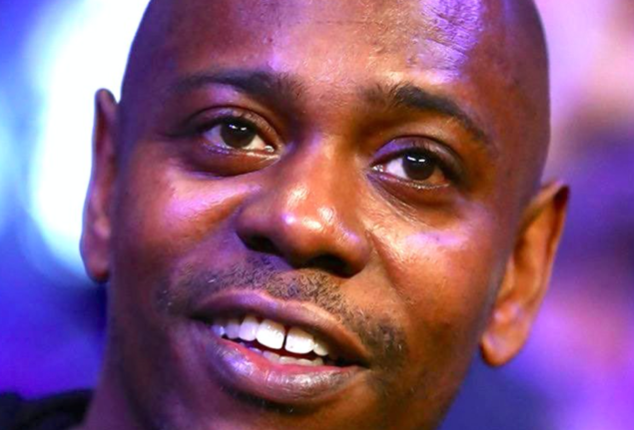
Modern mystic Dave Chapelle says we have to remember that half of the United States doesn’t agree with us. I say it lke this: 71 million people in the United States hate me. And 75 million people love me. Ok. Ok. Maybe not me, maybe it’s Joe Biden or Kamala Harris they love and hate. But if I allow those voters to love and to hate me, the reality is easier to swallow.

The bitter pill is, how do I not hate the 71 million in turn? How doI love them? I know the government to-be will keep more of them from dying of covid-19, fix their crumbling roads and bridges and secure their futures through Social Security and Medicare. I’m grateful for that. And equally grateful I’m removed from those decisions.
The truth is, anytime I’ve tried to stop hating someone who hasn’t been on my side, much less hated me, I’ve fallen short. Oh the people I’ve hated! All the ex’s—husbands, bosses, boyfriends, co-workers. And the parents.
My father gave me good reason to practice hate. I recently received a message from a friend I didn’t think knew my father:
“Your book reminded me of an encounter with your dad. Your description of one of his 4-step cons made me think about his pitch to me. He came to my office with a guy I knew who was supposed to build his credibility. He then revealed he was a VERY SUCCESSFUL businessman / lawyer. He had an important venture that I would want to invest in. He first wanted me to invest $50,000 into a newspaper, aimed at the business I ran. No, not interested. Second, advertising at $25,000 for a two-year commitment would help my business. No, not interested. Third, can we put you on the masthead as an advisor? Your name would guarantee success. No, not interested. Fourth, can you recommend any high-net-worth people? No, can’t do that either. He was smooth, business-like. A real confidence man.“
This is the latest addition to a long list of my father’s marks in his get-rich-quick schemes. It’s taken years of writing to shake off hate and slip into love. He’s been dead over twenty years but I only recently stopped fearing calls that might begin with the four frightening words, “Your father called me.”
Small love allows me to say, “he had a traumatic childhood”. Big love comes from grace. It disallows understanding or analyzation. I’ve just started to love my father, not because of those memories where he deserved love, but in spite of those memories where he didn’t deserve it.
It’s a beginning.
And now, for the 71 million.
This week, six people I know announced they’d tested positive for Covid-19. A few are sick, some are asymptomatic (a word in daliy use now). One of the blessings of Zoom is that some of these covid-positive friends were able to join about 200 other participants on my October 21 Zoom book launch with WBEZ’ Monica Eng. Another blessing? Friends from far afield who wouldn’t have been able to come to Chicago for a book launch party, zoomed in too.
And then there’s people from long ago. Matt Person and I lost contact over thirty years ago. Here’s the message he sent via Facebook Messenger:
Hi Regan, I’m the (Gary Hart) Road Warrior from Cape Cod who said yay Missouri and Indiana yesterday! Thanks for your stories and the awesome interview. We met in St Louis (in’84) and you were a mentor to our group, (Marc) Dann, (Pete) Giangreco. We then all headed to wonderful Indiana where Janet Reed and I worked in Jeffersonville. I returned home to Cape Cod. A decade later I became chef at the US Embassy in Reykjavik for a year. I’m sending you a hug from my partner Jill and myself, with appreciation! Such important experiences, ‘84, ’88. Good and challenging times! Best, Matt
Over on Amazon, a stranger, “Uptown Girl” buried her book review in a reply to a previous Customer Review:
While sex, drugs, and rock & roll are the salt, pepper & salsa of Regan’s delightful book, the constant is her life-long history in politics. I—like everyone—was shocked that Hillary lost in the last election—man, she took some hits, so it warmed my heart when Regan wrote: “I never failed to be completely starstruck by her brilliance, kindness, and sense of humor. She listened to people’s problems and laughed at their jokes” (p. 231). I was not surprised with her other description of Bill and Hillary together: “Hillary Clinton [dressed in a grey tweed suit and black high-heeled feet] is not the kind of woman who knows if there are leftovers in the fridge.” In blue jeans, Bill jumped to his feet, invited the group into the kitchen, and started pulling food from cabinets and containers. (p. 178). I needed to hear all of that. But what wormed its way into my heart and mind was that Regan never lost her faith in God. A god that could take her in—warts, addictions, and bad men. She writes: “I call myself a Christian. I love the same Jesus whose friendship saved me when I was a child. I trust that my despair, my depression, my addictions and my character flaws don’t change the universal goodness of God” (p. 229). Amen, sister. Thank you. I await your sequel. – Uptown Girl
The notes, comments, snaps, yowls and yowzas from these and others about my book are more nurturing than any I’ve received in all the hours I’ve been alive. The words, your words, nourish my spirit. They teach me to feed love and kindness to others—a virtue perpetually under construction in the daily restoration of my soul.
Thank you.

Order “In That Number” at ReganBurke.com
This week, six people I know announced they’d tested positive for Covid-19. A few are sick, some are asymptomatic (a word in daliy use now). One of the blessings of Zoom is that some of these covid-positive friends were able to join about 200 other participants on my October 21 Zoom book launch with WBEZ’ Monica Eng. Another blessing? Friends from far afield who wouldn’t have been able to come to Chicago for a book launch party, zoomed in too.
And then there’s people from long ago. Matt Person and I lost contact over thirty years ago. Here’s the message he sent via Facebook Messenger:
Hi Regan, I’m the (Gary Hart) Road Warrior from Cape Cod who said yay Missouri and Indiana yesterday! Thanks for your stories and the awesome interview. We met in St Louis (in’84) and you were a mentor to our group, (Marc) Dann, (Pete) Giangreco. We then all headed to wonderful Indiana where Janet Reed and I worked in Jeffersonville. I returned home to Cape Cod. A decade later I became chef at the US Embassy in Reykjavik for a year. I’m sending you a hug from my partner Jill and myself, with appreciation! Such important experiences, ‘84, ’88. Good and challenging times! Best, Matt
Over on Amazon, a stranger, “Uptown Girl” buried her book review in a reply to a previous Customer Review:
While sex, drugs, and rock & roll are the salt, pepper & salsa of Regan’s delightful book, the constant is her life-long history in politics. I—like everyone—was shocked that Hillary lost in the last election—man, she took some hits, so it warmed my heart when Regan wrote: “I never failed to be completely starstruck by her brilliance, kindness, and sense of humor. She listened to people’s problems and laughed at their jokes” (p. 231). I was not surprised with her other description of Bill and Hillary together: “Hillary Clinton [dressed in a grey tweed suit and black high-heeled feet] is not the kind of woman who knows if there are leftovers in the fridge.” In blue jeans, Bill jumped to his feet, invited the group into the kitchen, and started pulling food from cabinets and containers. (p. 178). I needed to hear all of that. But what wormed its way into my heart and mind was that Regan never lost her faith in God. A god that could take her in—warts, addictions, and bad men. She writes: “I call myself a Christian. I love the same Jesus whose friendship saved me when I was a child. I trust that my despair, my depression, my addictions and my character flaws don’t change the universal goodness of God” (p. 229). Amen, sister. Thank you. I await your sequel. – Uptown Girl
The notes, comments, snaps, yowls and yowzas from these and others about my book are more nurturing than any I’ve received in all the hours I’ve been alive. The words, your words, nourish my spirit. They teach me to feed love and kindness to others—a virtue perpetually under construction in the daily restoration of my soul.
Thank you.

Order “In That Number” at ReganBurke.com
“In That Number” Book Launch hosted by Skyline Village Chicago via zoom, Oct 21, 2020, 4:00 pm Chicago time with NPR/WBEZ reporter Monica Eng. Register here

Cousin Barb Violi, Omaha Nebraska
In another world and time uncertain, we’d be having a rip-roaring party at Half Sour in Chicago’s South Loop hosted by Beth Finke and Mike Knezovich. Iliana Genkova would pass around campaign-like buttons and cookies with the name of my book tattooed on top. We’d all be happy, joyous and free for a few brief hours away from the worries of the world.
Sigh. We’ll have to settle for a Zoom Book Launch. Please pull up your own refreshments and join us. Monica Eng has graciously agreed to lead the discussion for my book. You’ve heard her reporting on Curious City (most recently about rats!), Thursdays on WBEZ’s “All Things Considered”.
I’ve always wanted to be a published author but I never dreamed my writing would be so well received outside of a small circle of friends and fellow writers. I’m truly humbled. Thank you for reading my book and paying such generous compliments to me in person, on email and text, Face Book and Twitter and Zoom, and even a card in the mail!
A particular thank you to those who’ve encouraged me to compile years worth of 500-word essays from memoir writing classes into a book. It was a harder task and a longer trip than I imagined but well worth the effort. If you’re a writer, keep laying down those words. There’s power in the story. If you’re not a writer, thank you for supporting us; allowing us to make mistakes, grow weary, and to brag when we find that one perfect word for that one perfect sentence in that one perfect paragraph.
Allow me to share my joy with you through a smattering of quotes. In order not to embarrass anyone, I’ve kept most anonymous.
See you October 21!
“In That Number” Book Launch hosted by Skyline Village Chicago via zoom, Oct 21, 2020, 4:00 pm Chicago time with NPR/WBEZ reporter Monica Eng. Register here

Cousin Barb Violi, Omaha Nebraska
In another world and time uncertain, we’d be having a rip-roaring party at Half Sour in Chicago’s South Loop hosted by Beth Finke and Mike Knezovich. Iliana Genkova would pass around campaign-like buttons and cookies with the name of my book tattooed on top. We’d all be happy, joyous and free for a few brief hours away from the worries of the world.
Sigh. We’ll have to settle for a Zoom Book Launch. Please pull up your own refreshments and join us. Monica Eng has graciously agreed to lead the discussion for my book. You’ve heard her reporting on Curious City (most recently about rats!), Thursdays on WBEZ’s “All Things Considered”.
I’ve always wanted to be a published author but I never dreamed my writing would be so well received outside of a small circle of friends and fellow writers. I’m truly humbled. Thank you for reading my book and paying such generous compliments to me in person, on email and text, Face Book and Twitter and Zoom, and even a card in the mail!
A particular thank you to those who’ve encouraged me to compile years worth of 500-word essays from memoir writing classes into a book. It was a harder task and a longer trip than I imagined but well worth the effort. If you’re a writer, keep laying down those words. There’s power in the story. If you’re not a writer, thank you for supporting us; allowing us to make mistakes, grow weary, and to brag when we find that one perfect word for that one perfect sentence in that one perfect paragraph.
Allow me to share my joy with you through a smattering of quotes. In order not to embarrass anyone, I’ve kept most anonymous.
See you October 21!
In May 1990 Agnes collapsed and was taken to the hospital. I was in Chicago and flew to New Jersey immediately. Therese fetched me at Newark Airport and drove straight to Point Pleasant. My mother was unconscious and attached to a breathing machine. When I caressed her hand, I noticed her freshly painted nails.
“We went for a manicure a few days ago.” Cousin Therese whispered.
Agnes had dementia the last five years of her life. Whenever I visited her, we’d have dinner, go to a movie, shop. Her lifelong carping and criticism must have died with the missing brain cells. She was softer, easier to love, without the booze. More than a few times I caught her walking out of a shop with unpaid goods. I thought she just forgot how to pay.
The official cause of death states, “Alzheimer symptoms due to alcoholic brain syndrome.” A few years earlier, alcohol and cigarettes had been removed from her life. But she didn’t know it. Her dementia had progressed to the point that she involuntarily mimicked both lighting up an imaginary Marlboro and sipping an imaginary scotch-on-the-rocks. Wet brain (formally known as Korsakoff syndrome) is caused by alcohol robbing the brain of vitamin B1. The deficiency slowly destroyed her brain cells. The damage progressed beyond the point of no return until she died. She was seventy.
When I was a young wife and mother living in married student housing at Michigan State, my mother would occasionally send me exquisite sweaters, blouses, shoes and boots. My husband was a graduate student. We had a baby. Our only expendable income came from my babysitting jobs. My mother’s part-time job selling shoes supplemented whatever she could beg, borrow or steal from relatives. I gladly accepted her gifts, never questioning how she could afford them.
Agnes taught me to shoplift when I was twelve. At the time I thought we were learning together. She was, in retrospect, more experienced than she should have been for a beginner. I became a successful petty thief until I found God in my mid-twenties and changed my ways.

In dementia Agnes carried a small red leather clutch purse. She incessantly opened it and fingered through its only contents—lipsticks. The nursing home crew gave her their old lipsticks because the sound of them click-clacking as she rifled in her bag calmed her down. Besides, if her purse was filled with lipsticks, she was less likely to lift them from the other residents.
The day she died, Therese suggested we visit the nursing home to thank the staff. Agnes’ nondescript empty bed sat in a room with five others. Her closet and dresser overflowed with garments I’d never seen before.
“Is all this my mother’s?” I asked a nurse.
“No. We couldn’t stop her from taking other people’s clothes so we gave up and let her keep them.”
I thanked her for letting my mother make her own way across the universe.
Bridget Flynn and Michael Burke were born somewhere in the west of Ireland during the Great Famine of 1845-1849. They may have married in Ireland and emigrated to Earlington, Kentucky, or they may have emigrated with their families, met and married later. Or they may never have married at all. I’ve found birth records for two children, Wiliam A. Burke, my grandfather born in 1882 and Mary Agnes Burke, my great-aunt who was a nun at St. Ceceilia’s Academy in Nashville for her entire adult life.
The next generation of the Burkes, Flynns and other Irish immigrants moved up and out of the mines to work for the railroad.
My grandfather listed “boilermaker, RR” on all official documents, even when he registered for the WWII draft at age 59. He married Katherine Kilroy in 1916, moved to Terre Haute, Indiana where she died in a car accident leaving him with three children under the age of four.
The motherless Burke children, including my father, moved into the Kilroy family home with their maternal grandparents, seven aunts, and two uncles. In the early twentieth century, Terre Haute, a railroad town on the Wabash River, sat in the largest coal-producing county in the US. The crossroads entertainment included beer halls full of hustlers, alcoholics, floozies, grifters, drifters, desperadoes, and high-stakes gamblers.

My grandfather worked up and down the Louisiana and Nashville line and often arrived at dawn to visit his children in Terre Haute, for a few hours before hopping back on the afternoon train. It’s been said he was a railroad union organizer and had to be constantly on the move for fear of reprisals from the L & N Railroad’s anti-union thugs. These were the years leading up to the passage of the Railway Labor Act of 1926, which required railroad companies to allow collective bargaining, making it illegal to wage war against their union-organizing employees.
Terre Haute’s most famous citizen, Eugene V. Debs, five-time American presidential candidate, and leader of the Socialist Party of America, had worked on the railroad in the 1870s and became active in the Brotherhood of Locomotive Fireman. Debs led the Brotherhood in a major strike in1888 before founding the American Railway Union.
I have a hunch the family lore about my grandfather’s underground union organizing was greatly influenced by hometown hero Eugene Debs. I met my grandfather once or twice but hardly remember him. The death certificate says he died of a heart attack, “In Penn. RR car somewhere between Indianapolis and Richmond Indiana.”
My father’s generation anglicized their Irishness to fit into white middle class America. He was ashamed of his working-class immigrant heritage. But he took care of those family coal miners and railroad workers—as a young lawyer he worked for John L. Lewis, president of the United Mineworkers and wrote the first pension plan ever negotiated for American labor.