Is This Funny?

Is This Funny?

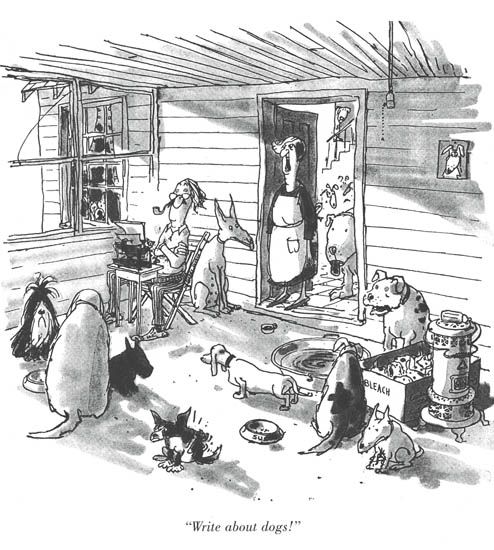
George Booth, the New Yorker cartoonist who died in November 2022, once created the funniest cartoon in memory. First of all, Booth’s silly line drawings were and remain funny enough–they don’t need captions. But the one I so love is a man sitting at his typewriter on a dilapidated porch wistfully smoking a pipe. Nine or ten dogs of different sizes and shapes laze around. There’s a bulbless socket hanging from the ceiling. His wife stands in the doorway. Caption: “Write about dogs!”

Ok. Ok. It’s not the funniest cartoon to you. But for me, a dog owner and a writer, it’s hilarious.

Obviously, the cartoon man has shouted, ‘What should I write about?’  ‘Write about dogs’ is a funny way of saying ‘write what you know’, writing’s first principle. Even fiction holds truths. Funny conversations and tales of goofy adventures are all around, like the dogs in Booth’s cartoon. I hesitate to write them because I don’t want my blog-reading friends to know how amusing their lives are to me. And what if the writing isn’t funny?

This summer I attended a free Comedy Writing Workshop taught by a professional, very intuitive, improv comedian. We didn’t have to pretend to be a tree or a bologna sandwich, though that would’ve been a kick; we simply pretended we were at job interviews and went back & forth with questions and answers. We could have answered any old way, and indeed creativity was encouraged, but everyone in this group seemed to answer like their jobs were on the line for real. And they. were not. funny.

Me? I said I was fired from my last job because I attempted to kill my husband with a stapler when he came to the office for a surprise lunch. Funny? I thought so, but no one laughed. Perhaps I actually look or sound like a murderer.

The comedy teacher smartened up to this over-55 group right away. She tailored the two-hour class to the cognition level of the twelve students she had before her. And still, no one was funny.

A friend of mine who’d recently been examined for dementia gave permission to the memory doctor to ask me how my friend had changed. Without hesitation, I answered, “She’s really funny but it’s taking her longer to get the punch line.”

Is this part of it? Aging, I mean.

Most researchers I skimmed agree that age-related cognitive decline contributes to difficulty with “humor comprehension”. The list of symptoms includes:

  • An inability to understand satire
  • A childlike sense of humor or enjoyment of slapstick comedy
  • Laughing at things that are not particularly funny, such as a dog barking
  • Taking jokes literally
  • Making inappropriate comments about strangers in public

George Booth created his last New Yorker cartoon ten months before he died from complications of dementia at 96. The cartoon cover is a goofy white dog glancing at a clock. Is that funny? A dog checking the time? 

If not, George and I share the same demented symptom of chuckling at things that aren’t particularly funny

.

Surviving Amnesia

God! How I love WebMD! This online ingenious, comprehensive, and reliable health and medical source has saved me from many time-gnawing trips to the Emergency Room.

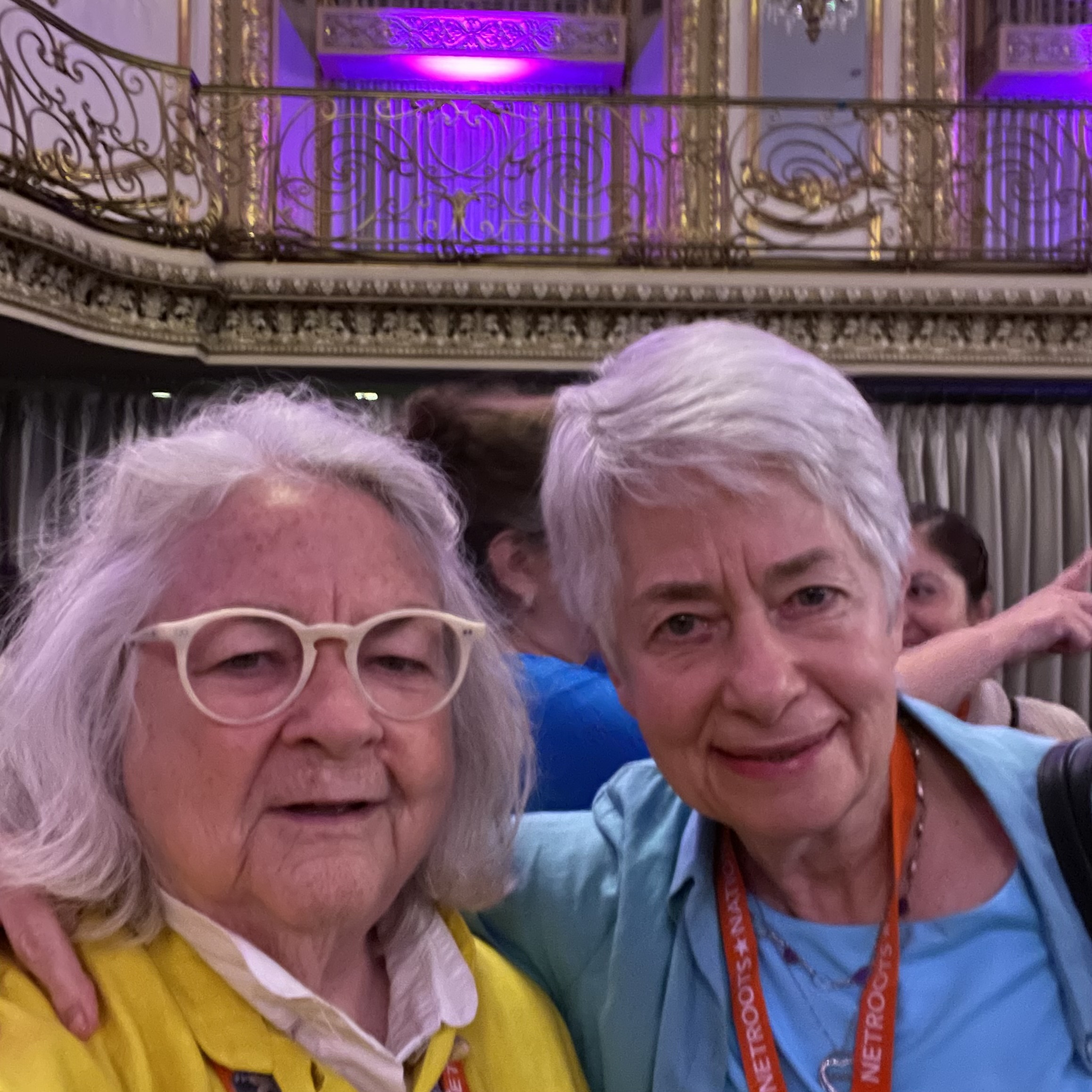
Last week I found myself at the bus stop on State Street near the Hilton Hotel with a “Netroots Nation” Convention credential swinging from my neck. I have no memory of the previous four hours. Zilch. I’d planned to attend the Netroots Nation Convention at the Hilton; the swinging credential assured me I’d at least registered.

Are you thinking I may have experienced an alcoholic blackout? Nope. Those days are long gone. I haven’t had a drink in forty-five years. Arriving home around 9:30 pm, I dove right into my laptop and searched for “lost memories”, which returned a description of something I’d hoped hadn’t happened to me: 

“Losing time, or having large blocks of time for which one has no memory is a symptom of Dissociative Identity Disorder. Sometimes a person will lose so much time that they “wake up” in an unfamiliar town or place. This is called Dissociative Fugue.

Uh-oh. That sounds like the multiple personalities portrayed by Sally Field in the horror movie, “Sybil”. I’d hoped I didn’t murder anyone, or go to some stranger’s hotel room whilst in a fugue state. I searched further—typed “sudden memory loss”:

“Transient global amnesia, TGA, is a sudden loss of memory. It’s an alarming but harmless condition. Symptoms usually last for hours and then memory returns. It has no lasting consequences. Doctors aren’t sure what causes it. It’s more common in people over 50 and with a history of migraines.

Whoa! That’s me! Thank you WebMD and for the good news:

“TGA …is not caused by a neurological condition like epilepsy or stroke. With TGA, you remember who you are and recognize the people you know well.

Netroots Nation’s mission is “to bring together online citizens across America, inject progressive voices into the national conversation, and advance the values of justice, equality, and community in our nation’s politics.” Their annual convention in my hometown came at the right time for my aging activism. Chicago had just elected a progressive, smart, kind-hearted new mayor, Brandon Johnson. I believe with my whole heart that within a few years, Chicago will be a role model of common solutions for all American cities. At the convention, I’d hoped to replenish my quiver’s rah-rah-cis-boom-bah that had fizzled since Mayor Johnson’s inauguration. 

In the late afternoon of the TGA incident, I planned to attend an event in the Waldorf Room, “Solidarity Across Differences: Organizing When We Disagree.” There’s no evidence I was there. But I was somewhere. My little black-and-white pocket notebook has three new quotes in my handwriting:

“There’s a collective out there that wants to shrink the hope of the possible.” Emma Tai, Director United Working Families—the grassroots organization that helped elect Brandon Johnson

“Chicago is a town that’s gonna show the world what the future looks like.”  Randi Weingarten, President American Federation of Teachers

“Safety is not blue lights.”  Brandon Johnson, Chicago Mayor

My iPhone displays several close-up photos of Mayor Johnson giving a speech, two selfies at the food table, and one selfie with Heather Booth a long-time political activist from Washington, DC. With the exception of the food table, these are exactly what I would have photographed, had I been in my right mind, proving once again how competent my online doctor, WebMD, is. 

“…in TGA the patient cannot acquire new memories but otherwise can function normally; personal identity is retained…”

Whew! What a relief; between the notebook inscriptions and my photos, I have proof I acted my best self, and confirmation I had all the symptoms of an episode of  TGA, Transient Global Amnesia.

Do I feel safe? Absolutely. Dr. WebMD tells me there’s rarely more than one occurrence. And no one has come forward to tell me I acted like Sybil.

At least not yet.

Mea Culpa NASCAR

Mea Culpa NASCAR

Elsa the Westie and I routed ourselves around the sidewalk construction barrier, down the block and around the corner to the park. I’d spent the early morning alone, lamenting this week’s Supreme Court decisions that flattened civil and human rights. A fellow dog-walker stopped me mid-thought.

 “Now they’re giving driver’s licenses to those immigrants!”

It mattered not that she was the owner of a cute little dog, she instantly turned savage in my eyes.

“So what?” I said. “Now they can drive to work.”

‘Work? They’re not working. They’re just laying around outside the police station.”

Elsa and I were both satisfied with her morning duties. I grabbed a coffee at the walk-up cafe. We settled in to soak up the morning airs with a friend on a bench near the tennis courts, dismissing the ugly of the street conversation.

A couple wearing Purdue t-shirts had circled the track and eyeballed Elsa. As they approached, my thoughts turned to the political atmosphere in Indiana. I wondered if they, too, wanted to speak hatefully of the asylum-seekers who made their way from Venezuela to Chicago, mostly on foot. 

“We had a 16-year old Westie who just died.”

Ah, sweet relief. Dog talk.

After sympathies for their dead dog, my recent dead dog, and all the dogs we’ve ever owned, the conversation turned to their new home in Carmel, Indiana, where they retired from a life of teaching in central Illinois. An arts colony, they called it. I must give off an it’s-ok-to-talk-to-me-about-politics aroma since the conversation led into the difference between the people of Indiana and Illinois. They gave us a for-instance.

 “We went to a James Taylor concert a few weeks ago in Carmel,” the man said, “when he announced he lived in California, the audience booed.”

 And there it is again; uninvited discomfort creeping into my life, demanding an audience. More sympathies all around for the Illinois couple and their unanticipated Hoosier life. At least they had a Chicago retreat and park-bench strangers like me to complain to. 

 But who am I kidding? 

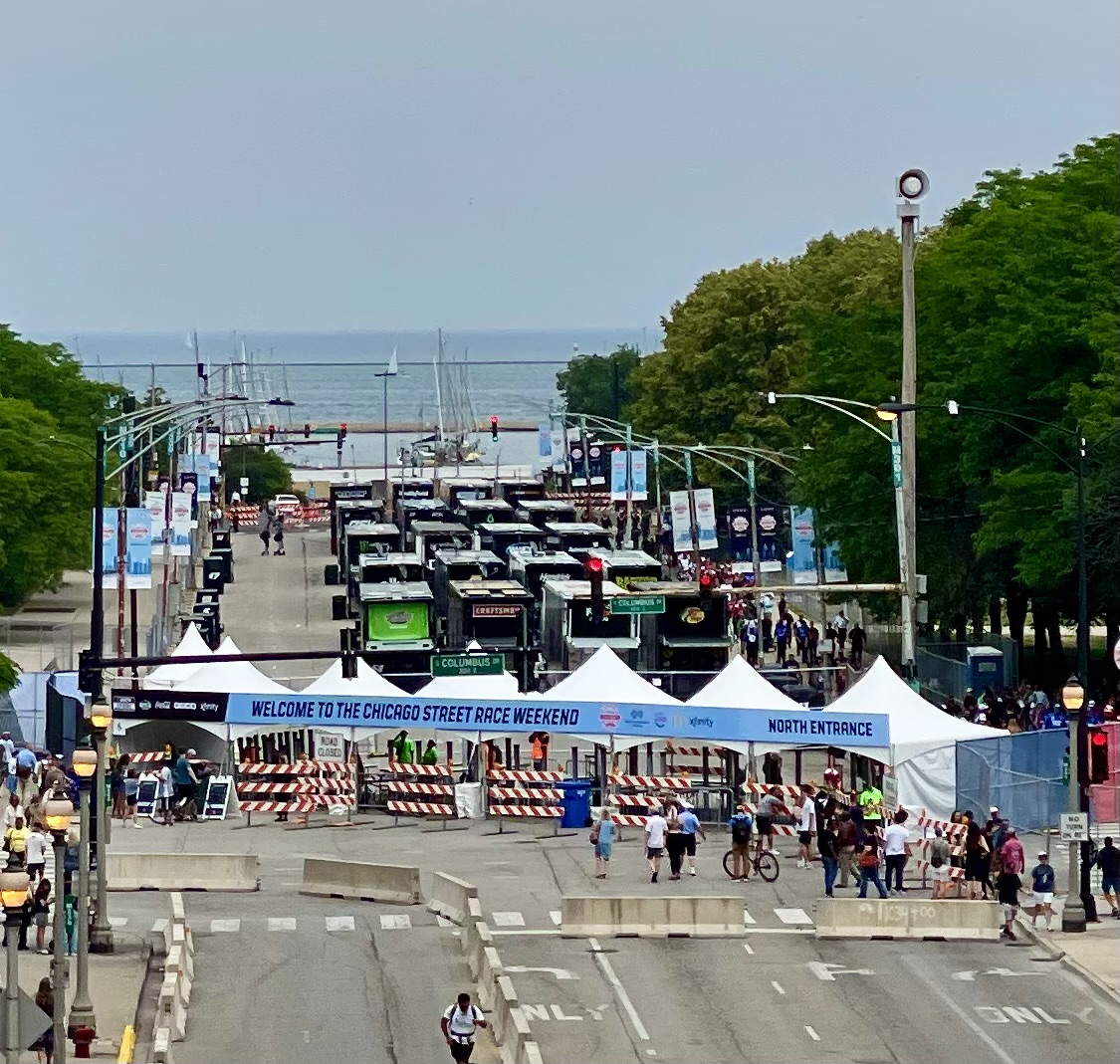
I started the weekend so contemptuous of NASCAR coming to Chicago that I was itching to be heard. The sidewalks were so empty at the start of the Fourth of July weekend, I figured all the residents had Air B&B’d their condos to NASCAR fans. Every time I saw people wheeling their suitcases down the street, looking at directions on their phones, I muttered to myself, “NASCAR”.

 And then it rained. In fact Mayor Johnson said it was the most rainfall on the city since 1987. I turned on the TV to guess what? NASCAR—just as Dale Earnhardt, Jr. announced the cars were passing Chicago Symphony Center. What a thrill to see my city washed clean, a shining backdrop to those who came here to show it off. 

I’ve never been comfortable with monoculturalism, where everyone looks and thinks alike. But contempt for the Other, those with differing views and interests, has given me nothing but backaches.


Driven to Risks

Driven to Risks

In 1950s Wilmette, Illinois, children followed rules. Not many ten year olds would steal onto the public works property and play around on the Water Plant roof. The first taboo my sister and I broke was to gather stones and toss them from the roof into the sand below. Next, we dared each other to jump off the 1930s one-story building. The sand provided a warm soft landing and extracted plenty of triumphant giggles from two adventurous little girls.

The Wilmette Water Plant, built into a low cliff on the shores of Lake Michigan, is walled off by an eight-foot cast iron spiked fence. The street level roof sits back far enough from the shore road to avert curiosity. A 1956 building expansion required a construction entrance in the fence leaving the Water Works temporarily defenseless.

We waited until the workers left for the day and again and again sneaked onto the roof to throw ourselves off. Eventually my sister slacked off and I jumped alone. Each leap to the unknown helped transcend the uncertainty of our volatile home life. For years afterwards I dreamed I was flying. Indeed, when I took a lot of psychedelic drugs in my 20s, I relived those jumps. 

In winter, down the street from the Water Works on the same cliff system, the fire department hosed down a steep hill for sledding. Devil-may-care pre-snowboarders sailed down the icy slope standing on cardboard slabs. Eventually I tossed the cardboard and flew downhill toward Lake Michigan standing only on my brown rubber boots. Ambulances, always at the ready, carted off sledders everyday to Evanston Hospital. Never me.

I see no reason to examine why I’m driven to dangerous adventures. Risky jumps and high-flying sledding sparked a fire in me that can’t be extinguished. Perhaps those early escapades instilled self-confidence, or more likely, false invincibility. 

For a few years I spent all my expendable income on scuba diving in the Bahamas. After a short course in diving, and a few failed attempts, I jumped to the unknown once again and flippered around with the fish. I never once thought of the risks. And there are plenty. 

Scuba Diving in the Bahamas

One morning before I left the islands, I suited up and waited for the divemaster to outfit the boat. I casually mentioned to a fellow diver I was leaving that afternoon.

“Are you flying?” asked the divemaster.

Yes I was. 

“Hang up your wetsuit and get out of here! Don’t you know you’ll get the bends if you dive and fly the same day? Your insides could explode in the plane!”

On social media last week, many posts begrudged the efforts to rescue five wealthy souls lost in the Titan submarine. My risky adventures are over now, and were never so grand. But I join adventurers everywhere who cherish the U.S. Coast Guard’s salvation message:

“We don’t put a price on human life. Every person who is missing deserves to be found. That’s the mission, regardless of who you are.”

Father’s Day: What Remains

Father’s Day: What Remains

His wavy black hair glistened as the light from oncoming headlights and street lamps streamed in and out of the front seat. With his left hand on the steering wheel, my father opened a pack of Pall Malls with his right, pulled out a cigarette between his teeth, and plugged in the lighter, all in one smooth move. I couldn’t wait to see the sparks, hear the hiss, and smell the burn as the lighter pressed up against the tobacco. The Pall Mall dangled between two yellow-stained fingers while the other two fingers and thumb encircled the steering wheel. In the passenger seat my mother scissored her cigarette between two Revlon-tipped fingers.

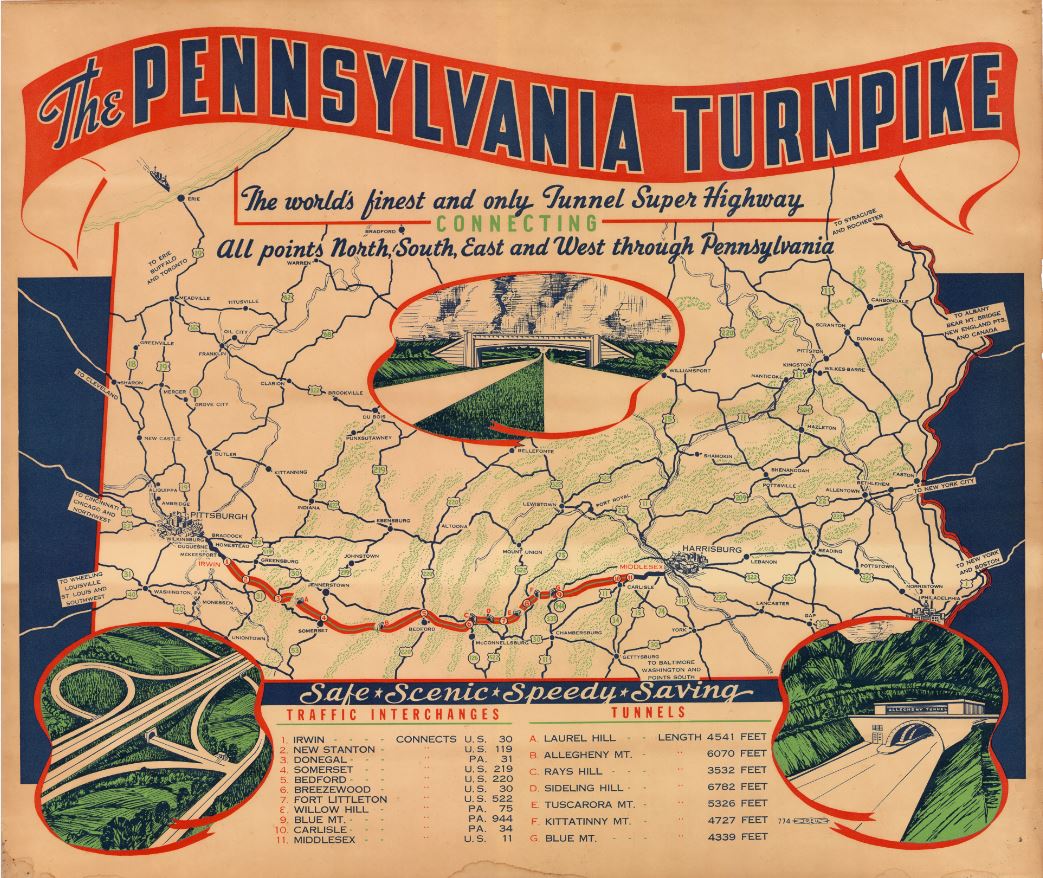
“We’re almost at the Pennsylvania Turnpike,” my mother announced.

The Pennsylvania Turnpike. My earliest memory of my father is watching the back of his head  moving up and back searching for signs for the Pennsylvania Turnpike. He’d driven my mother, my two sisters and I away from our home in Washington, DC, with the false hope of finding a saner life in Terre Haute, Indiana, his hometown. In 1952, driving north on two-lane roads through rural Maryland to hook up with the Pennsylvania Turnpike was a challenge, accepted by both parents. They knew their geography.

The Pennsylvania Turnpike ranks as the first long-distance highway built in the nation’s interstate highway system. Drivers and non-drivers alike bragged that call boxes were installed every mile to connect to an emergency service. Radio stations and newspapers across the U.S. followed the progress of the Pennsylvania Turnpike for its entire sixteen-year construction period.

“We’re headed into the Allegheny Mountain Tunnel,” my father said.

“How did they make this tunnel?” I asked.

“They dynamited a hole through the mountain.”

As we drove into the dimly-lit black cavern, I involuntarily stopped breathing. I could feel the full weight of the mountain above. I gripped the side of the window with my fingernails until we emerged a mile later into the Allegheny Mountains on the Pennsylvania Turnpike.

The super highway crosses the Appalachian Mountain Range in the central part of the state, passing through four tunnels and over five bridges. My mother called out the names of each map marker, a verification that we were on the right track. Allegheny, Susquehanna, Kittatinny, Mechanicsburg, Harrisburg, Pittsburgh, Blue Mountain.

Such was my introduction to the joy of map reading. My parents had the bug already. Nothing delighted them more than seeing a name printed on a big sheet of paper, driving in that direction, and coming across it in real life. It was more than just the practical accomplishment. They interacted with the world around them.

“Look! Shippensburg. That’s where your Navy friend is from.”

“There’s Hershey, where they make chocolate.”

“See the sign for Johnstown, home of the flood?”

There’s no chance we crossed Ohio and Illinois into Indiana without my parents’ succumbing to a drunken brawl. But grace abounds in recollecting those melodious names; navigating the Pennsylvania Turnpike is the only memory I have of my parents ever enjoying each other.

Born Free

Born Free

Most gay anthem playlists include these songs:  I Will Survive by Gloria Gaynor, Freedom! ’90 by George Michael, Vogue by Madonna, I’m Coming Out by Diana Ross, anything by Beyonce, Cher, Donna Summers, Lady Gaga and of course, Billy Porter. But no recognition for the song Born Free.

I recently attended a friend’s bon voyage picnic with my new dog. 99% of the picnickers were men. They adored my fluffy little white Westie with her pink-lined pricked ears. 

“What’s her name?” One guy asked. 

“Elsa,” I answered. 

He and his companion then broke out singing Born Free. Others joined in the serenade. 

Born free, free as the wind blows…

I looked straight at my friend with a questioning side smile and squinty eyes. 

“Gay,” was his answer. 

“Some kind of anthem?” I asked.

“Yep. From the movie.”

“Oh, I get it. Elsa. The lioness. Wanna go with me & Elsa to the Pride parade?” I asked him.

“Absolutely not!” he exclaimed. 

None of my gay friends express interest in Pride hoopla. At least not to me. But in social gatherings, I’ve overheard one or more talking about some cute guy they’d met at the Parade. It’s understandable. The Parade covers a lot of geography and seems to have no time constraints. If you live in Parade neighborhoods, you’re bound to meet a cute guy or two passing by. 

The rejection of Pride celebrations is a bit more puzzling. I’m not particularly drawn to St. Patrick’s Day parties and parades, but neither am I celebrating Irish freedom. After the first official Chicago Pride parade in 1981, I celebrated gay liberation at a raucous party in Lincoln Park . Plenty of our gay friends were invited. But they didn’t show. Perhaps they excluded us from their Pride activities because gay liberation didn’t belong to us? Nor we to it?

Political friends wave the flag, not necessarily to show they’re gay, but, as I do, to support gay rights. Showing the colors this year is especially important because recent laws in other states restrict gay freedom, including drag shows. 

On a stroll down Michigan Avenue the other day, I was overwhelmed by the display of rainbow colors in front of my church. There are ribbons tied to each iron fence post spelling out the iconic colors of gay pride—for the entire block in front of the church. 

“So colorful,” I mentioned to my walking companion.

“Doesn’t it make you feel kinda bad?” She asked.

“Whaddya mean?”

“Well, it’s a celebration for gays. And you’re not.”

Some of the church’s older adults asked to celebrate gay rights by having a drag show for their small group. The church denied the request. I’m excluded from men’s bible study, twenty-somethings and couples church groups. And like those, perhaps celebrating gay freedom with events like drag shows, really is (inadvertently) reserved for gays only. 

Fortunately, I can honor the entire queer nation by re-watching this year’s Tony Awards. 

Meanwhile, song compilers need to include Born Free in gay anthem song lists. 

Tommy at Woodstock

Tommy at Woodstock

Two neglected shoeboxes of faded and forgotten memories sit on the top shelf of my bedroom closet. They are filled with negatives, a noun I’ve not heard nor used since the Aughts gave us cameras on our mobile phones. I had used all types of cameras in my life from a Kodak Brownie to a 35 millimeter Pentax until photographic film and developing became too expensive in the 2000s. All my cameras had film that I’d drop off at the corner drug store or a camera shop for developing. I’d then mark time for a week or more waiting to hear that my pictures were ready for pick-up. The much anticipated package included the developed photos and their corresponding negatives.

A negative is the reversed image of the picture that can be used to develop another print. They were produced on small strips or sheets of transparent plastic film. Eight or ten miniature negative images appeared on each dark strip. If I wanted to reproduce a photo, I’d hold the plastic film up to the light, protect it from my fingerprints, search for the picture I wanted, cut the tiny square from the strip, and take it to the store for developing.

There’s no logical reason I packed old negatives in archival boxes and stored them on the top shelf of my closet. In order to get to them, I need to unfold the step stool, risk pinching a finger or two, and trust my balance will hold as I climb each step to reach the shelf. I have no intention of ever looking through the negatives in order to develop old photos. Most of the corresponding pictures may be in musty albums in my bookcase. I’m never drawn to those either.  

A few years ago I acquired a photo scanner. I offered to pay my teenage grandson to digitize my photos as a summer job. 

“I don’t know how to do that,” he answered.

“It’s easy. I’ll show you. You can do it at home and upload to your computer.”

“Naaw, I don’t think I’d like that.”

All hope drifted away then, that any of my relations would be interested in the photographic documentation of my life. I can’t blame him. I was never curious about details of my parents’ or grandparents’ lives until recently. How can I tell him that when he nears his sixties or seventies he’s going to find himself wondering what I and his other ancestors did during our lives? More importantly, how will he come to know that factors outside his control, passed down generation after generation may be the source of his own physical or mental hardships?

A production of the rock opera Tommy will be onstage this summer at Chicago’s Goodman Theater. 

“Wow! You saw Tommy at Woodstock?” exclaimed a theater-goer when we were in line to purchase tickets. 

Woodstock cachet seems to increase with every passing era. Forget the old photos. My-grandmother-went-to-Woodstock is probably the only legacy my grandchildren will ever need.

Listen to the Women

Listen to the Women

Our mythological mother, Eve, plucked our heads from the clouds and planted our feet on the ground when she told Adam, “we need to eat that apple to get insight into human nature so we know what we’re up against.” 

Some people dismiss, even deride women’s intuition. Perhaps this wrongheadedness is a subconscious backlash to colonial times when women were burned alive for their bewitching claims of divine truth-telling.

Three Chicago iconoclasts are standouts in demonstrating their feminine intuition and consequent leadership: Dorothy Day, Ida B. Wells and Emma Tai.

Emma Tai? 

Sagacious Democratic strategist David Axelrod praised Paul Vallas for his “brilliant” single-issue strategy during the 2023 Chicago mayoral campaign. Vallas pounded out one violent crime message after another. But, fortunately for Chicago, that was not the winning strategy.  

As the chief organizer for the progressive Working Families organization, Emma Tai honed her skills over the last ten years in grassroots campaigning, winning seats in Chicago’s city council. Conventional wisdom blinded moribund pundits into believing Vallas’ money and endorsements were a path to victory. They underestimated the tenacious Emma Tai—and never saw Brandon Johnson coming.

The losing Paul Vallas campaign outspent the winning Brandon Johnson campaign two to one. 

“I knew if we won, it would only be because of organizing our ground game.” Tai said. “Our people were on the doors, and the Vallas people weren’t on the doors. We had a door-knocking program across all fifty of Chicago’s wards. On election day, I felt confident that we’d left it all on the field.”

Dorothy Day wrote about and advocated for the poor and oppressed all her life. In the 1930s, Day, a pacifist, established the Catholic Worker Movement, to aid the poor and homeless. She continually  fought patriarchal systems in the workplace, politics, social structures, and the Catholic Church. She wrote uncompromising pacifist articles for the Catholic Worker, bucking the Catholic doctrine of just war theory. In 1951, the exasperated Archdiocese of New York ordered Day to cease publication or remove the word Catholic from her publication’s name. She did neither. 

Then in1983, a pastoral letter issued by the U.S. Conference of Catholic Bishops, noted her role in establishing non-violence as a Catholic principle: “The nonviolent witness of such figures as Dorothy Day and Martin Luther King has had profound impact upon the life of the Church in the United States.”

 In 1892, Ida Bell Wells, born into slavery during the Civil War, published an editorial in the Memphis Free Speech refuting what she called “that old threadbare lie that Negro men rape White women. If Southern men are not careful, a conclusion might be reached which will be very damaging to the moral reputation of their women.”

Violent white backlash drove her away from the south and eventually to Chicago. One of her lifelong pursuits was exposing lynchings of Black men. White suffragettes ridiculed and ostracized Ida because she openly confronted those who ignored lynching. Nevertheless, she continued advocating for women’s right to vote. 

Her passions drove her to found The Chicago Conservator, the first Black newspaper in Chicago; establish Chicago’s first kindergarten for Black children; help found the NAACP; found the National Equal Rights League calling on President Woodrow Wilson to end discrimination in government jobs; organize The Women’s Era Club, a first-of-its-kind civic club for African-American women in Chicago; help organize the National Afro-American Council, serving as the organization’s first secretary; found the Negro Fellowship League, the first Black settlement house in Chicago; organize the Alpha Suffrage Club to further voting rights for all women. 

The U.S. government placed Wells under surveillance, as a dangerous “race agitator”.  She ignored this threat and wrote a series of investigative reports for the Chicago Defender on the East St. Louis Race Riots. She then founded the Third Ward Women’s Political Club to help Black people become involved in Chicago politics.

 At Thalia Hall in Pilsen, reporter Laura Washington asked Mayor-Elect Brandon Johnson who his advisors would be when he sits in the mayor’s office.

He turned to the audience, looked around, paused, smiled, and answered. 

“I’m going to listen to the women.” 

Smart move, Mr. Mayor.

Green-eyed Monster

Green-eyed Monster

During my First Grade year I spent most of my schooldays in bed with all the feverish childhood diseases— measles, mumps, chicken pox—an inauspicious beginning to my school career.

Memories of the year are bereft of detail. My family moved within the boundaries of the District of Columbia that year so my sisters could stay in their school. I think we lived with relatives or friends, then a hotel. Different sick beds float around in my consciousness—or is it subconscious?

Having exhausted all resources in Washington, my father moved us to his hometown, Terre Haute, Indiana. My poor mother was an east coast snob, a New Jersey socialite, if there is such a thing. Drinking was her solution to surviving the dregs of Terre Haute. She enrolled my two sisters and me in the local parochial school, then left it to us to find our way there and back.

I went directly into to Second Grade because of my age. When the St. Joseph nuns discovered I couldn’t read or write, they sent me back to the First Grade. Fine with me. My sister was there, a comfort blanket. In order to thwart any trauma, my mother took me to the bike shop. 

“What’s your favorite color?” The clerk asked.

“My favorite color?” 

 I didn’t know I could have a favorite color, didn’t know anyone could have a favorite color.

“Do I have a favorite color?” I asked my mother.

“Green,”she said, “Like the trees.”

We walked out with my green Schwinn Roadmaster, garnished with a straw basket, chrome horn and a Rocket Ray headlight soldered to the front fender. My mother thought I knew how to ride a bike, like she thought I knew how to read and write. She got in the car, waved and said, “see you at home!” I climbed on and off, balanced and pedaled, fell off, climbed back on and pedaled home. 

From that time on, it was well-established that green was my favorite color. When I was a young wife and mother living in married student housing at Spartan Green Michigan State, my mother sent me a birthday gift—green pleated skirt, green sweater and green beret. 

Within a few weeks of receiving my green bike, bikes mysteriously appeared for my sisters in their favorite colors, blue and red. The favored status I’d held for the humiliation of having to repeat the First Grade perverted into favors for those two. That green-eyed monster laid low in my soul for years until it materialized at the bottom of a vodka bottle. I squashed it forevermore in a Twelve-Step program.

Susan B. Anthony once said, ”Bicycling has done more to emancipate women than anything else in the world. It gives freedom and self-reliance.” I can vouch for that. I freely bicycled all around any town I’ve ever lived, until at last, I put a permanent lock on my bike at age seventy-five. 

Self-reliance, however, is a two-faced virtue, not one for an eight year-old, girl or boy, to have to learn. 

Holidays Interrupted

Holidays Interrupted


In the Indianapolis Woolworth’s, I bought a Davy Crockett coonskin hat for fifty cents when I was eight. It was the biggest store I’d been in by myself until the Famous-Barr Co. department store in Clayton, Missouri.

In 1956 my family moved to Maryland Avenue in Clayton, directly behind the mid-century modern Famous-Barr store. Old-growth trees, low-lying rhododendron and azaleas filled our property. Burglar-proof chain link fences adorned with honeysuckle prevented all of us on Maryland Avenue from wandering over to the store through the loading dock from our backyards.

The first time I perched on an oak branch and peeked through its leaves at windowless Famous-Barr, I imagined a space ship had landed without anyone telling us. The 1940’s modern has a molded-cement four-story curved front, made to mimic the curve of Forsyth Avenue. My ten year old feet were itching to sneak down the street and around the fence to explore the inside.

As soon as my mother discovered I’d been wandering around Famous-Barr by myself, she sent me on errands to purchase small items like buttons and thread, and birthday cards she’d never send. I spent a lot of time examining the jewelry and when I received money for my tenth birthday I promptly ran to Famous-Barr for a coveted Elvis necklace.

One day before Christmas my mother kept me home from school and sent me to Famous-Barr. I had strict instructions to buy solid red wrapping paper, solid green ribbon and scotch tape.When I arrived home, boxes were piled up on the living room floor stamped with the Famous-Barr logos. She showed me how to wrap one box and told me to do the rest.

“Do not under any circumstances look in any of the boxes,” she instructed, “Just wrap them and put them under the tree.”

Then she went to bed.

It didn’t take long before I deduced she trusted me with keeping the contents secret. Of course she expected me to look inside. Every box had clothes for me and my two sisters. Skirts, blouses, sweaters, socks, underwear, shoes, gloves and hats. My mother thought sameness was elegant. She dressed us alike, as she did the boxes. 

I was used to keeping family secrets and easily kept this one. My sisters would have been angry with me for different reasons if I’d told them. One, because I knew before she did. The other, because she hated dressing in the same clothes, and that was reason enough to resent me.

On Christmas morning there were full ashtrays and dirty glasses throughout the house from the night before. Our parents were impossible to arouse from their drunken stupor so we opened presents without them. We shuffled the garments between us to try on our respective sizes. We loved our clothes and remained dressed all day as if someone might come along and take a picture.

For many holidays since, I’ve decorated boxes and feigned excitement. But true holiday spirit left me forever on the notions floor of Famous-Barr.