Jews

Jews

Jesus, my lifelong friend, accompanied me through chicken pox, mumps, and measles when quarantine isolated me from my sisters, parents, and friends. No, I didn’t have Mother Theresa-like visions. He was more of an imaginary friend for my waxing brain, like an animated Pooh Bear.  Clergy at St. Mary’s school in Terre Haute, Indiana, taught that Jesus was born in Bethlehem and died in Jerusalem. Due to those back-to-back pre-vaccine childhood illnesses, I heard these Jesus facts my second time around in the first grade. The teaching doubled down in my malleable brain, which had grown to ninety-five percent of its total capacity, normal for a six-year-old.

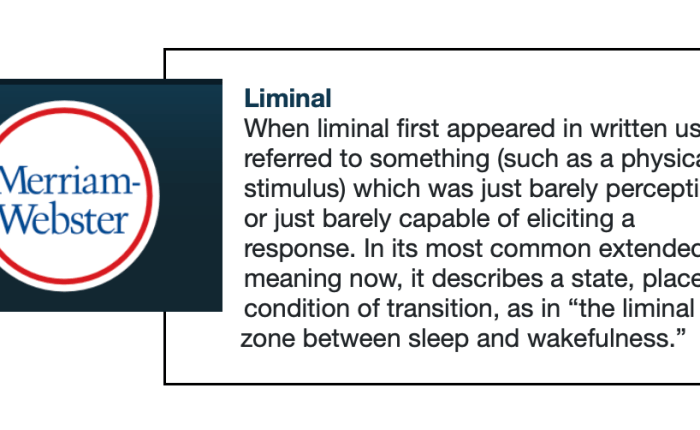
There was never any question that Jesus was born of Jewish parents. Israel, presented as a holy place, not a political state, was sacred ground because that’s where Jesus lived. There was always the implication that we, as Catholics, were in Jesus’s family, that somehow we had Jewish roots. If Jews believed in Jesus, they got to go to heaven, like us Catholics. But no other religion. Such was my Roman Catholic schooling.

Our single black-and-white family television transmitted few programs into our living room in the 1950s. Roy Rogers and I Love Lucy were allowed, but my parents insisted we watch the nightly news. My sisters and I didn’t dare whine for fear of verbal reprisals like, “Shut up and listen—maybe you’ll learn something.” 

They’d let us watch “This is Your Life,” a forerunner to PBS’ “Finding Your Roots’. In 1953, This is Your Life broadcasted the story of 32-year-old Hanna Bloch-Kohner, a Holocaust survivor. I wasn’t much interested in the not-so-famous Hanna, but I did wonder about the Holocaust.

When I was ten years old, as my brain power peaked, local TV stations advertised the opening of Old Orchard Shopping Center in Skokie, Illinois. We lived in Wilmette, on the border of Skokie.

“Where’s Skokie?” I asked my mother.

“That’s where all the Jews live.” She answered.

All my thoughts screeched to a halt. I’d never seen a Jew. I assumed that whatever Jews were leftover from the time of Jesus surely had died in that mysterious “Holocaust,” a word adults uttered in a hush. Of course, I couldn’t ask my mother what Jews were doing in Skokie. She expected me to know what she knew, no matter the subject. She would have ridiculed me with a sarcastic, “You’re kidding me. Don’t you watch the news?”

From that moment on, I looked for Jews in supermarkets, at the beach, in the record store, and even at school. It’s possible I looked for men who resembled Jesus. In high school, I met a Jewish brother and sister. I stared them into my spiritual family. I wondered how they got to New Jersey from Bethlehem or Jerusalem or Israel, those holy places whose ancient remnants had settled in my bones, with Jesus. 

My brain, now waning, has reformed itself through evidence, facts, and logic into knowing and loving the Jewish story. There may be evidence, and there may be facts, but there’s no logic to knowing Jesus. 

That’s still a belief. 

Falsely Accused

Falsely Accused

Fresh off a Zoom webinar titled Midwest Reparations, I rushed to my local coffee shop for a takeaway to sip during my upcoming current events group.

“12-ounce coffee in a 16-ounce cup?” The White barista asked. That’s my usual, with room for cream.

“Yes, please. What are all these new pastries? Chocolate cake? Key lime pie?”

“Yep, they’re new. All from different bakeries” said the barista.

“I’ll be back later with friends. They. Will. Love. These.” I said.

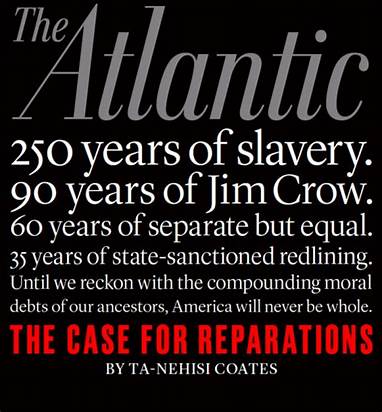
The Blackroots Alliance webinar that morning enlightened me on reparations projects in the Midwest. These are nascent activities reviving the 159-year-old “40 Acres and a Mule” policy for emancipated slaves that was promised and then revoked during Reconstruction. The initial focus of current reparations projects is research to uncover the descendants of enslaved people and how they’ve been impacted. Non-Black allies join at the end of the process when it’s time to distribute funds. Research is conducted by the harmed community, Black Americans, particularly African descendants, who look through the eyes of the tortured generations of chattel slavery. Non-Black Americans cannot be trusted to do this research since they see through a different lens: the eyes of the colonizers, the enslavers, the guardians of the dominant culture.

With this new information,  I was wondering how I, an old White woman, could fit into the reparations movement as I filled my coffee with half and half and rushed over to my current events group.

The group discussed the news of familiar territory: TFG, the former guy, and his latest legal shenanigans, immigration, climate change, gun control, and the ever-evolving White Christian Nationalism. Afterward, a small group sauntered over to the coffee shop where I’d spotted the new pastries. Six of us pulled up around a small table, coats draped over our chairs, rising one by one to fetch our drinks. 

I was the last one to the counter.

“I’m sorry, we can’t serve you.” said the barista.

“What?”

“We can’t serve you. The manager wants to talk to you.”  I joined my friends and announced what happened. The manager appeared and asked to speak to me privately.

“We can’t serve you because there’s been a report of you using a racial slur this morning.”

“What? What racial slur?

“The “N” word.”

“Well, there’s a mistake. I’ve never used that word in my life.’

“You understand we have to investigate when something like this is reported?”

“Wait. Are you accusing me of this?

“We have to investigate. Meanwhile, we cannot serve you.”

“For how long?”

“For the unforeseeable future.”

“You’re kidding. Look at me. I really don’t have an unforeseeable future.”

My friends were incredulous. ‘You? Boy, have they got the wrong person.’ They were ready to mount a protest in front of the building, signs and all.

In the following days, I connected with the company’s Chief Operating Officer. She apologized and emailed me a store voucher for $150. That’s a lot of coffee.

The coffee reparations, however, failed to dispel the lingering notion that I’m not a credible witness to my own story, that I’m not sufficiently worthy to be believed. How can we expect descendants of enslaved Africans to automatically manifest self-worth after enduring generations of false accusations, lynchings, and pressed-down powerlessness? 

We owe them a lot.

Sensemaking: The Eclipse

Sensemaking: The Eclipse

From my window, I can see Lake Shore Drive’s curve at Oak Street, an “S” curve fraught with danger. Some days, as many as five separate car crashes occur from unsuspecting or inexperienced drivers speeding toward the curve and sliding off the road. Heavy gauge ribbed steel barriers prevent errant vehicles from jumping the curb, flying off across a small park, and crashing into the Drake Hotel and vintage apartment buildings on East Lake Shore Drive.

On eclipse day, April 8, 2024, an East Lake Shore Drive building was an arrival point for President Joe Biden’s visit to Chicago. To augment the threat of car bombs speeding down Lake Shore Drive and intentionally barreling off into the building, city salt trucks lined up bumper to bumper on a half-mile stretch of the S curve that hugs the small park on one side and Lake Michigan on the other.

At 2:07 pm, the moon blocked the sun by 94% as I waited in the park with my dog Elsa. A few other dogs tethered to humans stood nearby. 

“Is the eclipse happening soon?” I called out to one.

“Yes, right now,” a neighbor announced.

“Here!” He rushed over and handed me his solar glasses so I could see the shadow of the moon crossing the sun. 

“Oh, there it is,” I whispered, “I thought the sky would be dark.”

At 94% sunshine, the sky doesn’t turn dark. Even a tiny sliver of the sun is so bright it can light up the sky. I hadn’t been paying much attention to the details of the solar cycle or lunar eclipses. I knew light from that 6% sunshine is so intense it can fry your eyeballs, but I didn’t know that 6% sunshine gives off an intense, vibrant light capable of eliminating shadows.

As I handed the solar glasses back to my neighbor, I looked down at Elsa, standing in the projection of overhead tree limbs. April brought out buds, but still no shady foliage. The images of the boughs, branches, and twigs on the ground were as clear as they were on the trees, like a photo. A perfect mirror image of the deep brown arbor architecture above. Nothing in my memory compared to this. I sensed, though, a deep knowing, as if ancient benevolent familiars had brought me the seeing of a thousand ancestors.


Elsa in the eclipse

“The sun is about a million times brighter than the full moon,” explains Angela Speck, an astronomer at the University of Texas at San Antonio, “So if 99.9% of the sun is obscured,” she says, “there will still be a thousand times more light than the full moon.

I read that in the days before the eclipse, but it held no meaning and slipped my memory. I still had a preconceived notion that the sky would turn black. Experiencing the solar light on the ground, mine and Elsa’s ground, in the valley between the salt trucks and the highrises, revved up my consciousness. 

Now it makes sense.

Lunch Money Reparations

Lunch Money Reparations

At the Goodman Theater Chicago’s Storytelling class, teaching artist Julie Ganey prompted us to write a “story of changed perspective” based on Goodman’s production of Margaret Atwood’s Penelopiad. 

I had a story in the can, Lunch Money, about a changed perspective, and decided to revise it for the storytelling assignment before I saw the Penelopiad performance. When I finally saw Peneliopiad, I couldn’t see the change in perspective theme—still can’t. Did Penelope change her perspective? Did Odysseus? Who? What? 

Had I seen Peneiopiad first (one of the best productions I’ve ever seen in any theater anywhere), I would have written about an experience in honest storytelling.  I have lots of those. But, alas, it’s best I don’t sermonize on truthtelling. The following is my change-in-perspective story, which I’ll soon be reciting in person at the Goodman Theater’s “Lobby Stories.” If you’re a regular blog reader, thank you; you’ll understand why retelling this story is important.

Lunch Money Reparations

Reparations are a program of acknowledgment, redress, and closure for a grievous injustice. — From Here to Equality, Reparations for Black Americans in the 21st Century, by William A. Darity, Jr. and A. Kirsten Mullen 

When I started working as a part-time receptionist in downtown Chicago, I lived with my nine-year-old son in a high-rise apartment and periodically spent more money than I had. Glitzy earrings or a new red lipstick often called to me as I passed through Marshall Field and Company on State Street. I once had my entire purse stolen off the counter as I adjusted my scarf in the mirror. 

Over the years, I’ve faced down quite a few street scams and purse snatchings. The worst was the time three teenage boys trapped me in a revolving door at the old Carson, Pirie Scott building. One had yanked on my purse as I entered, but I grabbed the shoulder straps while the accomplice pushed the door in the section in front of me. The accomplice stopped abruptly and held his hands on both glass doors. This left each of us stuck in a different section of the revolving door, awkwardly staring at each other through the glass. They all ran off when a security guard came to my rescue.

I added this grievance story to others like it. Joining the ranks of privileged pseudo-traumatized victims, I loudly condemned an exaggerated version of the bands of criminals marauding downtown Chicago. 

As a pensioner, I’ve inoculated myself against criminal assault by carrying nothing but my iPhone and a pocket-size purse where my bus pass, credit cards, and a small amount of cash are stored. Costume jewelry and cosmetics are no longer a retail draw. But I cannot resist accepting Dutch treat lunch invitations from friends, paying no attention to my budget or bank balance. 

One day, I sat waiting for a fellow retiree, Peter McLennon, in the lobby of a busy hotel where we’d planned to have lunch. I delved into my ever-present iPhone with heightened curiosity to see if anything big had happened between the time I had gotten off the bus, walked the two blocks to the hotel lobby, and plopped down in the overstuffed chair. 

I was so engrossed in the breaking news of a car accident on a distant highway that my senses were dulled to a body stirring in the chair next to me. When the body started in on her story, I momentarily jolted to attention. 

“My husband beat me for the last time. I been hidin’ in a women’s shelter but he found me, and now I need to move.”

“What?” I said as much to her as to myself since I was not quite tuned into her voice, my mind drifting in and out of her story while half-wondering what happened to the people in the car crash that was reporting out of my phone behind the now blank screen. 

“My social worker found a place in Cincinnati. They gonna hold a room 24 hours. I need $19 for the bus. Can you lend it to me?”

“What?” I looked around to see if Peter was nearby to rescue me. 

She repeated her story, adding some details about injuries inflicted by the husband. 

“As soon as I get situated in Cincinnati with a place to stay and a job, I’ll pay you back.” 

I tested her by asking if she was taking the mega-bus since $19 didn’t seem like enough money for a bus to Cincinnati. That stumped her, but she recovered nicely by describing where the bus station was. 

And for one shimmering split second, we caught each other’s eyes and I sensed she knew I was on to her. But she kept up the hustle. I admired that. She was working hard for her money.

I unzipped my little red purse and happily handed her my $20 lunch money. Before I zipped up, she was gone. The scam worked. Relief washed over me as I exhaled the stress of her desperation. Even if I doubted her, she deserved all the money I had for all the years I’d spent harboring both silent and noisy racial bias.

When Peter arrived, he commented on how serene I looked. As we walked toward the restaurant, I asked if he could pick up the tab for lunch. 

“Yes, of course.” He said.

And I didn’t even have to tell the story. 


Stop Making Sense

Stop Making Sense

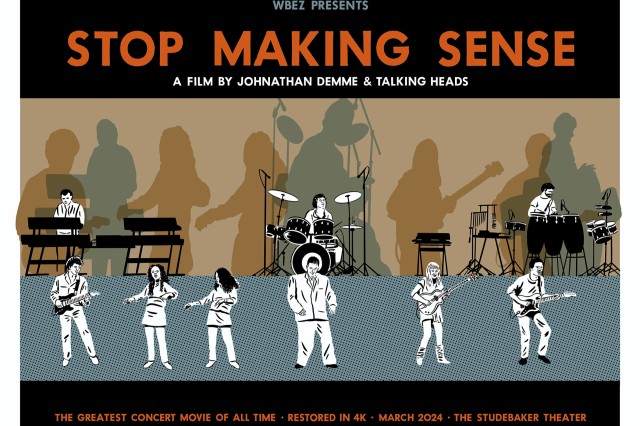
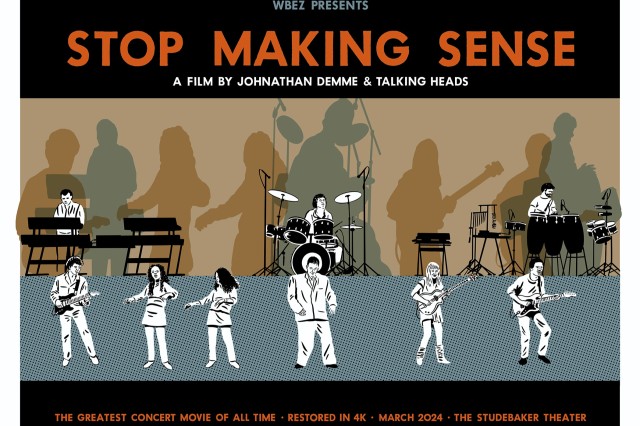
WBEZ Chicago is celebrating 40 years of one of the greatest concert films of all time, Stop Making Sense, at the Studebaker Theater in downtown Chicago’s Fine Arts Building.

I love this movie. Every Sunday when my son was a toddler, he’d nap as his father studied, and I’d go to the movies. When he was old enough, we went to the movies together, especially on Christmas Day after the divorces, and it was just the two of us. At seventeen, he convinced me to see the Talking Heads’ 1984 concert film Stop Making Sense at the same Studebaker Theater.

“I don’t like punk rock,” I said.

“It’s not punk. It’s different. You’ll like it,” he convinced me.

He had his own band at the time and knew his music, so I trusted him. He was right. I blasted the Stop Making Sense cassette on my car radio until the tape wore out.

The film documents the legendary rock band Talking Heads performing at Hollywood’s Pantages Theater in December 1983. David Byrne, Tina Weymouth, Chris Frantz, and Jerry Harrison perform alongside an ecstatic ensemble of supporting musicians.

When my movie buddy Marca Bristo was alive, we went to the movies nearly every Saturday. We’d mull the pros and cons of what we had just seen in the quiet theater afterward before going off to a coffee shop to talk about politics.  Marca died in September 2019. The releases that year included Little Women, 1917, and It’s a Beautiful Day in the Neighborhood. Part of mourning Marca meant slacking off on movie-going. I saw only one movie for the rest of the year,  Just Mercy, which tells the true story of defense attorney Bryan Stevenson and his client, a black man falsely accused of murder. It was my quiet tribute to Marca, a powerful advocate for disability rights.

These days, I’m wary of catching Covid and all manner of infectious diseases so I’ve been in only one movie theater since March 2020 to see Caste.

But I may have to venture into the old Studebaker theater with its high ceiling and wide aisles to see this old film with old friends who love the old Talking Heads. There’s just nothing like being in a room full of people who love what you love.

________________________

Stop Making Sense Tickets

Not Dead Yet

Not Dead Yet

(written for Skyline Village Chicago March-April 2024 newsletter)

Robert Kramer, 74, talking to students at the University of Southern California: “You have far more at stake in changing how we approach aging than I do. You are far more likely, statistically, to live past 100 than I am. If you don’t change society’s attitudes about aging, you will be condemned to lead the last third of your life in social, economic, and cultural irrelevance.”  

A KFF News article,  Do We Simply Not Care About Old People? lays out the blatant disregard for our citizen elders, citing covid-19 statistics.

Around 900,000 older adults have died of covid-19 to date, accounting for 3 of every 4 Americans who have perished in the pandemic. In the last week of 2023 and the first two weeks of 2024 alone, 4,810 people 65 and older lost their lives to covid — a group that would fill more than 10 large airliners.

Yet, where is the outrage? Experts in the field of aging from around the country all agree ageism has always existed, but the pandemic elevated an intense, hostile prejudice against us.

“The implied message to older adults is: ‘Your time has passed, give up your seat at the table, stop consuming resources, fall in line,’” said Anne Montgomery, 65, of the National Committee to Preserve Social Security and Medicare. She says that baby boomers can “rewrite and flip that script if we want to, and if we work to change systems that embody the values of a deeply ageist society.”

In the years I’ve tried to advocate against ageism, I’ve heard everything from “I’m 80 years old, and I’ve never experienced ageism” to “Ageism? What’s that — not admitting how old you are?”

Gay rights leader Harvey Milk famously said in the 1970s, “Come out to your parents.” He knew, and he was right, that if people got to know gay people (can I say “queer” now?), their bias toward them would diminish.

Anti-ageism advocates say, “integrate, don’t separate.” The best way to overcome the ageist stigma is for the people who are stigmatizing you to get to know you. Don’t put “old” in the closet. Go out. Speak out. Be old.

Chicago has separated the old from the rest of the population — in housing, in social groups, in churches, and in health care. “They” don’t see us. ‘They” look through us. We defend ourselves by saying: I wrote a book! I walked the Camino! I volunteer! I have wisdom! I babysit! Walk dogs! Ride my bike!

Reminding people that we are still here, part of the human experience, walking through life like everyone else at any other age, is the best way to flip that script, not by bragging about our credentials but by our visible presence. And when we can’t hear or when our brain energy gets depleted at 3:00 in the afternoon, we ask people to speak up, and we excuse ourselves to take a nap. 

We’re old. Say it. Be it. It’s OK.

Where Babies Come From

Where Babies Come From

A pamphlet in the back of the church had all the details. The Catholic Marriage Manual.  The title revealed nothing to me about the contents. But the sixth-grade boys knew. At recess, the girls followed them into the church from the playground. I was new and needed to fit in. One of the girls grabbed the booklet, and we all ran out to sit under the shady elm at the edge of the parking lot. She read from the booklet, “the man places his penis inside the woman’s vagina” to make a baby. “Eww!” The girls squealed. And those boys, standing by the corner of the church, pointed at us and laughed.

Image result for  1950s catholic marriage pamphlet To look cool, I desperately wanted to act like I already knew that. But I was so shocked I couldn’t control my facial expressions, and my shaking knees gave way. I could hardly stand up.

I act the same way when I come to some new awareness these days. I blurt out, “What? How come I didn’t know that?”

A boy I wanted to impress once told me Paul McCartney recorded a very high whistle sound in the song “A Day in the Life” so that his pet dog could hear it.

“I knew that,” I said, hoping he was telling the truth and not testing me. Inside my head, I heard, “What? I didn’t know that!”

Being cool was so important that I spent the first half of life pretending I knew more than I did. Over time, in an effort to be authentic, I slowly emerged from that deceptive veil. The lingering consequence of being truthful about myself was that I could no longer swallow my emotions and hide my expressions. 

Recently, a friend and I were rehearsing for a talk that we would present to a White audience on microaggressions. “I don’t see color” is a prevalent White microaggression since it’s a refusal to acknowledge the race-based struggles people endure and the discrimination they face. We discussed the outline, who would address what issue, and how to fill the time if no one asked questions. Then he showed me a video he wanted to use of an Asian woman giving a TED talk on microaggressions. 

“Are there videos by Black people instead?” I asked.

“There are, but White people often hear this material better if it’s from a light-skinned person.”

“Oh, of course,” I said, as if I knew that.

Suddenly, my breathing sped up. I started sweating and swaying in my chair. 

“I have to take a break,” I said.

The awareness that I don’t listen as deeply to Black people as I do to White people filled me with such shame that I almost fainted. 

Life was much easier when I learned where babies come from, jumped up, ran around, and tagged the boys in a game of  Steal the Bacon. On the playground, we were free to be ourselves, boys and girls, Black, Brown, and mostly White kids whooping it up in a simpler world where there were no microaggressions and we didn’t see color. 

Oops.

What’s Love Got To Do With It?

What’s Love Got To Do With It?

On February 15, 1976, I drove my red Toyota ten miles west from my Toms River, New Jersey, home to a small church meeting in Whiting.  I’d not had a drink for twenty-four hours. My head was pounding. I shook and shivered and sweated. I sat down but had one foot out the door.

Toms River shoulders the Atlantic Ocean. Most of life there happens near the ocean, its inlets, and brackish rivers. Whiting, known for the now-closed Nature’s Rest Nudist Colony, sits on unceded Leni Lenape land at the northern edge of New Jersey’s Pine Barrens. It’s a defunct railroad town surrounded by scrub pines, that dreary little tree that never grows more than eighteen feet because of the sandy soil. No one goes there.

I drove to Whiting to a meeting of Alcoholics Anonymous because I wanted to be anonymous and not run into anyone I knew. I had an overwhelming urge to announce out loud to strangers that I was going to kill myself with vodka.

An active adult community, Crestwood Village, had risen up near Whiting. The eight men and women at the AA meeting were over fifty years old, which was a turn-off for me at twenty-nine. But I was banging on the bottom and had nothing to lose. I thought I’d spill the beans there and bug out for the liquor store on my way home.

The group of eight centered the AA meeting around me and how I could stay sober. They figured out a schedule of who could follow me home that night and stay with me for the next few days. Each day, a different soul appeared on my doorstep to feed me, talk to me, answer the dreaded phone, and connect me to an AA group in my neighborhood. Their messages were the same: you’re sick, we were sick, too. Drink water. Eat chocolate. Go to AA. They trusted me with shocking truths about their lives before sobriety. 

They traveled well beyond their small community in the Pine Barrens and re-arranged their comfortable lives to help a suffering alcoholic. The obsession to relieve my misery with booze lifted after about seven days. Each of them called every day for a month.

I never drank again. After a few months, I sold my house, gave away the dog, left an estranged husband, packed up my son and houseplants, and drove to Chicago.

I was a dead soul before I met that group of kind and loving saints in New Jersey’s outback. Every minute of every day, I thought only of drinking and not drinking.

In the forty-eight years since, I’ve met many people who have asked for help. I share the same love that was offered to me that first week. In very few cases, people have stayed sober themselves. Most have disappeared, died, or gotten pissed off and moved on. 

Love saved me. That’s all I can wish for others.

Happy Valentine’s Day.

.

Sharks and Snakes At the Movies

Sharks and Snakes At the Movies

One summer in the early 1960s, my mother walked the beach near our Sea Girt, New Jersey home. A shark came into the calm shallow of the Atlantic and chomped off the leg of a man wading right in front of her. 

Another that week. And another. Grisly accounts and sightings of man-eating “great whites” all along the central Jersey coast appeared daily in the Asbury Park Press. Lifeguards stood high on their stands and whistled us out of the surf repeatedly at any sign of a dorsal fin. The summer was terrifying. 

When Peter Benchley’s 1974 novel, Jaws, appeared on the paperback rack, my mother snatched it up, read it, and passed it on. She and everyone else at the Jersey Shore convinced themselves that Benchley, who lived in New Jersey, based the book on our summer shark attacks. 

What a book. After eyeing that famous book cover, my seven-year-old son, Joe, became interested in and eventually obsessed with sharks. Having read in Dr. Spock that I shouldn’t tell my child frightening stories, like the crucifixion of Jesus, I kept the Jaws story from him. 

The movie Jaws was released the following year. I refused to watch it, much less expose it to my eight-year-old. His sleep was already interrupted by nightmares after getting hit with a pitched baseball at Little League. 

At age nine,Joe announced that Jaws was at the neighborhood theater on Dollar Day and begged me to take him. The near-empty theater was spooky. I held both hands over my eyes for most of the show .

“You can open your eyes now,” Joe said.

I did, just as the shark was ripping apart a girl on her raft.

“Oh my god! I’m going to puke! I thought you said it was ok!”

We laughed so hard we could hardly hear the movie. Thus began those funny years when boys learn there’s a big payoff in pranking their parents.

When Raiders of the Lost Ark came out in 1981, we lived in Chicago. 

“Is it about Noah’s Ark?” I asked Joe.

“No. The Ark of the Covenant. You know, where the Ten Commandments are.”

Dragging him to Sunday school all those years had paid off.

We ran to the 1,400-seat Esquire Theater on Oak Street. The only tickets left were upfront. Right there, on the front row, the entire wall before me slithered and hissed as Harrison Ford was lowered into a hypnotic pit of 10,000 snakes. 

I shut my eyes. 

“OK to look now,” Joe whispered.

And again, I got fooled into watching the creepiest part of the movie, where Indiana Jones is staring down a hooded cobra.

Raiders is set in 1936 and follows Indiana Jones vying with Nazi Germans to recover the invaluable long-lost Ark of the Covenant. Some have interpreted it as Steven Spielberg’s creation to slam the Nazis for the Holocaust. But to me, it’s a hilarious, breathless adventure, made memorably funnier by the prank of my fourteen-year-old movie companion.

And a memorable relief from how I view Nazis today. 

Oppenheimer & Jesus

Oppenheimer & Jesus

This is one of many stories I’ve written about the origin of my existential and nameless fears. As much as I try to analyze a deeper reason for the fears, the stories end up all the same, with a few updates. They seem to write themselves.

______________________________________________________________

In 1949, the Soviet Union started the Cold War by detonating its first atomic bomb, blockading Berlin, and pushing its way into Poland and Eastern Europe. The voices I heard swirling above my head at cocktail hour in our Washington, D.C. home implied the Russians were coming for us. 

Poor old Robert Oppenheimer. The father of the atomic bomb wanted nuclear weapons banned after President Truman used A-bombs to murder 180,000 Japanese civilians in 1945. Oppenheimer helped design an air defense of the United States against atomic attacks from the Russians through the National Civil Defense Administration. Common folk wisdom said only cockroaches would survive a nuclear attack. Nevertheless, Oppenheimer’s design required all school teachers to conduct impromptu air raid drills. When teachers shouted an impromptu Drop! us kids jumped out of our seats, crawled under our desks, fell over our knees, and covered our heads. The nuns added the instruction to recite Hail Marys aloud while on the floor. 

Holy Mary, Mother of God, pray for us sinners, now and at the hour of our death. Amen.

At seven years old, I didn’t understand the difference between a drill and the real event. I went to my death every time I huddled under that desk. But, I was not. afraid. to die. 

This is it, I’d pray, “I’m going to be with Jesus.”

I believed Mother Mary would grab me in her arms like she did baby Jesus and take me to heaven. Why did they pray to avoid such ecstasy? What were they so afraid of?

By the time third grade rolled around, I got used to not dying under the desk. Images of children who lived after their exposure to the atomic bombs in Hiroshima and Nagasaki appeared on our small black-and-white television. I feared that there were worse things than death. 

Our Catholic school teachers taught that Communists who ruled Mother Russia prohibited the celebration of the Mass. So we had to pray for Russia while fearing she’d annihilate us at any minute. In those days, at home, my two sisters and I made our own breakfasts and school lunches because my mother’s alcohol intake rendered her unconscious in the mornings. We often gathered around her bed, trying to figure out if she was alive. Holy Mary, Mother of God. One of us would place a finger under her nostrils to feel her breath until, with one exhale, she’d confirm that at least one of our fears was unfounded. 

Those early fears seeded my memory and have inoculated me against the mau-mauing of present-day alarmists, naysayers, and fear-mongers who sermonize about the death of our democracy. Yeah-but’ers and tsk-tsk’ers are relentless in efforts to convince me the country is hopelessly overrun with insurrectionists, sexual predators, corrupt politicians and gun-toting scofflaws.

And what if these are apocalyptic times? So what? So were the 1950s, the 1960s, and 1970s.

Mother Mary may be out of commission these days, but I still dream of being with Jesus.