Driven to Risks

Driven to Risks

In 1950s Wilmette, Illinois, children followed rules. Not many ten year olds would steal onto the public works property and play around on the Water Plant roof. The first taboo my sister and I broke was to gather stones and toss them from the roof into the sand below. Next, we dared each other to jump off the 1930s one-story building. The sand provided a warm soft landing and extracted plenty of triumphant giggles from two adventurous little girls.

The Wilmette Water Plant, built into a low cliff on the shores of Lake Michigan, is walled off by an eight-foot cast iron spiked fence. The street level roof sits back far enough from the shore road to avert curiosity. A 1956 building expansion required a construction entrance in the fence leaving the Water Works temporarily defenseless.

We waited until the workers left for the day and again and again sneaked onto the roof to throw ourselves off. Eventually my sister slacked off and I jumped alone. Each leap to the unknown helped transcend the uncertainty of our volatile home life. For years afterwards I dreamed I was flying. Indeed, when I took a lot of psychedelic drugs in my 20s, I relived those jumps. 

In winter, down the street from the Water Works on the same cliff system, the fire department hosed down a steep hill for sledding. Devil-may-care pre-snowboarders sailed down the icy slope standing on cardboard slabs. Eventually I tossed the cardboard and flew downhill toward Lake Michigan standing only on my brown rubber boots. Ambulances, always at the ready, carted off sledders everyday to Evanston Hospital. Never me.

I see no reason to examine why I’m driven to dangerous adventures. Risky jumps and high-flying sledding sparked a fire in me that can’t be extinguished. Perhaps those early escapades instilled self-confidence, or more likely, false invincibility. 

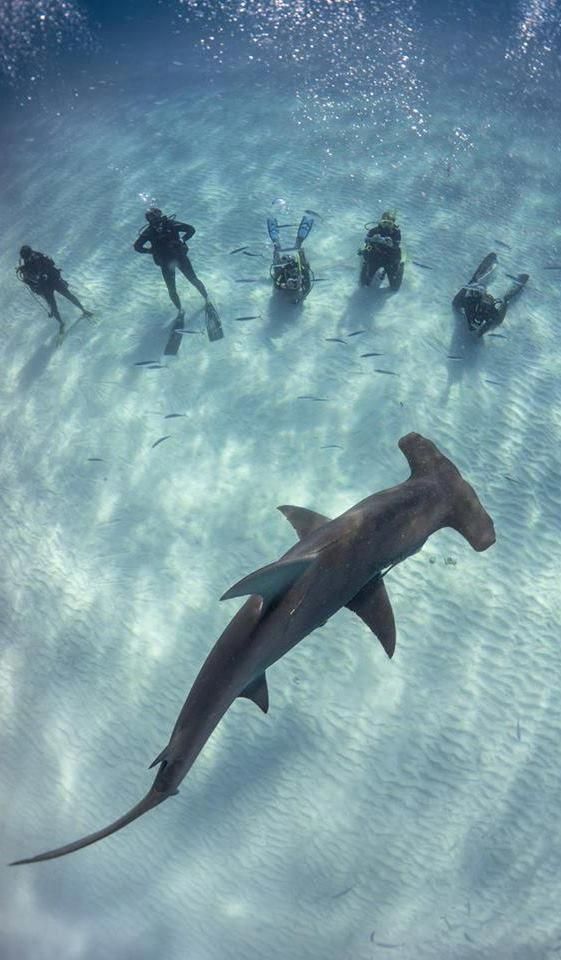
For a few years I spent all my expendable income on scuba diving in the Bahamas. After a short course in diving, and a few failed attempts, I jumped to the unknown once again and flippered around with the fish. I never once thought of the risks. And there are plenty. 
Scuba Diving in the Bahamas

One morning before I left the islands, I suited up and waited for the divemaster to outfit the boat. I casually mentioned to a fellow diver I was leaving that afternoon.

“Are you flying?” asked the divemaster.

Yes I was. 

“Hang up your wetsuit and get out of here! Don’t you know you’ll get the bends if you dive and fly the same day? Your insides could explode in the plane!”

On social media last week, many posts begrudged the efforts to rescue five wealthy souls lost in the Titan submarine. My risky adventures are over now, and were never so grand. But I join adventurers everywhere who cherish the U.S. Coast Guard’s salvation message:

“We don’t put a price on human life. Every person who is missing deserves to be found. That’s the mission, regardless of who you are.”

Father’s Day: What Remains

Father’s Day: What Remains

His wavy black hair glistened as the light from oncoming headlights and street lamps streamed in and out of the front seat. With his left hand on the steering wheel, my father opened a pack of Pall Malls with his right, pulled out a cigarette between his teeth, and plugged in the lighter, all in one smooth move. I couldn’t wait to see the sparks, hear the hiss, and smell the burn as the lighter pressed up against the tobacco. The Pall Mall dangled between two yellow-stained fingers while the other two fingers and thumb encircled the steering wheel. In the passenger seat my mother scissored her cigarette between two Revlon-tipped fingers.

“We’re almost at the Pennsylvania Turnpike,” my mother announced.

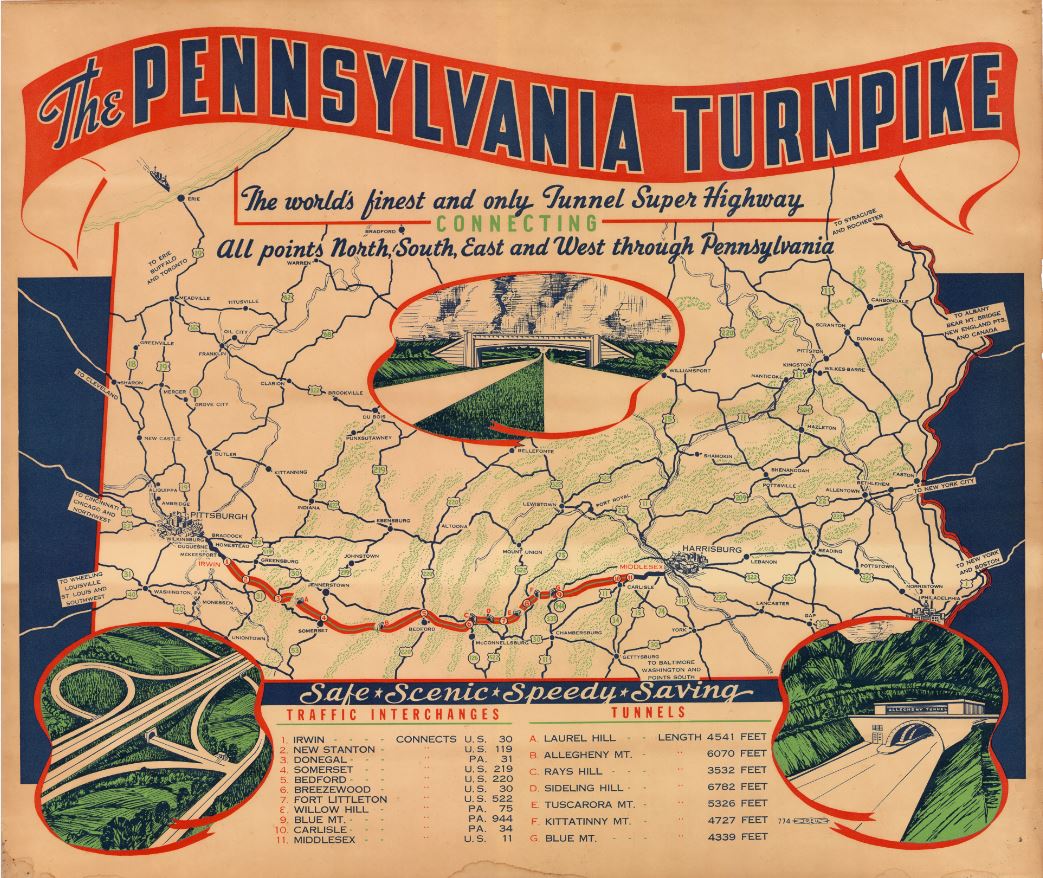
The Pennsylvania Turnpike. My earliest memory of my father is watching the back of his head  moving up and back searching for signs for the Pennsylvania Turnpike. He’d driven my mother, my two sisters and I away from our home in Washington, DC, with the false hope of finding a saner life in Terre Haute, Indiana, his hometown. In 1952, driving north on two-lane roads through rural Maryland to hook up with the Pennsylvania Turnpike was a challenge, accepted by both parents. They knew their geography.

The Pennsylvania Turnpike ranks as the first long-distance highway built in the nation’s interstate highway system. Drivers and non-drivers alike bragged that call boxes were installed every mile to connect to an emergency service. Radio stations and newspapers across the U.S. followed the progress of the Pennsylvania Turnpike for its entire sixteen-year construction period.

“We’re headed into the Allegheny Mountain Tunnel,” my father said.

“How did they make this tunnel?” I asked.

“They dynamited a hole through the mountain.”

As we drove into the dimly-lit black cavern, I involuntarily stopped breathing. I could feel the full weight of the mountain above. I gripped the side of the window with my fingernails until we emerged a mile later into the Allegheny Mountains on the Pennsylvania Turnpike.

The super highway crosses the Appalachian Mountain Range in the central part of the state, passing through four tunnels and over five bridges. My mother called out the names of each map marker, a verification that we were on the right track. Allegheny, Susquehanna, Kittatinny, Mechanicsburg, Harrisburg, Pittsburgh, Blue Mountain.

Such was my introduction to the joy of map reading. My parents had the bug already. Nothing delighted them more than seeing a name printed on a big sheet of paper, driving in that direction, and coming across it in real life. It was more than just the practical accomplishment. They interacted with the world around them.

“Look! Shippensburg. That’s where your Navy friend is from.”

“There’s Hershey, where they make chocolate.”

“See the sign for Johnstown, home of the flood?”

There’s no chance we crossed Ohio and Illinois into Indiana without my parents’ succumbing to a drunken brawl. But grace abounds in recollecting those melodious names; navigating the Pennsylvania Turnpike is the only memory I have of my parents ever enjoying each other.

Born Free

Born Free

Most gay anthem playlists include these songs:  I Will Survive by Gloria Gaynor, Freedom! ’90 by George Michael, Vogue by Madonna, I’m Coming Out by Diana Ross, anything by Beyonce, Cher, Donna Summers, Lady Gaga and of course, Billy Porter. But no recognition for the song Born Free.

I recently attended a friend’s bon voyage picnic with my new dog. 99% of the picnickers were men. They adored my fluffy little white Westie with her pink-lined pricked ears. 

“What’s her name?” One guy asked. 

“Elsa,” I answered. 

He and his companion then broke out singing Born Free. Others joined in the serenade. 

Born free, free as the wind blows…

I looked straight at my friend with a questioning side smile and squinty eyes. 

“Gay,” was his answer. 

“Some kind of anthem?” I asked.

“Yep. From the movie.”

“Oh, I get it. Elsa. The lioness. Wanna go with me & Elsa to the Pride parade?” I asked him.

“Absolutely not!” he exclaimed. 

None of my gay friends express interest in Pride hoopla. At least not to me. But in social gatherings, I’ve overheard one or more talking about some cute guy they’d met at the Parade. It’s understandable. The Parade covers a lot of geography and seems to have no time constraints. If you live in Parade neighborhoods, you’re bound to meet a cute guy or two passing by. 

The rejection of Pride celebrations is a bit more puzzling. I’m not particularly drawn to St. Patrick’s Day parties and parades, but neither am I celebrating Irish freedom. After the first official Chicago Pride parade in 1981, I celebrated gay liberation at a raucous party in Lincoln Park . Plenty of our gay friends were invited. But they didn’t show. Perhaps they excluded us from their Pride activities because gay liberation didn’t belong to us? Nor we to it?

Political friends wave the flag, not necessarily to show they’re gay, but, as I do, to support gay rights. Showing the colors this year is especially important because recent laws in other states restrict gay freedom, including drag shows. 

On a stroll down Michigan Avenue the other day, I was overwhelmed by the display of rainbow colors in front of my church. There are ribbons tied to each iron fence post spelling out the iconic colors of gay pride—for the entire block in front of the church. 

“So colorful,” I mentioned to my walking companion.

“Doesn’t it make you feel kinda bad?” She asked.

“Whaddya mean?”

“Well, it’s a celebration for gays. And you’re not.”

Some of the church’s older adults asked to celebrate gay rights by having a drag show for their small group. The church denied the request. I’m excluded from men’s bible study, twenty-somethings and couples church groups. And like those, perhaps celebrating gay freedom with events like drag shows, really is (inadvertently) reserved for gays only. 

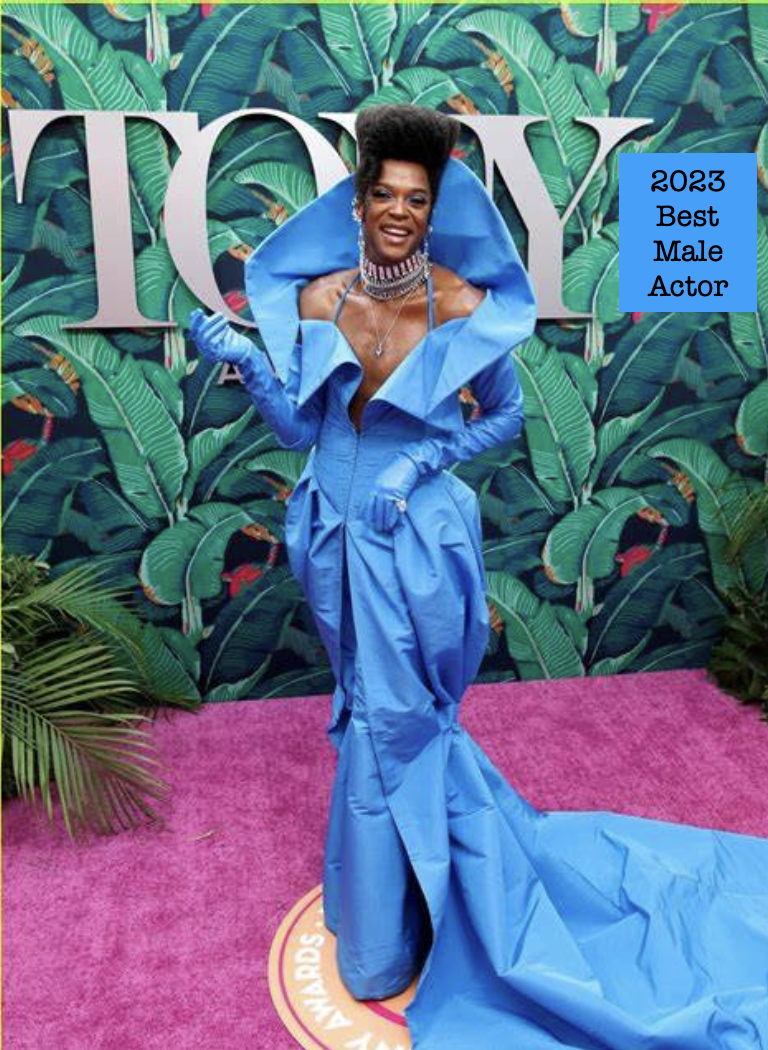
Fortunately, I can honor the entire queer nation by re-watching this year’s Tony Awards. 

Meanwhile, song compilers need to include Born Free in gay anthem song lists. 

Tommy at Woodstock

Tommy at Woodstock

Two neglected shoeboxes of faded and forgotten memories sit on the top shelf of my bedroom closet. They are filled with negatives, a noun I’ve not heard nor used since the Aughts gave us cameras on our mobile phones. I had used all types of cameras in my life from a Kodak Brownie to a 35 millimeter Pentax until photographic film and developing became too expensive in the 2000s. All my cameras had film that I’d drop off at the corner drug store or a camera shop for developing. I’d then mark time for a week or more waiting to hear that my pictures were ready for pick-up. The much anticipated package included the developed photos and their corresponding negatives.

A negative is the reversed image of the picture that can be used to develop another print. They were produced on small strips or sheets of transparent plastic film. Eight or ten miniature negative images appeared on each dark strip. If I wanted to reproduce a photo, I’d hold the plastic film up to the light, protect it from my fingerprints, search for the picture I wanted, cut the tiny square from the strip, and take it to the store for developing.

There’s no logical reason I packed old negatives in archival boxes and stored them on the top shelf of my closet. In order to get to them, I need to unfold the step stool, risk pinching a finger or two, and trust my balance will hold as I climb each step to reach the shelf. I have no intention of ever looking through the negatives in order to develop old photos. Most of the corresponding pictures may be in musty albums in my bookcase. I’m never drawn to those either.  

A few years ago I acquired a photo scanner. I offered to pay my teenage grandson to digitize my photos as a summer job. 

“I don’t know how to do that,” he answered.

“It’s easy. I’ll show you. You can do it at home and upload to your computer.”

“Naaw, I don’t think I’d like that.”

All hope drifted away then, that any of my relations would be interested in the photographic documentation of my life. I can’t blame him. I was never curious about details of my parents’ or grandparents’ lives until recently. How can I tell him that when he nears his sixties or seventies he’s going to find himself wondering what I and his other ancestors did during our lives? More importantly, how will he come to know that factors outside his control, passed down generation after generation may be the source of his own physical or mental hardships?

A production of the rock opera Tommy will be onstage this summer at Chicago’s Goodman Theater. 

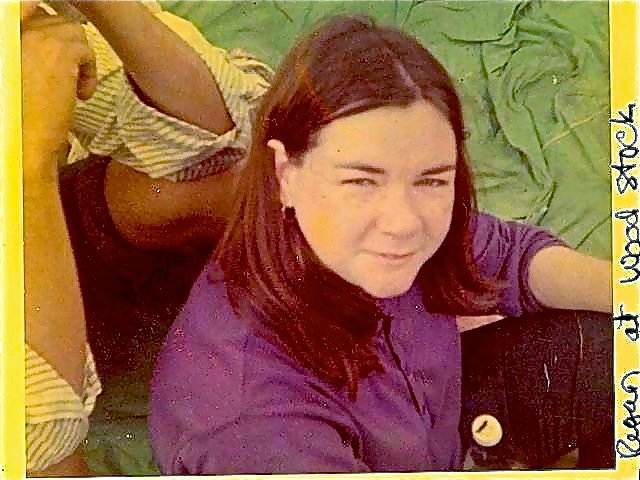
“Wow! You saw Tommy at Woodstock?” exclaimed a theater-goer when we were in line to purchase tickets. 

Woodstock cachet seems to increase with every passing era. Forget the old photos. My-grandmother-went-to-Woodstock is probably the only legacy my grandchildren will ever need.