
Good Memories by Veronica Cook

Good Memories by Veronica Cook

9384D35F-AB47-40E6-B9BE-4ECC850A08F1_1_201_a


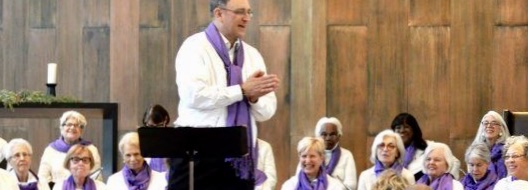
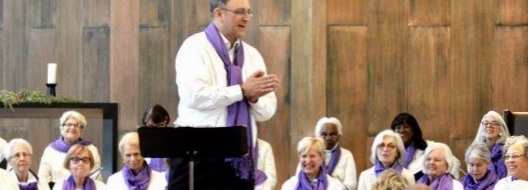
Guest blogger Veronica Cook and I share in the joys and benefits of the Good Memories Choir in Chicago. Veronica reflects here on her musical life.  


When I was a child, we weren’t what you’d call a musical family, but there were always songs. It might have been my big sister boogying around with her finger in the air to Jeepers Creepers, Where’d you Get Those Peepers. Or my mother and I humming along with a light opera song on the radio (O Rosemarie, I  love  you…). All through my life there have been refrains to hum. However in the last few years, while a tune may have played in my head, my voice was having a hard time matching it. Wonderfully enough, it’s coming back little by little because I’ve joined the newly-formed Good Memories Choir.

I now can hear myself carrying the harmony.

At the beginning of each new concert season comes a whole new repertoire of tune fragments to spin around in my brain. At Christmas it was the haunting lyrical tenor of Ose Shalom; the beginning of White Christmas …there’s never been such a day-ay, in Beverly Hills L.A…; and the upbeat conclusion of Go Tell It on the Mountain …that Jesus Christ is born-orn, that Jesus Christ is born-orn.

As I reflect on my choir, a theme emerges that is much more than any one song or one concert. In fact, it’s more than even the music. Founders Jonathan and Sandy Miller have begun a far reaching and profound community. It is heartening to recognize each of us has a hand in shaping this new creation.

The Good Memories website describes the choir as “… a fun, upbeat community where people with early-stage memory loss and their care partners sing together, enjoying familiar music they love.” Yet, there are no one-size-fits-all categories describing the folks in this choir. Unique life circumstances puts everyone at a different way-station along the journey into aging.

I’ve become aware that in the struggle with physical and cognitive decline, we differ only in degree. Likewise, the loneliness and isolation that can so often accompany the onset of memory loss is something that all of us experience in some form. The support, encouragement, the warmth of friendship that we exchange are grace-filled gifts for us all.

Tuesday morning gatherings that get us started seem deceptively simple and down to earth. We are welcomed by the familiar smiles of fellow choir members as we gather in our rehearsal room. We cluster around the coffee pot, savor an array of sweet and savory homemade snacks. There is a collage of expectant faces, the beaming smile of one, the delighted greeting from another, the oohs and aahs over special treats. Compliments are exchanged: earrings, a new coat, a sweater pattern. We catch up with each others’ news. We are at home here, surrounded by new friends. And then it’s time to warm up with Oh What a Beautiful Morning! 

Always front and center is the music. Singing! Having come close to my voice deserting me, I glory in what this means: making a melody emerge from within my being, and even better, to make it harmonize with others. Joining our voices in song is central. This is the precious gift we give and receive from each other.

I stole a look at the Spring 2020 Good Memories repertoire. I invite you to come hear us on May 12th at 12:00 noon, Fourth Presbyterian Church, 126 East Chestnut St, Chicago. You’ll hear Waitin’ for the Light to Shine, Kol Haneshama Tehalel Yah Bonia Shur, Storm is Passing Over, What a Wonderful World, Long Ago and Far Away, Bridge over Troubled Water and the finale that says it allHow Can I Keep from Singing! 


Join a Choir! If you live in the Chicago area, click here.

If you live elsewhere, check out the worldwide Giving Voice Initiative (GVI). If you don’t see a chorus listed near you, start your own!  www.givingvoicechorus.org.
A6B6723F-42BF-4BF9-BCC8-23831959EF4A_4_5005_c

Speaking of God…

Speaking of God…

I’m not sure what day or year or even decade I stopped being ruled by men. Feminist pop psychology (and real shrinks) used to tell me I “allowed” men to rule my life. Of course I was roped into that, having been raised in the patriarchal Catholic Church where women are still not allowed to be priests. God was always a man and because of that men were always in charge. Recovery from those old ideas was precipitated not by strong women helping me see the light, but by some very important men acting badly.

My Amazon Dot is tuned into the impeachment vote of President Trump. He’s the worst example of male dominance I’ve ever known, but he’s an extreme case. I’ve experienced Christian cultist men telling me God wanted me to submit to a physically abusive husband; a married lover who insisted I wait by the phone on Christmas for his call; a father who dragged me into fraudulent schemes; and, bosses (Gary Hart and Bill Clinton) who got caught with women-not-their-wives. To paraphrase Nancy Pelosi, “I don’t hate them. I pray for them.”

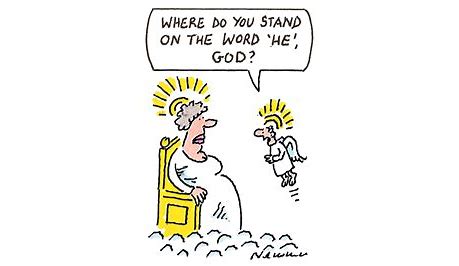
It’s true. I’ve been taught by the Twelve Steps of Alcoholics Anonymous to pray for people I don’t like (or, more likely, who don’t like me). The words I use in prayer for God’s gender are still masculine though. To be modern, I could rant publicly against male-centric words like “Lord,” or mind my manners and quietly substitute the more gender-neutral (or is it gender-inclusive?) “God.” I want to do that because these days I think of God as non-binary, neither male nor female.

I pause to see She-He-It in the yellow leaves of the honey locust fluttering down in front of me when I walk Henry-the-Dog. I hear They-Them when the crows caw. I even smell Her/Him/Them in the spring (what are those fragrant shrubs called?). These delicate manifestations of God are indeed gender-neutral.

But my senses play tug-of-war. The Bible rarely shows these versions of God. Just as I see the streets of Edinburgh when reading Ian Rankin mysteriesOIP.oB0fL0JIYA1IHyc9P5Ik4AHaEK, I see God as a man when reading the Bible. I visualize men—Jehovah, David, the king on his throne, the Father, the Lord. God the man made a covenant with David the man. David’s seed, not his eggs will rule as kings, not queens, from generation to generation. 

The subtler Biblical images of God as a mother caring for her children undergird my faith that God will always be, always live and always love. That female-male God who loves me deeper than I can visualize, who enfolds me at the still point, who sees me as perfect and lets me be. That is the God whose help I seek, whose direction I want, whose words I hear. I sing to that God.

In another world, I will know God as intersex, non-binary, genderqueer, agender, gender fluid, androgynous, bigender, multigender or demigender. In this world, I await David’s seed to change the God-man language to align with my gender neutral spirit.

Violence Against Women

Violence Against Women

He came home from work one day in the mid-1970s, went right to the fridge, opened the door, then slammed it shut and warned, “There’s no milk!”

Fighting words. Nothing grated more than to be accused of neglecting some trivial aspect of my role as a wife. He drank a lot of coffee with a lot of milk. Milk on display in the fridge assured him I thought of him first, had feelings for only him, loved only him. 

“What have you been doing all day that you couldn’t get milk?”

He really knew how to escalate things. I did too.

“I’ve been busy washing your clothes. Go get it yourself.”

“You are a lazy selfish bitch. You never think about anyone but yourself.”

“And you are a fucking spoiled brat. Go home to your mother if you want to be treated like a little kid.”

Kapow!

He grabbed my throat with his left and slugged me with his right. As he ran out the door I screamed, “Don’t ever come back!” 

The dentist asked me why I was icing my lip. I grabbed the box of tissues next to the chair as I cautiously unclenched my fist to reveal two front teeth in the palm of my hand. I didn’t want to part with them. In the short bleary-eyed drive to the dentist, I’d clutched them like a totem, a symbol of an uninterrupted life; a life where men didn’t punch you in the face. I asked the dentist if he could put them back. He couldn’t. He cleaned me up and told me the skin tissue was so damaged above my lip that as I got older it would collapse and wrinkle. He wanted to file a police report. I blew my nose and said, “No. No. I don’t want that.” As I was leaving, he held out my teeth and asked, “May I discard these now?”

And there went my innocence, dumped into the heap of damaged parts. It took another three years before I left.

These days I’m often in ad hoc conversations with friends about a news story describing a violent husband. Inevitably someone tsks, “why does she stay with him?” Or worse, “It’s her own fault. She should have left him the first time.”

Why do we stay? Because we often:

  • Feel the abuse “isn’t that bad”
  • Think we can change the guy
  • Believe it will never happen again
  • Believe that we deserve the abuse
  • Are dependent on him
  • Have no place to go

Many of us think twice because we can’t leave our pets. These and other reasons seem unreasonable to those who have never walked in our shoes. We know this. It’s the reason we keep our secrets.

Tennessee was the first state to outlaw wife beating. In 1850. Until the 1870s, courts in the United States supported the right of husbands to physically “discipline” their wives. In the 20th century, police were intervening in cases of domestic violence but arrests were rare. 

The Violence Against Women Act was signed into law by President Bill Clinton in 1994. It required coordination in domestic violence cases between courts, law enforcement, prosecutors and victim services. It has provided financial support to community-based organizations that help domestic violence victims find temporary shelter, even with their pets. 

Concerned Women for America, a socially conservative, evangelical Christian group opposed the original bill. One senior fellow said it “ends up creating a climate of suspicion where all men are feared or viewed as violent and all women are viewed as victims.” In April 2019, the Democrat-controlled U.S.House of Representatives passed a bill reauthorizing the Violence Against Women Act. Action came to a screeching halt in the Republican-controlled U.S. Senate in November 2019. The bill is dead.

Why do we stay? We’ve been helped and protected for only 25 out of the 240 years of United States history. That’s why.