One Giant Leap: Into The Slough of Despond

One Giant Leap: Into The Slough of Despond

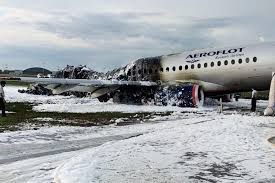
I stepped onto the Aeroflot plane at the Frankfurt airport knowing it had the worst safety record of any airline in the world. In April 1996, four years after the dissolution of the Soviet Union, Aeroflot was still evolving from a state-owned to a privately-owned airline. The flight attendants wore drab suits rather than uniforms. They served all ten passengers boiled beef with a cheesy mayonnaise sauce. The seats were cardboard thin. Lights flickered on and off sporadically throughout the entire four hour flight to St. Petersburg.

As a member of President Clinton’s Advance team, I took a later flight out of Washington than the rest of the group. Each of us had Russian-speaking US Embassy counterparts in St. Petersburg and mine was meeting me at the airport when I landed.

In flight, I mulled over the phone briefing I’d received from the State Department’s Russia desk as I packed my bags in my cozy apartment in DuPont Circle.

“Don’t talk to anyone you don’t know,” she informed me. “Use only US Embassy vehicles and drivers. Exchange your money with the US Embassy staff at the hotel. Don’t eat food outside the hotel. Drink only bottled water. You’ll be followed wherever you go. Your room will be bugged. Beware of street vendors. They’re illegal and probably pickpockets.”

“Food?” I asked.

“Yes. We assume all the food and water has been contaminated with fallout from the nuclear accident at Chernobyl. The food and water in the hotel are brought in from Helsinki.”

At the utilitarian grey airport, Russian military manned the entry checkpoints. A soldier tried to tell me in Russian that I wasn’t allowed entry. I tried to tell him in English that an Embassy official was waiting for me. 

I was among a group of people in the federal government who were frequently assigned to overseas White House “advance” teams for the Clintons. None of the requests were mandatory. But my love for art and the chance to see the treasures in St. Petersburg’s renowned art museums compelled me to jump at the chance. Until then, I declined trips to anywhere that was a war zone, required inoculations for diseases or had a reputation for kidnapping Americans. I naively thought of St. Petersburg as a safe city. I had no idea what post-Soviet Russia was like.

When I finally saw the American diplomat in the deserted terminal, he stated the Russians delayed all the Americans in President Clinton’s party. Later in the week, as our team was on an official walk-through of the Hermitage Museum, a Secret Service agent asked me if I was the one “detained” at the airport. 

“Don’t ever travel alone to Russia again,” he said. 

We drove to the 120 year-old neoclassical Grand Hotel Europe in Nevsky Prospekt, the neighborhood where Dostoevsky set Crime and Punishment in 1866. Stepping inside, I faced marble floors, gilded walls and breathtaking stained glass. 

I set out to walk around Nevsky Prospekt, imagining Raskolnikov skulking around every corner. What I found was a sea of red-eyed people wrapped in nondescript clothes, fixated on the sidewalks. Furtive street vendors sold Beatles nesting dolls, artifacts from the Soviet era and peasant folk art. Russians teetered on the lintel between communism and capitalism. All their safeguards were gone—pensions, free education, health care and food safety. Uncertainty shrouded St. Petersburg streets. 

This city of revival palaces, Baroque monasteries and treasured art, became the most depressing place I’d ever visited. I’m reminded of that time in today’s shoulder-drooped America as we witness our autocratic-loving President driving us off democracy’s cliff into the slough of tyranny.

Out of the Closet: I Am A Christian

Out of the Closet: I Am A Christian

“We have this totally warped idea of what Christianity should be like when it comes to the public sphere, and it’s mostly about exclusion….no matter where you are politically, the gospel is so much about inclusion and decency and humility and care for the least among us. (How does ) a wealthy, powerful, chest-thumping, self-oriented, philandering figure like (Donald Trump) have any credibility at all among religious people.” – Pete Buttigieg

The Moral Majority, established in 1979, was predominately a Southern-oriented organization of the Republican Party’s Christian Right, but its national influence grew throughout the 1980s to the point where I was embarrassed to call myself a Christian. It was already hard, since I grew up in the Catholic church where only Protestants called themselves Christian. Catholics never did. Because of Democratic Presidential candidate Pete Buttigieg’s reclaiming Christianity for the Democratic Party, I can finally come out of the closet. I am a Christian.

When I marched into a church confessional and announced to the priest I no longer believed salvation was available to Catholics only, he said, “then you are no longer a Catholic.” I expected more of an argument, but at age 18, I felt I’d been set free. And adrift.

Until that moment, through all the alcoholic parental rages, multiple midnight moves, changes in schools and churches, only one place made me feel at home—the pew on Sunday morning where I heard Jesus loved me. 

Daniel and Philip Berrigan were my heroes then. The brothers were Catholic priests who’d been convicted of destroying military draft records in protest to the Vietnam war. I searched for a pew in their radical faith, but stumbled instead into the despair of drug and alcohol addiction. Another patriarchal Christian (but non-Catholic) church found me and delivered the familial message, Jesus loves you. Desperate to belong, I swallowed their conservative biblical fundamentalism for four years before I fled that oppressive pew. 

I tried to be a non-churchgoer. It was impossible. I’m at home in a pew on Sunday morning. I sought a simple pew in a simple church. They are easy to find, those simple churches. I hopped from one to the other long enough to know people by their names, feeling satisfied but longing for a more high-octane Jesus message. A lot of post-Watergate Christian pulpits were delivering bromides—safe words and a kindly gospel. Where was the social gospel of the Berrigans, Thomas Merton, Martin Luther King? Where were the Christian anarchists?

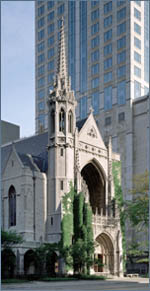
I lamented to a friend who suggested Fourth Presbyterian Church. For the first few years FourthPresbyterianChurchChicagoat Chicago’s Gold Coast Gothic Revival landmark, I arrived late and left early. I sat in the last pew, never opened the pew Bible, the songbook or recited the prayers. I didn’t belong there. I didn’t have the right clothes, right politics or right job. Indeed, I had no right to sit in well-ordered Presbyterianism.

Gradually I moved closer to the pulpit. I wanted to catch every word of Reverend Elam Davies’ sermons. Davies was slight of build, but a mighty orator. His spoken words came from deep inside his heritage, as if the whole of his native Wales was belting them out.

The first ten minutes of every sermon had me in sorrow. Sorrow for my selfishness, sorrow for my recklessness, sorrow for my sins. The next ten minutes had me laughing. Laughing for joy that Jesus knew all those sorrows and loved me anyway. The last ten minutes moved me to action. Action to protest policies that deprived people of basic human rights, action to help relieve indignities suffered by the victims of such policies.

When Elam Davies retired in 1984, I thought I’d be on the prowl for another pew. But each of the succeeding preachers have delivered similar bedrock messages that tell me every week: Jesus loves you. It’s been almost forty years since I first hid in that pew on North Michigan Avenue. I may not belong there still, but I no longer hide and the preaching makes me feel at home.

Dead Socks (Thank you Bruce Springsteen)

Dead Socks (Thank you Bruce Springsteen)

In Buddhist practice, one is urged to consider how to live well by reflecting on one’s death. 


When I was a young mother I watched a woman at the laundromat put her family’s socks in a mesh bag that she threw in the washer. “So none of them get eaten by the machine,” she informed me. I couldn’t imagine such a thing. It seemed extravagant, even lazy. Why didn’t she just look in the machines?

For all of my adult working life I wore pantyhose. I washed them in the sink and threw them over the shower rod to dry. They were (and are!) the ugliest piece of unworn clothing in existence, made more so by scary movies where criminals pull pantyhose over their heads to disguise themselves when they rape, kill or mug their victims.

Now that I no longer dress for business all my socks are bright cotton, primary colors. Whenever I do the laundry I love hanging wet socks on the foldable clothes rack in my bedroom. If I were an artist I’d paint the explosion of color hanging to dry. I diligently scour the washing machine in my building’s laundry room as I cannot afford to let even one errant sock get trapped and forgotten. This has worked for many years, sparing me the anguish of making decisions about left behind socks. 

Until Henry came to me. 

A few months into our life together, seven year old Henry and I were out for a walk. I bent over to scoop up his morning duty and stared down into a roll of turquoise cotton. Putting two and two together, I rushed home to inspect the bottom rung of the clothes dryer. One missing turquoise sock.

Oh Henry. This sixteen pound West Highland Terrier, without the advantage of a full set of teeth, supplements his dog food with cardboard boxes, cotton garments and paper. He’s sneaky but sometimes he brazenly waits at the printer for paper to eject and tries to gobble it up before I pry it from his clamped jaws. The other day, I looked over from my morning awakening and noticed the bottom corner of the cotton drapes had been Henry’s midnight snack.

You may wonder if Henry gets sick. Yes, he sometimes lays around more than usual. So far a bulging stomach seems to be the only side effect.IMG_0344

I panic though. I spray vinegar to make the reachable distasteful. But the unpredictability of his foraging renders me useless to keep him from harm. I’m sure his suicide is imminent.

And so, reflecting on his death, I sing to my sentient canid– my version of the Buddhist practice of living well. 

(To the tune of Bruce Springsteen’s “Oh Mary Don’t You Weep”)

Well dogs are quirky don’t you know. They eat stuff that we’d forgo. Sneaky eating’s got me worried. Oh Henry don’t you go.

Oh Henry! don’t you die, don’t go. Oh Henry! don’t you die, don’t go. Sneaky eating’s got me worried. Oh Henry don’t you go.

When I see your stomach ache, my heart starts to palpitate. Sneaky eating’s got me worried. Oh Henry don’t you go.

Paper, cardboard, pill bottle’os. Playbills, books and hanging clothes. Sneaky eating’s got me worried. Oh Henry! don’t you go.

Oh Henry! don’t you die, don’t go. Oh Henry! don’t you die, don’t go. Sneaky eating’s got me worried. Oh Henry! don’t you die.

I hope he sinks his teeth into the message.


Listen to Bruce: Oh Mary Don’t You Weep


Curious City: Scoop on the Poop at Chicago Beaches

Curious City: Scoop on the Poop at Chicago Beaches
 Recently NPR/WBEZ reporter Monica Eng called me about a question I submitted to WBEZ’s Curious City. She asked if I’d like to meet her at the Illinois water testing lab at UIC. Here’s what happened.

Regan Burke used to love taking her dog, Usher, down to Oak Street Beach for morning walks — until about a decade ago, when she says a lifeguard came up to her and told her to get her dog out of the water because E. coli levels were too high.

Ever since, Regan’s been worried about water safety at Chicago beaches.

Still, for a while, she felt confident the city was responsibly warning people and closing beaches when fecal bacteria (measured through E.coli) got too high.

“In the early 2000s, they really reported that every day, and you’d hear it on WBEZ,” she recalls. “It was on the regular Chicago news. But I don’t hear it at all now.”

So Regan wrote in to Curious City with a few questions:

Is that water safe for dogs? Why don’t they close the beaches for E. coli anymore? Are Chicago beaches safe [from bacteria]?

The answer to that last question depends on a lot of things, like which beach you visit, what day you visit, and how old and healthy you are. But it’s an important question because, on most summer days, at least one Chicago beach has elevated fecal bacteria levels. In fact, one city beach recently saw a level more than 300 times the federal notification level — and remained open. Also, the public appears to be confused about how to interpret the city’s new swim advisory system. And so, in an effort to clear up any such confusion, we offer this handy primer on fecal bacteria on Chicago beaches.

Regan Burke used to love taking her dog, Usher, down to Oak Street Beach for morning walks — until a lifeguard came up to her and told her to get her dog out of the water because of high E. coli levels. (Courtesy Regan Burke)

Regan Burke used to love taking her dog, Usher, down to Oak Street Beach for morning walks — until a lifeguard came up to her and told her to get her dog out of the water because of high E. coli levels. (Courtesy Regan Burke)

How do I find out how dirty a beach is?

Each morning at dawn, University of Illinois at Chicago researchers collect two water samples from at least 20 Chicago beaches. The samples are delivered to a UIC lab where they are tested for enterococci, a fecal indicator bacteria. The park district then takes the two readings for each beach and calculates a geometric mean (which is not the method recommended by the EPA; more on that later).

The city communicates its recommendations to beachgoers in three ways: on the park district’s website, through the city’s data portal, and through a flag system at the beach. Here’s how you can find it online:

Keep in mind that the Chicago Park District only posts the average (geometric mean). If you’re good with spreadsheets and you’d like to find the highest sample at your favorite beach on a given day, go to the city’s data portal after 1 p.m., export the data into Excel, and then sort to find the correct day and beach. Look under the “DNA sample” columns to find that day’s readings.

You can also check the flags posted at each beach:

Beach flags graphic

How can I stay safe?

Check the levels for your beach before you go. If fecal bacteria levels are anywhere near 1000 CCE, UIC public health scientists Sam Dorevitch and Abhilasha Shrestha say to consider avoiding contact with the water, particularly if you are:

  • Elderly
  • Very young
  • Immune-compromised
  • Pregnant
  • Or have an open wound
  • If you go to the beach before the website is updated, keep in mind that hard rains the previous day often result in high fecal levels the next morning.
  • If you swim on a day when levels exceed 1000 CCE, be careful not to swallow water or dunk your head.
  • Always wash your hands after swimming, especially before eating.

What can I do to make beaches safer?

  • Clean up your:
    • Food
    • Garbage
    • Diapers
    • Pet poop
  • Don’t feed the birds.

Wait. What? The city doesn’t follow EPA suggestions on when to warn people?

That’s right. The EPA suggests advising the public to take precautions when any single sample is above 1,000 CCE. The Chicago Park District, however, determines whether to notify the public based on the geometric mean of its two samples (which will always be lower than the highest single sample). In its 2012 guidance, the EPA suggests using the geometric mean “to assess the longer-term health of the waterbody”; not to determine whether to issue a daily warning. None of this EPA guidance is legally enforceable; it’s just a suggestion based on extensive research.

Officials from the park district defended their use of the geometric mean in a statement, saying: “Densities of [fecal indicator bacteria] are highly variable in ambient waters therefore a measure based off of a distribution, such as [geometric mean]…, are more robust than single estimates.”

Chicago Beach Poop By the Numbers, 2018 Edition

We crunched enterococci data from last summer, totaling 101 days. Below are some highlights, which take into account the differing standards used by the city and suggested by the EPA. Here are some highlights:

And what about the dogs and E. coli?

Chicago veterinarian Dr. Vaishaili Joshi says that dogs are exposed to E. coli all the time and usually don’t get sick. But, like humans, “immunocompromised pets, juveniles and seniors may be at higher risk of infection secondary to heavy exposure.”

More about our questioner

Regan Burke is a Chicago writer who worked in local and national politics — for Gary Hart, Bill Clinton and Adlai Stevenson — for most of her professional life. She details that part of her life in the upcoming book, I Want To Be In That Number, which she says is all about “politics and nervous breakdowns.”

As Regan grew up in Chicago and around the Midwest, she says her mom would often tease her for being a “nature lover.”

“I always thought of myself as a city person, but I do love nature,” she says. “That’s one of the reasons I’m more interested and cognizant of what’s outside my window than what’s inside my apartment.”

When she heard the final answers to her questions about the nature on the lake, she had a couple of reactions.

“Well, I’m very impressed at the level of testing that they do on the Chicago beaches,” she says. “But, at the same time, we don’t get the results until 1:30 in the afternoon.”

Still, Regan was pleased to hear that dogs are not very susceptible to E. coli., despite what the lifeguard seemed to imply.

But when she heard that the city will never puts up a red flag or close a beach, even when fecal levels skyrocket, she was not pleased.

“That, to me, is appalling,” Regan says. “The idea that at 1000 CCE there is a health risk — I can buy that. But when it’s 300,000 and they don’t close the beaches? I mean, how sick are people getting? And people go to the beach with their dogs, their children and their grandchildren. They must close the beaches when that happens. It’s just appalling.”

The 9 minute audio story has more information. Listen here.

Submit your own question to Curious City here.

Follow Monica Eng:  @monicaeng.

Poop flag by Katherine Nagasawa/WBEZ