Father Hungry

Father Hungry
71_big
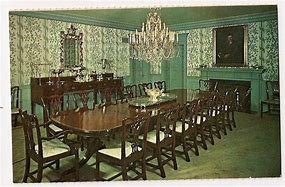
Arkansas Governor’s Mansion

The week before Thanksgiving, 1991, I called my father from Little Rock to tell him Governor Clinton had told all campaign staff to go visit their families. 

“He said we’ll be busy and out of touch from December until the end of the primary season,” I said, letting my father know I’d be back in Chicago on Thursday. 

“What are your plans for Thanksgiving?”

I was so caught up in the excitement of my co-workers’ plans to visit their families that I’d forgotten my father never made plans to celebrate holidays. Nor birthdays. Nor graduations. Nor milestones of any kind.

“Dorothy doesn’t want you joining us for Thanksgiving,” my father told me over the phone.

I can’t remember whether they were married yet or whether Dorothy was still just another one of the girlfriends. I had no particular ax to grind with her outside of her unnerving naiveté. She actually believed my father was going to provide a secure home for her and her son. When she showed me her engagement ring the previous summer and asked why I didn’t jump for joy that they were to be married, I thoughtlessly answered, “You’re kidding, right?” 

Like she knew what I knew.

Furious, alone and full of self-pity, I abandoned the trip to my home town and settled into catching up on the never-ending details of planning events, logistics, contingencies and recruiting new advance people for my candidate. When asked, I’d feign, “I’m spending Thanksgiving in Chicago with my father.”

The hunger to be normal is one of my fatal flaws.

But Governor Clinton was on to me. Late that Wednesday evening he called out of the blue and invited me to “come on over to the house” for Thanksgiving.

I drove into the guest parking lot at the Arkansas Governor’s Mansion about 3:00 pm and recognized cars that belonged to staffers from the Governor’s office as well as the campaign. Bill answered the door, introduced me all around and took me into the kitchen to meet the chef.

He bragged that Clarence was the best cook in Arkansas, that he was once on death row for murder but that shouldn’t scare me because he’d pardoned him.

“Thas right. Thas right,” said Clarence.

People who study psychology say if a girl grows up craving attention from her father she will gorge herself on various substitutes to satisfy the longing. I certainly proved that theory while stuffing myself at the Clintons’ dinner table that Thanksgiving. The Governor kept telling Clarence to bring out more food. He insisted we all eat up, and my self-consciousness around overeating in public disappeared into 2nd and 3rd helpings.

After dinner Governor Clinton had us all go “out back” to play touch football. I sat on the sidelines with Hillary and others. The First Lady laughed and joked with us about the goofy footballers and told funny stories about Clinton’s well-reported inept sports activities.

On the way back to my apartment, I stopped by the campaign office to type some final touches into Clinton’s schedule for the next week in New Hampshire. Alone, but no longer angry, lonely or hungry, I paused, called my father and wished him a Happy Thanksgiving.
Up In The Air with Bill Clinton and Daddy

Hillary Clinton celebrated her 50th birthday with a private party at the Chicago Cultural Center in October,1997. Chicago transplants working in the Clinton Administration were not only invited to the party, but also to fly with her and Bill and their guests aboard Air Force One from Washington.

Per instructions, I joined my fellow Chicagoans in the 1950’s era lounge at Andrews Air Force Base outside Washington a few hours prior to the scheduled take-off. Boarding the plane in a heightened mood we located our assigned seats in the guest section.

The Clinton friends arrived with the President and First Lady in the motorcade from the White House. Senator Barbara Boxer sat down next to me. Ted Danson and Mary Steenbergen sat in the two seats facing us. I sent a numeric “thank you” text to my friend in the White House who had compiled the plane manifest and assigned the seats.

Mary Steenbergen is an old friend of the Clintons. She and Ted had married about a year before. Ted looked nervous and self-conscious. I had read he had a hair transplant or plugs or something and I couldn’t take my eyes off his scalp. Mary chatted away, making introductions and jokes and we all relaxed. As soon as we were in the air, Bill Clinton, of course, sauntered back to the guest section. He introduced me to the two movie stars, then told them that I had worked in the campaign in Little Rock. They acted impressed. I felt impressive.

We landed on the military tarmac at O’Hare Field in 39 degree rain and rode downtown in the President’s motorcade. I rushed to the makeshift staff room to use a secure landline because cell phone coverage failed inside the 1890’s cement landmark. I needed to call my son at my father’s bedside phone at Northwestern Hospital.

“He just died,” Joe said.

I hadn’t seen my father for about five years, ever since he started trying to swindle my friends and former employers.

“Do you want to see him?”

“No. I’ll call you later.”

I looked at the only other person in the room—a Secret Service agent I didn’t know.

“My father just died. He’s in a hospital 5 blocks down the street.”

“Oh, I’m so sorry. Are you leaving?”

I wandered down the hallway to Preston Bradley Hall, grabbed a Diet Coke and walked around in a daze nodding to friends. I found Bob Sirott, who had a morning TV news show at the time. Bob and I had arranged to talk off the record about what it was like to ride on Air Force One. I gave him a box of M&M’s imprinted with the aircraft’s seal and described the inside of the plane and the food.

I left early to overnight at Joe’s. He told me some bits and pieces about my father’s last moments.

Up in the air the next morning on a United flight back to Washington, the cumulus heaven below held me in contemplation. My mantra: thank God he’s dead.

Umpteen Nervous Breakdowns

Umpteen Nervous Breakdowns

fullsizeoutput_31ecI’m not exactly sure what a nervous breakdown is. Is it the same as a mental breakdown? Emotional breakdown? Whatever it’s called, I’ve had a few of them. Like in every job I’ve ever had. And with every man I’ve ever loved.

When I was hired to work in the Clinton Administration I walked in the door of the U.S. Department of Education knowing it was the best job I would ever have. I worked for Secretary of Education Richard Riley, one of God’s greatest manifestations of His image and likeness. Surely this was a good sign.th

The previous year I’d been working at the Cook County Clerk’s Office. I’d landed a job there after cracking up in the 1992 Clinton presidential campaign. In that grueling 16-hour-a-day job as Clinton’s scheduler, sleep was constantly interrupted by phone calls from Clinton friends who questioned my every decision—everything from who would be introducing Clinton onstage to what sandwiches would be in his holding room. When I returned to Chicago from Little Rock I blamed my getting canned on sleep deprivation rather than a frazzled emotional state. I didn’t want to look weak.
At the Cook County Clerk’s Office, I tucked the shirt tail of my mental collapse into my suit skirt and presented myself as an emotionally stable, confident, experienced political operative. At about the 11-month mark as Director of Communications I took an extended sick leave and started Prozac. That’s when I received a call from a campaign friend who worked in the White House Personnel Office inquiring about my availability to move to Washington. I accepted without deliberation, convinced it was a sign of better days ahead.

A friend keeping watch over my umpteenth nervous breakdown tried to warn me. He said moving to Washington was not a sign from God. He told me it was not a good move. But my default modus operandi is self-sufficiency. Deep inside my soul grows a bed of weeds whose dandelions of reason attract me like bees to nectar. They tell me I am my own master gardener. I provide my own seeds, water, nutrients and sun to my life. Reason tells me it’s unnatural to ask for help or accept advice from others. Whatever my spiritual condition is, at any given moment, Reason proclaims, “You are your own god. Be perfect.”

All spiritual teachers say a life lived on reason leads to despair. And so it did. By the end of the Clinton Administration I was seeing a psychiatrist every day. On weekends I feared I’d drive across the Potomac and buy a gun at a Virginia Wall Mart and blow my brains out.

When I returned to Chicago in 2001 I sought help, as I’ve always done when hitting a spiritual bottom. There’s been no loss of despair but I’ve learned to let hope live next to it—not hope in imaginary perfection but hope in the unknowable.